
Use CFA’s checklist to plan your giving day.
Author: CFA
CFA’s Giving Day Timeline Calculator
Use CFA’s calculator to plan your giving day timeline.
One Day, Lasting Momentum: A Case Study in Launching a Giving Day

For eight years, Mila has been the Director of Annual Giving at Alderbrook University*, a regional institution in the Northeast with a $160 million annual operating budget and roughly 6,000 undergraduate and graduate students. Alumni Relations and Advancement maintained connections to around 100,000 alumni and supporters.
At the homecoming game, Mila found herself chatting with Vanessa, a young alumna, three years out, dressed head-to-toe in Alderbrook blue. When Mila asked Vanessa if she had given any consideration to the college’s recent appeals, the alumna paused for a beat. “I love this,” she said, gesturing toward the crowd. “But those appeals aren’t really talking to me. They’re for someone ten or fifteen years further along, someone who can write a real check. What am I going to give, twenty dollars? That’s not going to make a difference.”
The comment stayed with Mila. It wasn’t apathy she had heard, but a graduate who showed up for anything that felt like community, having decided her gift would be too small to matter.
What a Giving Day Actually Is
Mila began looking into whether the “giving day” concept that she’d heard about at conferences but never seriously considered might reach alumni like Vanessa. It’s a question Creative Fundraising Advisors’ Senior Consultant Rob Ruchotzke fields often.
“A ‘giving day’ is different from GivingTuesday,” Rob explains. “National days of giving put every nonprofit in competition for attention on the same day. A giving day belongs to one institution and leans on peer-to-peer outreach and stories tied to that place, so there’s far less noise to cut through.” The format is especially common in higher education, where alumni identity and school pride already give institutions something to rally around, though it adapts well to other kinds of organizations.
Where It Fits in the Bigger Picture
Rob is careful to frame a giving day as one piece of a larger annual giving strategy, not a replacement for it. “Most giving-day gifts land in the same range as other annual gifts,” he says. “The real value is as an acquisition and reacquisition tool. It’s a visible, low-barrier moment that can reengage a lapsed supporter, or turn someone who’s never given at all into a first-time donor.”
Giving days also let institutions engage supporters more than once a year for different purposes, he notes: “Organizations might ask for an annual fund gift in the fall, then a giving-day gift in the spring directed toward a program relevant to the donor. The two appeals should build on each other rather than compete.”
Building the Right Team
For institutions contemplating their first giving day, Rob recommends forming a small planning committee with a range of roles and experience. Some members might play more than one of the following roles:
- A communications lead who determines external messaging and channels
- An annual giving, community engagement, or alumni representative with direct relationships to your constituents
- An experienced fundraiser who can speak convincingly to the mission and the ask
- A project manager who can build a realistic timeline and keep the work on track
“I’d start planning at least six to twelve months out for a first giving day,” Rob notes. “Early meetings can be monthly, then tighten to biweekly and weekly as the date approaches.”
Once Mila had determined that a giving day would be a good fit for Alderbrook, she assembled a planning committee that included a communications officer, an alumni relations staffer, and another fundraiser from Mila’s team who also served as the project coordinator. They gave themselves eight months; the alumni relations staffer’s first assignment was to begin recruiting ambassadors for peer-to-peer outreach. The appeal would target the entire alumni base, but Mila wanted alumni like Vanessa to feel it was speaking to them, too.
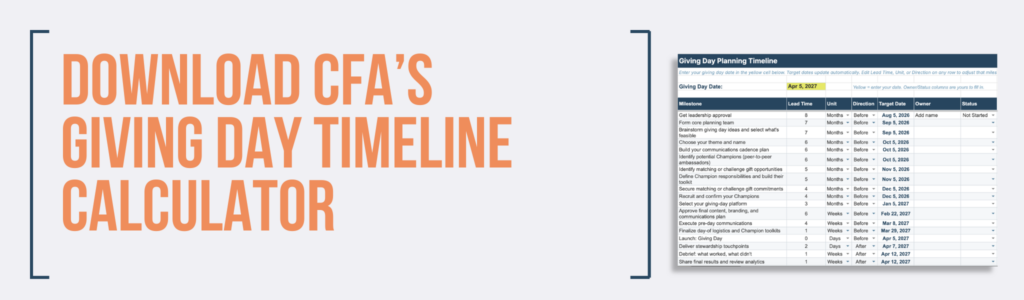
Plan your timeline: Enter your giving day date in our Giving Day Timeline Calculator and it calculates target dates for each milestone and outreach touchpoint.
Choosing a Platform and Building Champions
The planning committee settled on a branded name, Falcon Flight Day, tying the effort to Alderbrook’s mascot, and picked an ambitious but achievable first-year goal: 1,200 donors. Mila wanted Alderbrook’s first giving day to emphasize donor count rather than dollars, so a recent graduate’s gift would count as much as a longtime donor’s larger one. At the same time, she wanted to create an opportunity for the school’s most generous supporters to play a meaningful role.
“Matching gifts are one of the most reliable drivers of a giving day,” Rob says, “but organizations often overcomplicate them. The real power isn’t a strict dollar-for-dollar accounting exercise. It’s a messaging tool. A donor’s early commitment tells everyone else, ‘I believe in this enough to go first, and I want you to join me.'”
The committee’s strategy was to create a matching vehicle, funded by board members and longtime donors that unlocked in stages as the donor count climbed. Every 200 donors unlocked more of the matching funds, and meeting the goal of 1200 unlocked the whole matching grant. Counting donors instead of dollars enabled a $25 gift from a recent graduate to move the needle toward the next unlock as much as a $2,500 gift did. It was Mila’s answer to Vanessa’s math: A gift of any size could help release additional funds.
Rob also considers it essential to recruit “champions,” alumni and current students willing to post, email, and talk about the day in their own networks. “Institutional messaging alone will never generate the same energy as peer-to-peer outreach,” he says. “A good rule of thumb is roughly one champion for every ten donors you hope to reach, and I always encourage organizations to overbuild that number rather than come up short.”
Alderbrook started by recruiting champions from recent graduating classes — the same alumni who showed up for homecoming but rarely opened a fundraising email. Their job wasn’t to solicit gifts. It was to bring homecoming’s energy into people’s social feeds for one day.
Building Momentum Before the Day Arrives
With roles assigned and an online giving platform chosen, Mila’s committee created a layered communications plan: a save-the-date mailer a month out, followed by social posts and emails that increased in frequency. More pep rally than pledge drive, the messaging leaned into school spirit, but donors could opt to select programs or clubs they were especially interested in supporting.
“I also like offering people the chance to give early,” Rob says, “so that if someone can’t participate on the actual day, their gift still counts toward the total. That early momentum matters. When the day begins, and supporters can already see fifty gifts on the board, it tells everyone else that something real is happening, and they want to be part of it.”
The Results
Falcon Flight Day launched on a Wednesday in early May. By midnight, Alderbrook had welcomed 1,650 donors, including 480 who had never given to the university before, comfortably clearing its goal. They raised just over $310,000, and nearly a third of the day’s donors were graduates from the last decade.
In the days after Falcon Flight Day, Alderbrook’s committee sent personal thank-yous to every first-time and major donor, posted the final results publicly, and held a debrief to set a tentative date for next spring. For Mila, the follow-up mattered as much as the day itself. A giving day’s real value isn’t the one afternoon of energy. It’s whether the alumni it reaches show up the next year knowing their support counts. Rob sums it up simply: “Thoughtful stewardship is the most important thing you can do to turn a single gift into a habit of giving that endures.”
Get started: Download our Giving Day Checklist, a step-by-step worksheet for building your team, timeline, outreach cadence, and post-day stewardship plan.
Partner With Us
Is your organization considering a giving day, looking to strengthen annual giving, or trying to build a stronger pipeline of future supporters? Through a development assessment or strategic counsel, CFA can help you identify opportunities for growth and build fundraising strategies that create lasting momentum. Contact CFA today.
*Disclaimer: Client confidentiality is paramount in our work with each and every organization. The story in this article is fiction, based on real situations (or an amalgamation of several situations) drawn from CFA’s broad experience serving nonprofit organizations.
Advised Not to Launch a Campaign, They Built the Engine Instead

Not every nonprofit feasibility study ends with a green light for a capital campaign. Sometimes, the better outcome is to surface what an organization is genuinely ready to accomplish and to identify the investments that will strengthen its development program, increase fundraising yield, and ultimately position it for more impactful work down the road. For Minnesota Land Trust (MLT), that was precisely the case. In 2023, the organization engaged Creative Fundraising Advisors (CFA) and consultants Paul Johnson and Colin Hamilton to assess its readiness for a campaign. What followed was a carefully considered course correction that, three years later, has produced some of the most significant fundraising growth in the organization’s history.
Minnesota Land Trust: Protecting What Cannot Be Replaced
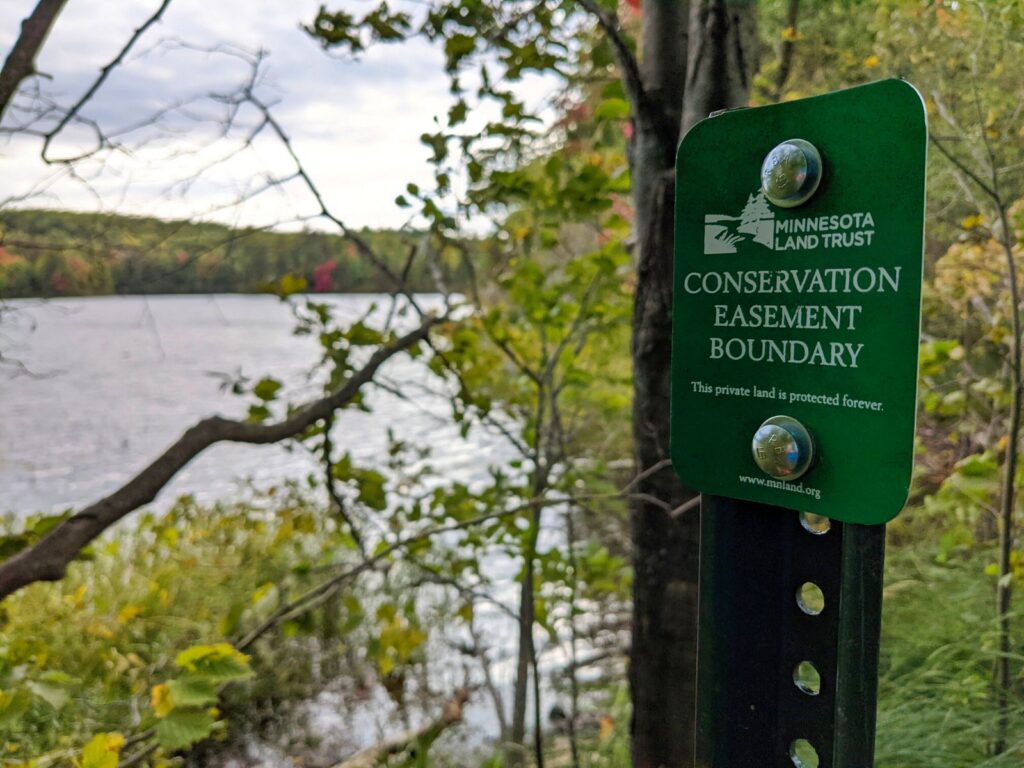
Founded in 1991, MLT works to protect and restore Minnesota land, water, and wildlife. The organization helps landowners protect and preserve property through conservation easements, legal agreements that permanently restrict development and open the way for rewilding the land and restoring its ecology. MLT has conserved more than 1,000 properties across Minnesota, making it one of the highest-volume land trusts in the country. Public sources fund the majority of its roughly $20 million annual budget, and the organization is also a trusted advisor to the Minnesota state government on conservation policy.
Entering the Engagement
In 2023, MLT was thinking expansively. Having completed a $5 million capital campaign in 2021, leadership hoped to follow it with a larger, $12 million campaign to accelerate programmatic work, grow the development program, and build the long-term stewardship fund. MLT CEO Kris Larson recalls a thorough, energizing process, involving a strong volunteer committee and extensive donor interviews. Like most organizations embarking on a feasibility study, MLT expected the process would confirm a campaign as the logical next step.
What the Feasibility Study Revealed
CFA Founder and CEO Paul Johnson says that one of the main purposes of a feasibility study is to “move things from the ‘we think we know’ column to the ‘we know’ column.” What emerged from MLT’s process was a nuanced and ultimately clarifying picture. CFA’s assessment found that while donors believed deeply in MLT’s mission, the conditions for a $12 million campaign were not yet in place. In launching a new campaign so soon after the previous one, some stakeholders felt that MLT was simply asking again rather than offering something meaningfully new. The study also indicated that the development operation needed investment before it could support a campaign of this ambition. The analysis surfaced a strategic question at the heart of its recommendations: was a campaign the right vehicle to fuel the growth of the development operation, or did investment in their development operations need to come first? The evidence pointed clearly toward the latter.
CFA’s assessment concluded there wasn’t a feasible short-term path to $12 million, and that scaling back the number wouldn’t produce a compelling campaign either. But the data pointed to a real opportunity: a substantial pool of cold-to-warm donors ready for cultivation, and an underdeveloped strategy for engaging landowners as long-term philanthropic partners. CFA Strategic Partner Colin Hamilton puts it simply: “A campaign can become the default solution, but sometimes there are more effective things an organization can do first. It’s really about finding what’s the best path at any given period in your organizational arc.” What CFA’s assessment revealed was not a closed door but a roadmap, one that gave MLT the clarity and confidence to take the steps that would serve its mission best in the long run.
Building the Foundation for Lasting Growth
CFA’s core recommendation was to spend the next 18-24 months building MLT’s development program: hire and activate a stronger team, deploy CEO Kris Larson as lead fundraiser rather than depend on him for every relationship, and evolve major giving into a more donor-centric, portfolio-driven approach. Rather than one large campaign, CFA pointed MLT toward smaller, targeted initiatives tied to specific geographies, issues, and outcomes that donors already cared about—moves that were smaller, more local, more nimble, and ultimately more productive than competing head-on with larger national organizations that were also planning campaigns at that time.
Kris took the advice to heart, recruiting Adam Breininger as the new Director of Development and Communications. Adam reviewed the feasibility study before accepting the role, a transparency that shaped his approach from the start. Among his first moves was co-designing Ignite, a targeted campaign that made a compelling case for investing in the development department itself. Ignite raised more than $800,000, funding growth of the development and communications team from four to ultimately nine positions, a tech stack overhaul including a new CRM and online giving platform, and a comprehensive organizational rebrand launching later this fall.
Remarkable Signs of Success
The results have been striking. Since fiscal year 2023, MLT has achieved 83% growth in contributed revenue, with budgeted annual fundraising rising from about $1.3 million to more than $3 million. The donor base has grown roughly 50%, from 2,000 to 3,000, with another 1,000 supporters expected this year. MLT’s 2026 gala was the most successful event in the organization’s history, raising over $725,000. Adam also notes that the growth is broadly distributed: “All four of our giving categories, from community-level donors to major gifts, are seeing significant upticks.” Some of the organization’s largest gifts to date arrived not through a campaign but through annual giving, a powerful signal that MLT’s donor base is warming and scaling in ways that would have been hard to imagine three years ago.
A New Organizational Confidence
Growth in contributed revenue is just one part of this success story. A bold new strategic plan calls for accomplishing as much conservation work in the next decade as in its first 35 years, and MLT has grown from roughly 30 to 45 staff members to help deliver on it. Kris no longer carries the majority of donor relationships himself; that trust has been distributed across a professional team, reducing organizational risk and deepening stewardship across the board.
“The traction we had on the development side freed up not just the board but the whole staff to dream bigger,” Kris observes. “Development used to feel like a department of limitations. Now it’s the engine driving ambition across the whole organization.” When MLT launches its next campaign, it will do so from a very different position than in 2023, with an experienced team, sophisticated infrastructure, and a growing donor community ready to scale alongside the mission.
Partner With Us
Are you unsure whether a campaign is right for you? A feasibility study can give you the information you need to confidently step into your next chapter. CFA meets every client where they are, with honest, thoughtful counsel to meet your challenges and seize your opportunities. Whether the path forward is a comprehensive campaign, a targeted initiative like Ignite, or a period of purposeful capacity building, we can help you map the right path and deliver your mission with greater impact. Contact CFA today to begin the conversation.
3 Leadership Opportunities to Shape Your Fundraising Culture

When Anya joined a regional art museum* as its director of development, she came with a strong resumé and genuine enthusiasm for the mission. Operating on a $60 million annual budget, the museum possessed a loyal donor base, growing visitorship, a good reputation in the community, and an ambitious strategic plan that would require a major campaign in the years to come. On paper, everything looked great.
Eleven months later, Anya was quietly seeking a new position.
No one had been unkind or set impossible expectations. What had happened was subtler and harder to name. The executive director, a charismatic figure with deep connections in the philanthropic community, had become the center of gravity for every significant donor relationship, leaving Anya little room to build the kind of connections that sustain a development program. The curatorial staff guarded their donor relationships for their own projects and acquisitions rather than collaborating on them with the development team. When a significant fundraising gap appeared, Anya had a plan, but no internal partners to help her execute. She was talented and committed, but functionally on her own.
Her experience is not unusual. According to industry research, including CompassPoint’s UnderDeveloped — a landmark study of more than 2,700 nonprofits, the average tenure of a development director hovers between 16 and 18 months. The problem is frequently framed as one of compensation or talent pipeline. Jake Muszynski, Principal and Head of Consulting at Creative Fundraising Advisors, sees a deeper current running beneath those explanations. He observes that “the culture of fundraising or ‘culture of philanthropy’ in any organization is almost always a direct expression of how the person at the top understands and relates to philanthropy. That understanding, or the absence of it, radiates into every corner of the organization.”
A culture of philanthropy is an organizational mindset in which philanthropy is woven into the mission, values, and daily work of the institution. It is characterized by shared responsibility, meaningful engagement among donors and stakeholders, and disciplined practices that strengthen relationships, advance the mission, and fuel long-term success. Leaders who do not shape the culture of philanthropy with intention and care risk undermining the very fundraisers who make the organization’s mission possible. The cultural gaps Jake encounters tend to emerge when leaders miss a few key opportunities to determine how fundraising is understood and practiced across the whole organization.
Opportunity #1: Shared Ownership of Fundraising
One of the clearest signals Jake looks for is how the executive director talks about fundraising and who figures in that story. A leader who can speak about philanthropy in the context of programs, board leadership, financial strength, and organizational impact has understood something essential: that fundraising is not any one department’s singular function but a shared organizational responsibility.
A lack of shared ownership can manifest in different ways. In some organizations, a leader has wrapped their identity so tightly around fundraising that the development team has little room to operate. While it may appear that this leader is fundraising successfully, there are risks. Jake observes, “When fundraising becomes one person’s domain, it stops being a culture and starts being tied to a single personality. Personalities are not scalable, and they are not sustainable.”
The opposite extreme is the executive director who steps away from fundraising entirely and assigns it to a department. Fundraising is siloed in these organizations, too. Program staff may see little reason to share stories or donor connections, and board members may take their cues from leadership and conclude that fundraising belongs to a department and has little to do with them. Donors may build relationships with fundraisers, but they receive little evidence that philanthropy is valued across the institution. The result is a weakened fundraising program that is fundamentally disconnected from the mission it exists to support.
Opportunity #2: Donor Relationships That Belong to the Institution
Closely related to shared ownership is how leaders manage their relationships with individual donors. Many executive directors, particularly those who have been with an organization for a long time, have cultivated deep personal connections with its most significant supporters. Those relationships are genuine and valuable. The challenge arises when a leader becomes the sole bridge between the organization and the people who support it. Jake encourages organizations to give their most important donors more than one point of contact: “a donor who knows only the executive director has a relationship with a person. A donor who also knows the development director and a program lead has a relationship with the institution itself, one that does not depend on any single individual remaining in place.” A major donor who has met a curator or attended a behind-the-scenes preview has more reasons to stay invested than one whose entire connection runs through the executive director’s office.
Opportunity #3: Transparency That Equips Rather Than Overwhelms
The third area where leadership shapes fundraising culture is in how honestly and how helpfully leaders communicate about organizational challenges. Jake is a genuine advocate for transparency and believes executive directors should be clear with their teams about financial realities. What he cautions against is a version of openness that functions more as a transfer of pressure than genuine communication. Telling a development director that a significant budget gap needs to be closed by year’s end is not leadership; it is delegating a problem. Jake says: “The most effective leaders share the hard truths and then immediately ask, ‘What do you need from me to be successful?’ That single question changes the entire nature of the conversation.” The executive director who names the challenge, asks what support would help, and commits to being part of the solution has done something fundamentally different. That shift can help to keep talented fundraisers from seeking employment elsewhere.
The Questions Worth Sitting With
Anya was not let down by any single failure of leadership. She was let down by institutional norms and assumptions that had drifted, gradually and unintentionally, away from the best practices that create a healthy fundraising culture. Jake has found that the most useful thing he can offer leaders willing to examine these dynamics is two questions:
- Do you truly understand how fundraising touches every part of your organization?
- How are you empowering the people around you to be part of that work?
An honest look at the answers to these questions can breathe new life into an organization’s fundraising culture. The leader who establishes a healthy culture has a better shot at retaining the institutional knowledge accrued by valued employees and securing the resources and relationships needed to fuel the mission over the long term.
Partner With Us
Every leader influences their fundraising culture, whether intentionally or not. If you are wondering whether yours is working the way you hope, CFA’s Development Assessment offers a compassionate and clear-eyed look at the structures, relationships, and culture shaping your philanthropic work. Contact CFA today to start that conversation.
*Disclaimer: Client confidentiality is paramount in our work with each and every organization. The story in this article is fiction, based on real situations drawn from CFA’s broad experience serving nonprofit organizations.
The National Gallery: A Case Study in Funding the Margin of Excellence

We know excellence when we see it. We stop. Look again. And stand back in awe. Whether it is a social service organization so humane that it transforms not just individual lives but entire communities, a dancer or musician who has perfected their craft to the point of making the impossible look effortless, or a land conservation effort so ambitious it reshapes the ecological future of a region, true excellence announces itself. It is a curious alchemy of skill, vision, and hard work in perfect harmony.
What is less often remarked upon is how excellence comes into being. In the nonprofit sector, when we are in the presence of something truly exceptional, philanthropy is almost always at the core of the story. The cancer research center rewriting the odds for patients. The conservatory that educates generations of world-class musicians. The ballet company that does not merely perform but creates. In each case, philanthropy funds the distance between good and excellent, between what earned revenue and government support make possible and what vision demands.
There is a name for that threshold, the place where transformational vision and transformational philanthropy join forces. It’s called the margin of excellence.
Campaigns Propel Organizations into the Margin of Excellence
Every nonprofit, however resourceful, eventually hits the limit of what earned revenue and government support can sustain. Ticket sales, tuition, memberships, program fees, and facility rentals seldom generate all the resources excellence requires. Government funding is usually tied to existing programs and often cannot be relied upon year after year. Creative Fundraising Advisors (CFA) Founder and CEO Paul Johnson notes, “Philanthropy gives an organization the flexibility and entrepreneurial spirit to go beyond what public funding or earned revenue makes possible, to reach for excellence. It unlocks creativity and innovation that routine funding would never afford.” When an organization is ready to level up, campaigns are the vehicle. “At their best, campaigns fund the margin of excellence,” Paul argues. “They are not about covering a budget gap. They are about taking an organization from good to great, or from great to excellent.”
The Building Blocks of a Credible Case for Excellence
Not every organization is ready to make the case for excellence. Before an organization can credibly invite donors to fund excellence, it must demonstrate that it has already earned the right to claim it. Paul identifies two qualities as foundational to a case for excellence: transparency and authenticity. Transparency is about how an organization defines and communicates its standards, showing donors not just what you have achieved, but the framework of thinking and judgment that governs every decision. It is the difference between asking donors to admire the result and inviting them into a genuine understanding of what you are building. “Donors giving at the highest level need to see inside the work,” Paul explains. “They need to understand the standard you have set and how it is upheld. Transparency converts donors into true believers.”
Authenticity operates differently. It is about revealing the human cost of pursuing excellence. Where transparency illuminates the standard, authenticity lifts the veil on what it takes to meet it, day after day. Donors who attend a ballet see a performance that appears effortless, not the years of training, the daily barre work, or the physical therapy that makes it possible. The most authentic organizations understand that this gap between what donors see and what excellence actually requires is not a backstory but an opportunity. The most authentic organizations close that gap intentionally, giving donors a window into the hard work and dedication required to deliver the mission. This is how an organization demonstrates that its pursuit of excellence is real, sustained, and worthy of investment. “Excellence is hard-earned,” Paul says. “Authenticity is letting people see what that pursuit really looks like — because that is what inspires giving at the highest level.”
When Vision and Philanthropy Converge: The National Gallery’s Project Domani
These qualities, transparency about the standard and authenticity about the pursuit, are what allow an organization to meet sophisticated donors where they are: ready to invest at the highest level when the vision is credible, the leadership is proven, and the standard of excellence is beyond question. At the National Gallery in London, a CFA client, that alignment has already attracted £375 million toward one of the most ambitious cultural campaigns of our era.
Founded in 1824, the National Gallery houses the UK’s collection of paintings in the Western tradition and is one of the most visited museums on earth. It is also a free museum, whose operating budget is largely sustained by the British government. That public funding does an enormous amount. What it cannot do is fully fund the transformation the Gallery’s leadership has spent years envisioning.
Project Domani is that transformation. The £750 million campaign will fund a landmark new wing designed by Kengo Kuma and Associates, create an endowment to fund acquisitions and programming, and build new public spaces connecting Trafalgar Square and Leicester Square. Project Domani also includes the move to extend the National Gallery’s historic collection beyond 1900, making it the only museum in the world that exclusively displays paintings, where visitors will be able to view the entire history of painting in the Western tradition.

The campaign was catalyzed by a transformational gift of £150 million from the Crankstart Foundation, accompanied by the promise of a significant collection of works. That commitment was matched by a gift of equal size from the Julia Rausing Trust — two of the largest gifts ever made to a museum anywhere in the world. Together they signal something important: when an institution has earned the right to claim excellence and can articulate with clarity what philanthropy will make possible, donors of extraordinary capacity respond in kind.
At the heart of this effort is a curatorial philosophy defined by uncompromising discernment: only the finest examples of each artistic movement and school are considered for acquisition. The result is a collection that is not vast so much as definitive. Extending the collection beyond 1900 demands the same exacting standard, and with it, the considerable resources needed to acquire modern masterpieces. “The National Gallery has the collection, the expertise, the history, and the relationships to claim excellence with complete credibility,” Paul says. “What it needs now is the philanthropy to bring the vision fully into being.”
“Excellence, at the end of the day, is inspiring,” Paul reflects. “When donors can see it, understand it, and believe that their investment will bring something extraordinary into the world that would not exist without them — that is when transformational philanthropy becomes possible.”
Donors Fund the Why
Simon Sinek’s bestseller, Start With Why, argues that the most inspiring companies do not lead with what they do — they lead with why they do it. The why is the purpose, the belief, the cause that animates everything else.
This core philosophy of starting with why is especially relevant for nonprofits, and Paul has built his consulting practice around this insight. “People fund vision, not a catalogue of activities. They want to know why you do what you do, and when you can answer that compellingly, the what takes care of itself.” Annual giving keeps an organization in motion, but it rarely produces a donor’s best gift. Campaigns do because a campaign is an invitation to invest in a future that does not yet exist. “The difference between checkbook philanthropy and investment philanthropy is always vision,” Paul says. “One asks a donor to maintain what is. The other asks them to believe in what could be and to make it real.”
For a vision to unlock transformational generosity, it must be aspirational but achievable. Not a wish, but a destination. “A vision has to be believable to be inspiring,” Paul says. “Aspirational enough to be exciting, grounded enough to be trusted. When donors can see themselves in the story of how you get there, they do not just write a check. They become part of something that will outlast them.”
The Starting Point for Your Organization
For organizations ready to shift their conversations toward a new vision of excellence, Paul’s counsel is consistent: start with a strategic plan. Not a vision statement in isolation, but a full articulation of what impact the organization seeks and the goals that will get it there. “Excellence is not an abstract aspiration. It is grounded in process. You have to be able to show donors not just where you are going, but what will be true when you arrive and what it will mean for the people you serve.”
Partner With Us
Is your organization ready to make the case for excellence? CFA works with nonprofits at every stage of this journey, from strategic planning and vision articulation to case development and campaign counsel. We help organizations find and tell the story of why their work matters at the highest level, and we partner with them to translate that story into transformational philanthropy. Contact us to find out how we can help your organization operate in the margin of excellence.
Leslie Cronin, Senior Manager of Strategic Communications
Leslie Cronin comes to Creative Fundraising Advisors with broad experience in education and nonprofits. Early in her career, she taught English, composition, and creative writing at selective independent schools, colleges, and universities. In 2005, she became Senior Development Writer at the Museum of Fine Arts, Houston, overseeing all aspects of communication coming out of the museum’s development department including exhibition descriptions, grant applications, correspondence with major donors, acknowledgements, and event invitations.
Leslie later brought her experience in education and fundraising to a new role, serving first as board member and then vice president of the board of an independent school in Houston, Texas. During her tenure, she was instrumental in the formulation of the school’s 20-year plan, including its successful accreditation as an International Baccalaureate institution. She worked closely with a wide variety of consultants on urban planning, architecture, and a fundraising feasibility study. Her insight into the client experience helps her every day in her work for CFA.
As Senior Manager of Strategic Communications, Leslie helps CFA’s clients shape their campaigns for maximum impact and results by leading case development workshops, writing compelling case summaries, and crafting powerfully persuasive campaign collateral. Additionally, Leslie manages CFA’s brand voice by developing content for the firm’s resource library and overseeing the editorial calendar.
Leslie believes nonprofits have the power to change the world. In crafting cases for support, she writes as a committed advocate for each client and their goals. Leslie holds two Masters degrees, one an MFA from the Iowa Writers’ Workshop, the other an MA in English Literature from Temple University. She is mother to two grown children, a voracious reader, and an amateur equestrian. She lives on Cape Cod with her husband, author Justin Cronin, and their rescue dog, Lonesome Dove.
Is Your Database Helping or Hurting Your Fundraising Efforts?

Most conversations about fixing problems with customer relationship management (CRM) databases focus on data health: eliminating duplicate records, outdated addresses, and inconsistent fields. Those issues are real, quite urgent in many cases, and need to be solved. But two other database issues are just as common, just as costly, and often just as destabilizing: (1) when data is perfectly clean but not accessible to the people who need it, and (2) when the CRM is not aligned with how the organization works. Both can quietly—or not so quietly—undermine fundraising strategy, donor relationships, and staff morale.
Stephanie Willis, CFA Consultant and author of The Art and Science Approach to Fundraising Data and Research, encounters these issues regularly through the client data audits she conducts as part of CFA’s data services. Working with nonprofits across the country on data strategy and the complex human dynamics that shape how CRMs and other data systems are used, she has learned that resolving major issues requires as much attention to people and culture as it does to technology.
Case Study 1: A Database on an Island
Vistas Land Trust* was an environmental nonprofit with a $6 million annual budget and a donor base that had been growing steadily for years. Their data coordinator, Mia, had managed their fundraising CRM for years, and she was meticulous. Every record was accurate and up to date. Salutations were correct. Gift histories were complete. The data was, by any measure, immaculate.
But Mia was the only one who knew how to use the system.
When the development director wanted to pull a report, she had to ask Mia. When a grants officer wanted to check whether a foundation contact was already in the database, she had to ask Mia. When leadership needed a donor list for an event, Mia generated it. She was, as Stephanie puts it, “the keeper of the keys.” No one else knew how to access the CRM.
When data becomes one person’s domain, it isn’t a technology problem or a data quality problem. It is a culture and training problem. Imagine for a moment what would happen if that person suddenly left their position. Every data-related operation would come to a standstill. This sounds extreme, but it is actually more common than most nonprofit leaders realize.
“An organization’s database is not the administrator’s database,” Stephanie says. “It belongs to the whole organization. Everyone who touches fundraising in any way—development staff, program staff, finance, leadership—should be able to view the information they need and understand how the system works. When only one person can access it, everyone else is flying blind.”
At Vistas, the consequences were becoming harder to ignore. An influx of new donors from a successful series of community events left the development team struggling to steward the new relationships effectively. They couldn’t pull segmented lists for outreach. They couldn’t generate reports for board meetings. They couldn’t even verify basic contact information without routing a request through Mia.
The solution was not to find a new system or replace Mia. Her institutional knowledge, skills, and precision were important assets. The solution was to build a shared culture of database literacy throughout the organization.
Stephanie’s approach in situations like this one begins with a single, direct question she poses to the whole organization: What do you actually want your database to do for you? The answers are often revelatory. Staff members articulate priorities they’ve never voiced. Leaders recognize gaps between what the system could offer and what they’ve been asking of it.
To get everyone up to speed, Stephanie provides workshops, training and process guides, as well as group and individual coaching sessions that help each staff member define processes and understand how to use their fundraising CRM in ways relevant to their specific responsibilities.
“A database should serve the entire organization,” Stephanie emphasizes. “When you democratize access thoughtfully, with clear guidelines for who can view, who can edit, and how entries are made, you protect the data integrity that someone like Mia has worked hard to build, while giving everyone else the tools they need to do their jobs.”
Case Study 2: When the Tool and the Organization Don’t Align
Northstar Arts Center* was a performing and visual arts nonprofit with a $60 million annual budget. Two years prior, leadership decided to migrate to a new CRM platform designed by a reputable company with strong brand recognition and seemingly powerful capabilities. The investment was substantial. The promise was significant.
What Northstar’s team didn’t fully anticipate was what the system would actually require of them.
The CRM they chose was highly customizable, which was sold to them as a plus, but in order to configure it for fundraising and keep it running reliably, the organization also needed a dedicated database administrator. Northstar initially hesitated to make that investment, assuming the system, once set up, could be managed within existing roles.
Without a database administrator, this expensive “top shelf” CRM could not deliver on its intended value. Staff members couldn’t complete basic fundraising functions. Reports were unreliable. Workarounds multiplied. The database that was supposed to streamline operations was instead draining time and energy.
“Some platforms are built for fundraising from the ground up,” Stephanie explains. “They have recognizable fields, intuitive processes, and a manageable learning curve. Other platforms are designed for maximum customization, which means they need someone who knows how to build and maintain a specific architecture. If you don’t have that capacity in place, the system won’t work as expected.”
Over time, Northstar came to a better understanding of the tradeoff it had made. The system itself was not inherently flawed—it was built with certain expectations about technical oversight. The gap was in how the organization had resourced and structured its use. Once that became clear, leadership shifted its approach, investing in a database administrator, providing additional staff training, and adjusting internal workflows to support the system more effectively.
In situations where the CRM and the organization seem mismatched, the issue is not simply whether to keep the old CRM or adopt a new one, but whether the system can meet the organization’s core needs when properly configured and supported.
“No system can be everything for every organization,” Stephanie explains. “The real question is: what are your non-negotiables? What are the things your database has to do well to support your fundraising?”
If a system can deliver on those non-negotiables, with the right staffing and workflows in place, then the work is to resource it appropriately and use it with intention. If a CRM cannot meet the organization’s non-negotiable needs, even with capable support, then it may be time to reconsider the platform altogether.
For Northstar, the best way forward was to appropriately resource their CRM. For other organizations, it may make better sense to change systems. To help clients quickly see which systems align with their capacity and priorities, Stephanie maintains a spreadsheet for side-by-side comparison of donor management platforms, organizing them by organization size, fundraising volume, features, technical skill requirements, and typical use cases.
Asking the Right Questions
Both Vistas and Northstar had invested in their fundraising databases. But in both cases, something essential was missing: alignment between the tool, the team, and the way the organization wanted to work.
Stephanie offers practical diagnostic questions for organizations wondering whether their database is helping or hindering them:
- Can your team pull the reports they need?
- Do they trust what’s in the system?
- Are they using it or avoiding it?
If the answers are no, no, and the latter, it may be time to reassess your organization’s CRM.
“Your database should be your primary source of truth,” Stephanie says. “It should tell you who your donors are, how they’re engaged, and where your fundraising is headed. When it does that well, it’s one of the most powerful tools you have. When it doesn’t, your strategy, stewardship, and reporting are built on sand.”
Partner With Us
Is your database serving your organization the way it should? Are there staff members who need access and training they’ve never received? Is your CRM the right fit for your team’s size and technical skill? CFA conducts thorough data audits that assess not just data health, but database fit, staff usage, and organizational alignment. We help nonprofits understand how to put their data systems and processes to the best use, where the gaps are, what options exist, and how to move forward with confidence. Contact CFA today to find out how a data audit can strengthen your fundraising strategy.
*Disclaimer: Client confidentiality is paramount in our work with each and every organization. The story in this article is fiction, based on real situations drawn from CFA’s broad experience serving nonprofit organizations.
Leslie Cronin, Senior Manager of Strategic Communications
Leslie Cronin comes to Creative Fundraising Advisors with broad experience in education and nonprofits. Early in her career, she taught English, composition, and creative writing at selective independent schools, colleges, and universities. In 2005, she became Senior Development Writer at the Museum of Fine Arts, Houston, overseeing all aspects of communication coming out of the museum’s development department including exhibition descriptions, grant applications, correspondence with major donors, acknowledgements, and event invitations.
Leslie later brought her experience in education and fundraising to a new role, serving first as board member and then vice president of the board of an independent school in Houston, Texas. During her tenure, she was instrumental in the formulation of the school’s 20-year plan, including its successful accreditation as an International Baccalaureate institution. She worked closely with a wide variety of consultants on urban planning, architecture, and a fundraising feasibility study. Her insight into the client experience helps her every day in her work for CFA.
As Senior Manager of Strategic Communications, Leslie helps CFA’s clients shape their campaigns for maximum impact and results by leading case development workshops, writing compelling case summaries, and crafting powerfully persuasive campaign collateral. Additionally, Leslie manages CFA’s brand voice by developing content for the firm’s resource library and overseeing the editorial calendar.
Leslie believes nonprofits have the power to change the world. In crafting cases for support, she writes as a committed advocate for each client and their goals. Leslie holds two Masters degrees, one an MFA from the Iowa Writers’ Workshop, the other an MA in English Literature from Temple University. She is mother to two grown children, a voracious reader, and an amateur equestrian. She lives on Cape Cod with her husband, author Justin Cronin, and their rescue dog, Lonesome Dove.
Good Reads for Greater Impact: The Culture Code
CFA’s book recommendations guide readers toward ideas and resources that can strengthen leadership, build healthier organizations, and improve fundraising results.
The Culture Code and the Case for Building Culture on Purpose
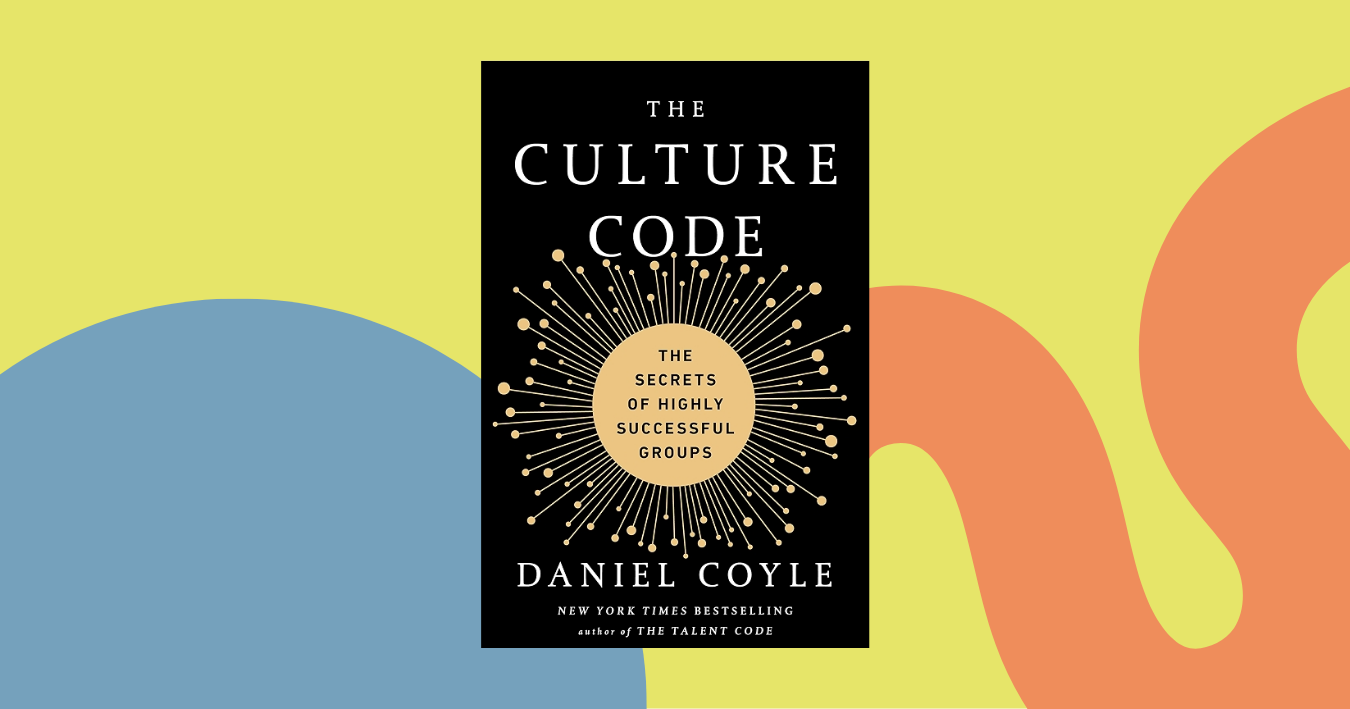
The Culture Code: The Secrets of Highly Successful Groups
By Daniel Coyle (Bantam, 2018)
Organizational culture can feel like the weather, an ambient condition that simply exists, rather than something built deliberately by leadership. Left unattended, culture will form itself, shaped by habit, precedent, and unspoken norms. It touches everyone connected to the mission: staff, board, volunteers, the whole stakeholder community. That gap between accidental and intentional culture is what The Culture Code sets out to close.
Consciously cultivating the conditions for an organizational culture where employees can thrive is especially important in nonprofit organizations because the stakes are real. More than a decade ago, the UnderDeveloped study documented a nonprofit sector-wide problem of widespread burnout and high turnover among fundraising staff. A common pressure makes it worse: nonprofits are often expected to deliver results while maintaining low overhead, a dynamic that researchers call the nonprofit starvation cycle, which pushes organizations to underinvest in the staff and infrastructure that sustain good work. Recent research from the Center for Effective Philanthropy confirms the problem has spread well beyond development roles, finding that nonprofit employees, including organization leaders themselves, are now reporting excessive levels of stress and burnout.
The good news is that leadership has the power to renovate organizational culture, and Daniel Coyle’s 2018 bestseller, The Culture Code, can be a helpful resource in rethinking how your internal culture operates. The Culture Code was originally published as a business title, and the book draws its wisdom from a wide range of teams — sports franchises, military units, creative ensembles, and nonprofits alike — and its lessons travel well across different contexts. Surprisingly, most of the insights center not on assembling the right composition of talent and skill, but on retooling how people treat one another and interact.
Through case studies, the book details a range of philosophical perspectives and concrete moves that can turn a besieged staff into a cohesive team that collaborates, supports one another, and strives to meet the highest standards. When teams share a sense of common purpose and trust one another enough to be truthful or even vulnerable, they are better equipped to tackle hard problems and navigate the ordinary friction of any workplace.
How The Culture Code Makes Research Come Alive
Coyle is not a scientist, and The Culture Code does not pretend to be groundbreaking scholarship. It draws on established organizational psychology, including Amy Edmondson’s research on psychological safety and Google’s Project Aristotle study. Coyle’s real contribution is translating these concepts into real-world applications. He is a journalist, a New York Times bestselling author, and a longtime Outside magazine contributor who spent years embedded with groups as diverse as Pixar, the Navy’s SEAL Team Six, Saturday Night Live, and the San Antonio Spurs, investigating how each team handled its worst defeats and achieved its peak experiences. The book reads less like a management manual and more like a set of true stories that illustrate how the research findings work in real life.
Three Strengths to Cultivate for a Healthier Culture
Coyle organizes the book around three core concepts that create the conditions for a healthy organizational dynamics:
- Building Safety. The first, and probably the most important, is building safety. Coyle draws on research into what he calls belonging cues, the small, repeated signals that tell a group’s members they are secure enough to stop guarding themselves and start contributing. As he puts it, these cues “seek to notify our ever-vigilant brains that they can stop worrying about dangers and shift into connection mode.” For nonprofit teams, that safety is the bedrock of effective collaboration.
- Shared Vulnerability. Coyle talks about Pixar’s “Braintrust” meetings where peer filmmakers critique projects in development to illustrate the importance of creating safe forums for open conversation. As Pixar co-founder Ed Catmull tells Coyle, “The Braintrust is the most important thing we do by far. It depends on completely candid feedback.” Coyle is careful to distinguish this from brutal honesty: the point is never to wound, but to name problems with openness, curiosity, and care. He calls this “the risky, occasionally painful, ultimately rewarding process of being vulnerable together,” and the payoff is steady progress toward excellence and trust that holds up under pressure.
- Establishing Purpose. Nonprofits start with a built-in advantage here, since mission is the reason every nonprofit exists. Coyle suggests most leaders still undersell it and recommends that they “be ten times as clear about your priorities as you think you should be.” Nonprofit leaders can create the conditions for a shared culture of purpose-driven work by exploring, cultivating, and connecting organizational and personal purpose.
Within its three-part framework,The Culture Code offers a wide range of practical strategies that encourage positive and productive organizational dynamics. With a few intentional changes, leaders can build a culture in which people feel safe, connected, and purposeful, one where they stay long enough to carry institutional knowledge forward and grow alongside the mission they serve.
How CFA Can Help
At Creative Fundraising Advisors, we believe that building an organizational culture where your team can thrive is one of the most valuable investments a nonprofit can make: energized teams build deeper donor relationships, and those relationships drive impact. Our development assessment can show how safety, trust, and purpose are functioning on your team, and our educational, training, and workshop opportunities can help you put ideas like Coyle’s into practice. Ready to create the conditions that help your team and mission truly thrive? Contact CFA to start the conversation.
Leslie Cronin, Senior Manager of Strategic Communications
Leslie Cronin comes to Creative Fundraising Advisors with broad experience in education and nonprofits. Early in her career, she taught English, composition, and creative writing at selective independent schools, colleges, and universities. In 2005, she became Senior Development Writer at the Museum of Fine Arts, Houston, overseeing all aspects of communication coming out of the museum’s development department including exhibition descriptions, grant applications, correspondence with major donors, acknowledgements, and event invitations.
Leslie later brought her experience in education and fundraising to a new role, serving first as board member and then vice president of the board of an independent school in Houston, Texas. During her tenure, she was instrumental in the formulation of the school’s 20-year plan, including its successful accreditation as an International Baccalaureate institution. She worked closely with a wide variety of consultants on urban planning, architecture, and a fundraising feasibility study. Her insight into the client experience helps her every day in her work for CFA.
As Senior Manager of Strategic Communications, Leslie helps CFA’s clients shape their campaigns for maximum impact and results by leading case development workshops, writing compelling case summaries, and crafting powerfully persuasive campaign collateral. Additionally, Leslie manages CFA’s brand voice by developing content for the firm’s resource library and overseeing the editorial calendar.
Leslie believes nonprofits have the power to change the world. In crafting cases for support, she writes as a committed advocate for each client and their goals. Leslie holds two Masters degrees, one an MFA from the Iowa Writers’ Workshop, the other an MA in English Literature from Temple University. She is mother to two grown children, a voracious reader, and an amateur equestrian. She lives on Cape Cod with her husband, author Justin Cronin, and their rescue dog, Lonesome Dove.
Good Reads for Greater Impact: Strong Ground
CFA’s quarterly book recommendation guides readers toward sources that will help them strengthen leadership and achieve better results in their fundraising work.
Finding Strong Ground: Leadership Lessons Nonprofits Need Now
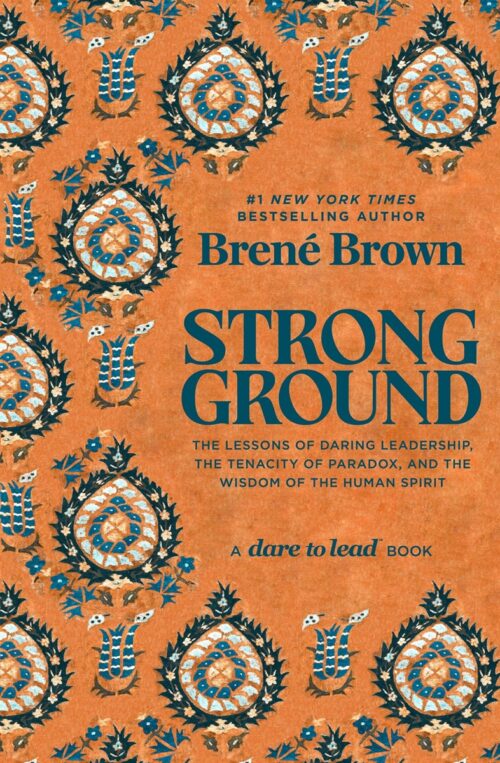
Strong Ground: The Lessons of Daring Leadership, the Tenacity of Paradox, and the Wisdom of the Human Spirit
By Brené Brown (Random House, 2025)
The road to nonprofit leadership has never been clearly marked. Unlike the established pathways into law, medicine, or business, there has been no standard degree, no widely recognized pipeline, and no credential that signals readiness to lead a mission-driven organization. Most nonprofit executives, development directors, and board leaders have learned their craft the same way generations before them did: on the job, through mentorship and hard-won experience—and, for those committed to growing in the role, through a disciplined habit of lifelong learning and professional curiosity.
That commitment to learning has never mattered more. The nonprofit landscape is shifting faster than most leaders can comfortably absorb. The donor cliff looms. The great intergenerational wealth transfer is reshaping philanthropy in real time. Technological advances and the sudden acceleration of AI are forcing nonprofits to grapple with issues they couldn’t have imagined a decade ago. And beneath these visible forces lies a quieter but equally urgent challenge: how to build and sustain the teams that will carry organizations forward.
Today’s employees arrive with a different set of expectations. They want meaningful work, opportunities for personal and professional growth, and a visible path toward advancement. Leaders who dismiss those expectations as distractions risk losing exactly the people they most need to succeed.
This is the terrain Brené Brown explores in Strong Ground, and it is why this book belongs on the shelf of every nonprofit executive, development professional, and board member serious about leading well in a complicated moment.
Built on Research, Grounded in Experience
Brown holds the Huffington Foundation Endowed Chair at the University of Houston’s Graduate College of Social Work, where she has spent more than two decades conducting qualitative research on courage, vulnerability, shame, empathy, and human connection. She also serves as a Professor of Practice at the University of Texas at Austin’s McCombs School of Business—an appointment that reflects the applied leadership dimension of her work.
She is not, in other words, a business consultant who stumbled into leadership theory. She is a researcher whose work on human behavior naturally led to the question of what courageous leadership looks like inside real organizations.
Strong Ground grows out of six years of work developing and delivering Brown’s Dare to Lead curriculum to tens of thousands of leaders around the world. The book distills lessons drawn from that work into a practitioner’s guide that speaks directly to the realities leaders face inside organizations.
The book’s central metaphor is memorable. While rehabilitating a sports injury, Brown’s trainer instructed her to “find the ground”—to build genuine strength by stabilizing the body rather than compensating around weakness. Brown extends that insight into organizational life. Leaders who layer new strategies on top of unstable foundations do not solve their problems; they amplify them. Real transformation begins when leaders find their organization’s strong ground and build from that foundation.
A Primer on Cutting-Edge Approaches to Leadership
One of the book’s most valuable features is the way Brown brings other voices in leadership into the conversation. She draws on discussions with writers and practitioners whose work is shaping modern leadership practice. Among them are Adam Grant, whose research examines how intellectual humility and generosity shape strong organizational cultures; Daniel Pink, whose research on motivation reshaped how leaders think about autonomy, mastery, and purpose; and Aiko Bethea, a leadership strategist whose work centers on values-driven leadership and accountable organizational cultures.
Each of these thinkers brings a distinct perspective to the conversation, and each has a substantial body of work beyond what appears in these pages. In that sense, Strong Ground functions not only as a leadership guide but also as a curated introduction to a wider body of thinking that nonprofit leaders can draw on as they strengthen their organizations.
Taken together, these conversations point toward a model of leadership that is both demanding and deeply human—one that holds courage and care together, recognizes the hunger for meaning in work, and understands that strong organizations are built not through strategy alone but through the trust and relationships that allow people to do their best work.
For nonprofit leaders, the takeaway is clear: the theories of leadership shaping many high-performing companies are just as relevant—perhaps even more so—in mission-driven institutions. The nonprofit sector has always been hungry for practical wisdom on leadership. Strong Ground delivers it.
How CFA Can Help
At Creative Fundraising Advisors, strategic planning and leadership coaching are components of several of our service lines because we know the strength of an organization’s fundraising is inseparable from the strength of its leadership. If your organization is navigating change, strengthening its team, or preparing for its next phase of growth, we would welcome the opportunity to help. Contact CFA to learn what strategic advantages you might leverage for the continued success of your nonprofit.
Leslie Cronin, Senior Manager of Strategic Communications
Leslie Cronin comes to Creative Fundraising Advisors with broad experience in education and nonprofits. Early in her career, she taught English, composition, and creative writing at selective independent schools, colleges, and universities. In 2005, she became Senior Development Writer at the Museum of Fine Arts, Houston, overseeing all aspects of communication coming out of the museum’s development department including exhibition descriptions, grant applications, correspondence with major donors, acknowledgements, and event invitations.
Leslie later brought her experience in education and fundraising to a new role, serving first as board member and then vice president of the board of an independent school in Houston, Texas. During her tenure, she was instrumental in the formulation of the school’s 20-year plan, including its successful accreditation as an International Baccalaureate institution. She worked closely with a wide variety of consultants on urban planning, architecture, and a fundraising feasibility study. Her insight into the client experience helps her every day in her work for CFA.
As Senior Manager of Strategic Communications, Leslie helps CFA’s clients shape their campaigns for maximum impact and results by leading case development workshops, writing compelling case summaries, and crafting powerfully persuasive campaign collateral. Additionally, Leslie manages CFA’s brand voice by developing content for the firm’s resource library and overseeing the editorial calendar.
Leslie believes nonprofits have the power to change the world. In crafting cases for support, she writes as a committed advocate for each client and their goals. Leslie holds two Masters degrees, one an MFA from the Iowa Writers’ Workshop, the other an MA in English Literature from Temple University. She is mother to two grown children, a voracious reader, and an amateur equestrian. She lives on Cape Cod with her husband, author Justin Cronin, and their rescue dog, Lonesome Dove.
Register: Prospect Research Bootcamp

A 4-WEEK, ONLINE COURSE PRESENTED BY CFA
APRIL 19 – MAY 17, 2026
Course Description:
Fundraising is both an art and a science, and prospect research is part of the science that makes fundraising more strategic. This course is designed for development professionals, fundraisers, and anyone wanting a practical introduction to prospect research. Participants will gain the skills needed to identify and qualify new donors, interpret wealth indicators and giving patterns, and prioritize donor outreach based on real data – not just instinct.
Course Details:
Instructor: Stephanie Willis, CFA Consultant and Apra Board Member
Time Commitment: 2-3 hours per week
Format: Asynchronous learning through recorded lectures, readings, weekly assignments, plus live kickoff and live cohort office hours
Investment: $300 for tuition and all course materials, offered at a special introductory price of $99 per person
Learning Outcomes:
This course will give you the prospect research skills and confidence, adding tangible value to your organization. Upon completing this course, you will be able to:
- Identify and evaluate potential donors using ethical research practices
- Learn how to interpret wealth indicators and giving patterns
- Use a variety of free prospect research tools and understand when paid tools help
- Translate prospect research into clear, useful insights for fundraisers
- Develop stronger, more strategic gift ask recommendations
- Begin building or improving a prospect research system at your organization
- Earn 8 Certified Fund Raising Executive (CFRE) credits
Space is limited! To ensure a high-quality experience for everyone, CFA is limiting the cohort to 30 participants, so sign up early to secure your spot.

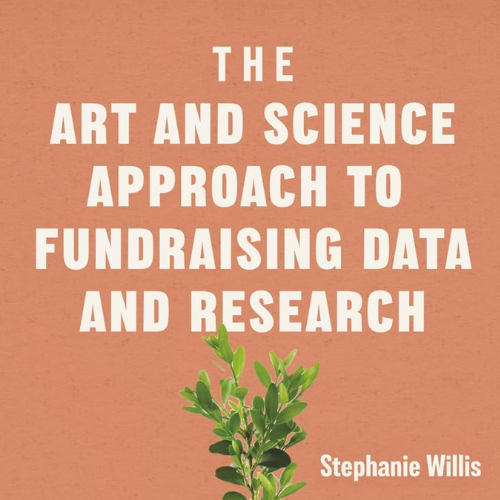
All registrants will receive a digital copy of The Art and Science Approach to Data and Fundraising (Amplify Publishing Group, 2026).
Full participation in Prospect Research Bootcamp is applicable for 8 points in Category 1.B – Education of the CFRE International application for initial certification and/or recertification.
Campaign Staffing: Where to Start?

Story House* was a mid-sized literary nonprofit with a $3 million annual budget and no permanent home. Readings took place in rented auditoriums, while writing workshops were held in libraries and community centers. The organization worked out of a small house adapted for office use, a deliberately modest arrangement that reflected a focus on directing resources toward programs rather than facilities.
The staff was lean but capable: Miguel, executive director; Dana, director of development; Aisha, director of programs; and Dinesh, administrative assistant. This small but mighty team delivered a full calendar of readings, workshops, and community programs while managing fundraising and partnerships. The organization’s ability to achieve outsized results had become part of its identity.
Over time, however, the limits of working in rented spaces became harder to ignore: rental costs added up, scheduled events were sometimes vulnerable to last-minute changes, and participation was often constrained by the limited number of rental spaces for classes and the limited availability of spaces for readings.
Even more concerning was the fact that workshops would fill after the first week of registration, leaving plenty of unmet demand. People had been asking for years about additional programs for children and teens. It had become apparent that the organization needed to grow.
Leadership began to see that with an appropriately sized home of its own, Story House could reach more people, schedule more classes and programs, and achieve greater impact. To achieve this ambition, it became clear that a new permanent home with a 200-seat auditorium, three classrooms, a flexible space for smaller readings, receptions, and youth programs, and additional office space to accommodate more staff as the organization grew would be needed. Estimates placed the cost and activation of such a facility at $25 million.
They knew they would need a capital campaign to realize this ambition. What remained uncertain was how a staff this small could realistically take on the extra work that a campaign would require while at the same time keeping up with the demands of meeting annual fundraising goals.
Staffing Models for Organizations of All Sizes
For many organizations, one of the most challenging aspects of a capital campaign is finding the staff time required to manage daily campaign work. CFA Senior Manager of Campaigns Anne Spears notes that “organizations consistently underestimate how much time campaign work actually takes. Campaigns do not replace day-to-day fundraising; they sit on top of it, multiplying meetings, follow-ups, and coordination.”
Campaigns introduce new demands that require sustained attention behind the scenes, often pulling leadership away from donor-facing work. “When fundraisers are entering data, stuffing envelopes, or printing name tags,” Anne explains, “they’re not building relationships. And that’s where campaigns can stall.” It’s important to carefully assess the skills and hours needed to do campaign work and plan accordingly. This will look different for different-sized organizations.
Large nonprofits may be in a position to hire part-time or full-time staff to support campaign work. Before adding additional fundraisers, however, it is important to recognize that donor-facing roles are a long-term investment. It can take six months to a year for a new major gifts officer to build the relationships and trust needed to make asks. Given the time constraints of a campaign, organizations may see faster results by hiring supporting roles that free existing frontline fundraisers to spend more time with donors.
Small and mid-sized organizations often need to be creative, using a combination of strategies to support campaign work. Some rely on volunteer fundraisers, though this approach still requires staff coordination to organize outreach, track progress, and support volunteers as they engage donors. Others invest in data or administrative roles that handle tracking, scheduling, and reporting, allowing experienced fundraisers to stay focused on donor relationships and solicitations. Still other organizations resort to shared staffing, where team members divide their time between campaign responsibilities and their regular roles. Anne observes, “The shared staffing model works best when time for campaign work is protected, and individuals are accountable for specific tasks. With dedicated time and clear accountability, it’s less likely that campaign work will get pushed aside.”
The Cost of Being Understaffed
Story House was initially reluctant to hire more personnel. They were accustomed to doing more with less, and as they reviewed their expenses and considered their budget, staffing felt like a cost center, while construction was viewed as the real investment. At the same time, every member of the team had little capacity to take on extra tasks. For any of them to assume more responsibility would be completely unsustainable.
Anne sees this dynamic often and reminds clients that “Burnout is never worth it. In reality, understaffing a campaign is expensive because it makes campaigns last longer. And longer campaigns cost more.” Delays compound over time. Construction prices can rise, consultant contracts extend, and staff turnover can reset progress. Anne points out, “Time and money are inseparable in a campaign. Investing early in appropriate staffing is not a luxury. It’s actually an act of financial stewardship.”
Deciding What Roles to Hire
Story House needed more hands and could afford to make only one new hire, making the decision consequential. What emerged was the need for a development coordinator: someone responsible for executing the administrative tasks required to support fundraising strategies set by leadership. This role would handle gift processing, scheduling, reporting, prospect tracking, materials management, and follow-up. Rather than adding another major gift officer and waiting months for full productivity, the organization chose to invest in a position that freed leadership to focus on donor relationships.
Anne sees this decision point frequently. “Every organization is different, so it’s hard to generalize,” she says, “but in most cases, the first hire is not another gift officer. Often, what’s needed first is someone who takes the administrative weight off the people doing that work.” When organizations make that decision early, campaign activity becomes more systematic and less reactive.
What Lasts Beyond the Campaign
Importantly, Story House understood the new development coordinator role as an investment beyond the campaign itself. Once the campaign was complete, the development coordinator would remain on staff, with their role evolving as future needs became clearer.
When campaigns are staffed thoughtfully, their impact extends well beyond the fundraising goal. “The best outcome of a campaign,” Anne reflects, “is coming out the other side with a deeper pool of committed donors and a healthier organization.” For Story House, staffing decisions would shape not only the success of the campaign but the strength of the organization as it carried its mission into the future.
Partner With Us
At their core, campaign staffing decisions are not just about adding people. They are about protecting time, focus, and momentum. Through a development assessment or feasibility study, CFA helps organizations see clearly whether their staffing can support their fundraising ambitions, where gaps are likely to appear, and how to address them in ways that fit both budget and culture.
Contact us to find out how the right staffing decisions can strengthen your campaign and your organization for years to come.
*Disclaimer: Client confidentiality is paramount in our work with each and every organization. The story in this article is fiction, based on real situations drawn from CFA’s broad experience serving nonprofit organizations.
Leslie Cronin, Senior Manager of Strategic Communications
Leslie Cronin comes to Creative Fundraising Advisors with broad experience in education and nonprofits. Early in her career, she taught English, composition, and creative writing at selective independent schools, colleges, and universities. In 2005, she became Senior Development Writer at the Museum of Fine Arts, Houston, overseeing all aspects of communication coming out of the museum’s development department including exhibition descriptions, grant applications, correspondence with major donors, acknowledgements, and event invitations.
Leslie later brought her experience in education and fundraising to a new role, serving first as board member and then vice president of the board of an independent school in Houston, Texas. During her tenure, she was instrumental in the formulation of the school’s 20-year plan, including its successful accreditation as an International Baccalaureate institution. She worked closely with a wide variety of consultants on urban planning, architecture, and a fundraising feasibility study. Her insight into the client experience helps her every day in her work for CFA.
As Senior Manager of Strategic Communications, Leslie helps CFA’s clients shape their campaigns for maximum impact and results by leading case development workshops, writing compelling case summaries, and crafting powerfully persuasive campaign collateral. Additionally, Leslie manages CFA’s brand voice by developing content for the firm’s resource library and overseeing the editorial calendar.
Leslie believes nonprofits have the power to change the world. In crafting cases for support, she writes as a committed advocate for each client and their goals. Leslie holds two Masters degrees, one an MFA from the Iowa Writers’ Workshop, the other an MA in English Literature from Temple University. She is mother to two grown children, a voracious reader, and an amateur equestrian. She lives on Cape Cod with her husband, author Justin Cronin, and their rescue dog, Lonesome Dove.
Aligning Fundraising & Finance Teams

Building a Harmonious Relationship Between Fundraising & Finance Teams:
A Story of Unified Revenue
At a regional children’s museum known for its hands-on approach to learning, creativity had always been front and center. Children built bridges from wood and wire, experimented with pigments and textiles, and explored inventors’ labs designed for curious minds of all ages. The museum’s revenue model was as dynamic as its galleries: memberships, gift shop and café sales, tuition-based craft and maker space classes, annual giving, and major gifts from committed stakeholders.
Behind the scenes, however, the museum had been grappling with a challenge familiar to many nonprofits—one that rarely appeared in program evaluations or visitor surveys. Development and Finance were operating with two different pictures of revenue.
When Idris* joined the museum as director of development, he stepped into a fundraising operation that was outwardly successful but internally fragmented. His predecessor had been an exceptional fundraiser, adept at cultivating relationships and closing gifts. Communication with the Finance team, however, had been inconsistent. Reconciliation was frequently postponed for months and, in some cases, years, turning the close of the fiscal year into an exhausting ordeal.
Leila*, the museum’s chief financial officer, had experienced the consequences firsthand. As the executive responsible for financial systems, internal controls, and reporting, she understood that when Development and Finance worked in silos, clarity suffered. Her goal was not to slow fundraising or introduce unnecessary bureaucracy. She wanted one shared, accurate picture of revenue—something the organization could trust for planning, governance, and accountability.
Two Departments, Two Versions of the Truth
Development tracked revenue through their fundraising database: memberships, donations, grants, and multi-year pledges. Finance focused on deposits into the bank account. Both perspectives were valid. Both were incomplete on their own.
Admission revenue flowed through online payments and the front desk. Tuition for maker space classes was processed through a separate registration platform. Gift shop and café sales posted daily. Major gifts arrived by mail, wire, or donor-advised funds. Without regular alignment, unresolved discrepancies accumulated. Development often believed revenue was ahead of pace, while Finance saw delays in cash flow. Finance flagged variances that Development struggled to explain weeks—or months—later.
CFA Head of Client Success and Principal Joanne Curry is all too familiar with this scenario: “This is one of the most common operational challenges we see. Development and Finance are each doing their jobs well, but they’re looking through different windows of the same story. Until those views are merged, confusion is inevitable.”
- Check out a recording of CFA’s Finance for Fundraisers webinar for more tips from Joanne.
Starting with Purpose, Not Blame
Rather than focusing on what had gone wrong, Idris and Leila chose to reset the relationship between their departments. The museum had grown in complexity, and its internal systems had not kept pace. What once worked was no longer sufficient. The two aligned around a simple principle: there needed to be one revenue story, jointly owned.
To design a system that reflected reality, they consulted broadly. Front desk staff described how admission tickets were processed during peak attendance and on weekends. Educators explained the seasonal nature of class enrollment and tuition payments. Operations staff outlined the daily logistics of mail handling. The bookkeeper identified where delays and confusion most often occurred. These conversations grounded the solution in practice rather than theory. The goal was not perfection, but consistency, transparency, and shared understanding.
Building a Daily Revenue System
The system Idris and Leila implemented shifted reconciliation from a periodic crisis to a daily discipline. All revenue—gifts, memberships, tuition, shop sales, and café receipts—was logged daily in a centralized revenue log. Staff responsible for opening mail or processing transactions recorded payments immediately, following clear, written procedures.
Development entered all philanthropic revenue into the database promptly, using consistent coding for funds, restrictions, and appeals, so donor intent was captured accurately from the start.
Finance reviewed daily deposits and compared them against the revenue log and Development entries. Discrepancies were identified the same day. A missing check, a delayed deposit, or a coding error could be resolved while details were still fresh.
Idris and Leila held brief, standing check-ins—often just 10 minutes—to confirm that daily totals aligned. These conversations were operational and collaborative, focused on accuracy rather than fault-finding.
Joanne points out, “Daily reconciliation takes the emotion out of the process. When issues surface quickly, they’re easy to fix. When you wait weeks or months, reconciliation can become personal, political, and unnecessarily painful.”
Checks, Balances, and Oversight
Strong internal controls were built into every step of the process. Revenue was handled collaboratively from start to finish, with responsibilities shared across teams to ensure accuracy, transparency, and accountability at every step. These checks and balances protected both the organization and its staff. They reduced risk, strengthened audit readiness, and reinforced a culture of shared responsibility.
Leila served as the owner of this process, responsible for ensuring that Development and Finance remained aligned and that the system functioned as a single, integrated whole. Procedures were documented, and responsibilities cross-trained, so institutional knowledge would not disappear with staff turnover. The system was also designed to scale, accommodating growth in programming, attendance, and fundraising without breaking down.
The Benefits of One Shared Revenue Story
The results were immediate. Month-end closes became smoother and faster. Finance committee meetings shifted from troubleshooting discrepancies to discussing strategy. Development reports aligned with financial statements, strengthening credibility with leadership and the board.
Idris gained the ability to spot trends early. When annual appeals slowed or membership renewals softened, he could adjust outreach before small issues became serious challenges. Leila gained clearer insight into cash flow, improving forecasting and financial decision-making.
Communication improved across the organization. Staff understood how their daily work affected financial health. The board received consistent, reliable information, reinforcing trust.
Joanne adds that “When Development and Finance are aligned, there are no surprises. You can communicate confidently with the finance committee, the development committee, and the board as a whole—and you avoid the impossible task of reconciling a year’s worth of activity all at once.”
From Annual Ordeal to Everyday Practice
By year’s end, reconciliation was no longer feared. It had become routine—embedded in daily operations rather than deferred to a stressful deadline. For the children’s museum, the outcome went beyond cleaner books. The organization gained confidence that every dollar entrusted to it was accounted for, respected, and put to work expanding creativity, curiosity, and learning for the community it served.
Partner with Us
Do your Development and Finance departments struggle to align? CFA’s Development Assessment is specifically designed to help organizations evaluate how their fundraising strategy, staffing, systems, and cross-department communication function in practice, including how revenue is tracked, reported, and reconciled. By identifying gaps and recommending practical improvements, the Assessment strengthens internal coordination, improves confidence in reporting, and helps leadership and boards make better-informed decisions.
Contact us to find out how a Development Assessment can help your organization build one clear, shared revenue story.
*Disclaimer: Client confidentiality is paramount in our work with each and every organization. The story in this article is fiction, based on real situations drawn from CFA’s broad experience serving nonprofit organizations.
Leslie Cronin, Senior Manager of Strategic Communications
Leslie Cronin comes to Creative Fundraising Advisors with broad experience in education and nonprofits. Early in her career, she taught English, composition, and creative writing at selective independent schools, colleges, and universities. In 2005, she became Senior Development Writer at the Museum of Fine Arts, Houston, overseeing all aspects of communication coming out of the museum’s development department including exhibition descriptions, grant applications, correspondence with major donors, acknowledgements, and event invitations.
Leslie later brought her experience in education and fundraising to a new role, serving first as board member and then vice president of the board of an independent school in Houston, Texas. During her tenure, she was instrumental in the formulation of the school’s 20-year plan, including its successful accreditation as an International Baccalaureate institution. She worked closely with a wide variety of consultants on urban planning, architecture, and a fundraising feasibility study. Her insight into the client experience helps her every day in her work for CFA.
As Senior Manager of Strategic Communications, Leslie helps CFA’s clients shape their campaigns for maximum impact and results by leading case development workshops, writing compelling case summaries, and crafting powerfully persuasive campaign collateral. Additionally, Leslie manages CFA’s brand voice by developing content for the firm’s resource library and overseeing the editorial calendar.
Leslie believes nonprofits have the power to change the world. In crafting cases for support, she writes as a committed advocate for each client and their goals. Leslie holds two Masters degrees, one an MFA from the Iowa Writers’ Workshop, the other an MA in English Literature from Temple University. She is mother to two grown children, a voracious reader, and an amateur equestrian. She lives on Cape Cod with her husband, author Justin Cronin, and their rescue dog, Lonesome Dove.
Good Reads for Greater Impact: From What Is to What If
CFA’s quarterly book review guides readers toward sources that will help them get better returns on their fundraising efforts.
From What Is to What If—Imagination for a New Year, and a New Kind of Leadership
As nonprofit leaders step into the new year, the desire to imagine a better future will very likely meet the hard edges of reality. Economic uncertainty continues to ripple across communities. Many organizations are feeling the strain of cautious philanthropy, unpredictable markets, and donors managing competing priorities. The pace of current events can leave even the most optimistic leaders feeling hesitant.
In these moments, imagination can feel like a luxury. But as Rob Hopkins argues in From What Is to What If, imagination is actually a necessity—especially now.
Hopkins, co-founder of the Transition Network, makes a compelling case that imagination is one of society’s most undervalued resources. He defines it not as escapism, but as the essential starting point for any meaningful change. When our imaginative capacity weakens—through fatigue, fear, distraction, or simply the pressure of daily responsibilities—our ability to envision alternatives narrows. The temptation to default to incremental adjustments rather than bold solutions is strong.
Fundraising is harder in moments of uncertainty. Strategic planning becomes more cautious. Teams lean heavily on what is proven, familiar, and efficient. Yet the missions nonprofits pursue—environmental recovery, community health, educational opportunity, artistic expression, food security, scientific progress—require the opposite. They require courage, creativity, and the willingness to imagine outcomes that do not yet exist.
Hopkins’ book reminds us that this imaginative capacity is not just individual but collective. It is strengthened through community, collaboration, and shared purpose. Through case studies and stories from around the world, he shows how imagination can reshape civic life, revitalize neighborhoods, and inspire people to work together despite differences. These examples feel urgent in a year when many communities are searching for common ground and common good.
At CFA, we see inspiring innovations every day in the organizations we serve. Nonprofits normalize the common good. They stand in the vanguard of social change, tirelessly working toward a brighter, happier, more beautiful, and more equitable future—often long before the rest of society catches up. Even during economic headwinds, nonprofits persist in planting seeds for a better tomorrow. Their commitment is one of the most powerful expressions of civic imagination we have.
And this is precisely why Hopkins’ book is such a strong companion for planning the year ahead. It asserts that imagination is not naïve—it is strategic. It fuels the bold visions that galvanize donors, shape campaigns, and attract partners. It strengthens our capacity to see beyond short-term challenges and to articulate compelling, hopeful futures that people want to invest in.
As we enter 2026, From What Is to What If offers a timely invitation: to keep that imaginative muscle strong, even when circumstances make it difficult. It reminds us to stay grounded in reality without being confined by it. And to remember that the futures nonprofits imagine—healthier communities, stronger ecosystems, more just and connected societies—are the very futures the world needs now more than ever.
Leslie Cronin, Senior Manager of Strategic Communications
Leslie Cronin comes to Creative Fundraising Advisors with broad experience in education and nonprofits. Early in her career, she taught English, composition, and creative writing at selective independent schools, colleges, and universities. In 2005, she became Senior Development Writer at the Museum of Fine Arts, Houston, overseeing all aspects of communication coming out of the museum’s development department including exhibition descriptions, grant applications, correspondence with major donors, acknowledgements, and event invitations.
Leslie later brought her experience in education and fundraising to a new role, serving first as board member and then vice president of the board of an independent school in Houston, Texas. During her tenure, she was instrumental in the formulation of the school’s 20-year plan, including its successful accreditation as an International Baccalaureate institution. She worked closely with a wide variety of consultants on urban planning, architecture, and a fundraising feasibility study. Her insight into the client experience helps her every day in her work for CFA.
As Senior Manager of Strategic Communications, Leslie helps CFA’s clients shape their campaigns for maximum impact and results by leading case development workshops, writing compelling case summaries, and crafting powerfully persuasive campaign collateral. Additionally, Leslie manages CFA’s brand voice by developing content for the firm’s resource library and overseeing the editorial calendar.
Leslie believes nonprofits have the power to change the world. In crafting cases for support, she writes as a committed advocate for each client and their goals. Leslie holds two Masters degrees, one an MFA from the Iowa Writers’ Workshop, the other an MA in English Literature from Temple University. She is mother to two grown children, a voracious reader, and an amateur equestrian. She lives on Cape Cod with her husband, author Justin Cronin, and their rescue dog, Lonesome Dove.
Transformational Client Moments of 2025

(Listed in chronological order)
- United Theological Seminary announces the creation of the Wilson Yates Chair in Theology and the Arts, a new, tenure-track, faculty position made possible by gifts from United friends, alums, and former faculty. (March 6, 2025)
- San Francisco Ballet receives gift from Shelby and Frederick Gans to name the Music Director and Principal Conductor position. (June 9, 2025)
- North Carolina Museum of Art launches the $75 million Reimagining the Possible campaign. (June 16, 2025)
- The Entertainment Community Fund concludes the ESSENTIAL campaign, surpassing its three-year goal by raising $164 million. (June 26, 2025)
- Lincoln Center Theater receives gift from Board Chair Kewsong Lee and Zita Ezpelet to name the Artistic Director position. (July 2, 2025)
- Every Meal completes the $13.4 million Setting the Table campaign, nearly doubling its square footage and expanding its capacity to end child hunger. (October 9, 2025)
- Neighborhood House launches the $25 million Hope in Action campaign. (October 13, 2025)
- The Nature Conservancy protects 12,000+ acres of Minnesota’s Northwoods – its largest land acquisition in Minnesota in 25 years. (October 14, 2025)
- The Friends of the Saint Paul Public Library receives a $2 million grant from the Knight Foundation, the largest private donation the organization has ever received. (December 21, 2025)
Data Health for Nonprofits

A Wake-Up Call Over Breakfast
Kendra* is the development director of a regional food bank. Recently, she met a board member, Luisa, for breakfast. They were chatting the way they always did at their breakfast meetings when Luisa set down her coffee cup with a sigh. “There’s something I need to show you,” she said, pulling a stack of three letters out of her handbag. “I got three appeals from the food bank this quarter,” she said gently. “Two went to my home and one to my office, and this one,” she said, presenting the envelope to Kendra, “still has me listed as Mrs. Walker.” The name of Luisa’s former husband made them both wince.
Concerned, Kendra took a more careful look at the stack. The letters were beautifully written and personalized, but two-thirds of the data that went into them was flat-out wrong. Luisa was a committed supporter, and Kendra knew she would be in for the long haul, but as the situation sank in, Kendra’s stomach dropped. Duplicate records, outdated names, and wrong addresses weren’t just clerical errors—they were signs of a much larger problem: wildly inaccurate data. Kendra apologized profusely, and Luisa was so gracious, but Kendra knew that there were more errors out there that wouldn’t be so kindly received.
Back at the office, Kendra went straight to see Youssef, the food bank’s new development data coordinator. He’d been hired two weeks earlier, and his workspace was only halfway unpacked. “I just had the most mortifying conversation with Luisa Reyes,” she told him. She explained the whole situation, concluding with, “Our data is a mess.”
Youssef nodded, unsurprised. “To be honest, I knew this would be the first issue we needed to solve. Not to worry. I’ve started an audit,” he said. “There’s a lot to untangle: out-of-date records, partial merges, inconsistent fields; but it’s fixable. We just need to review and clean up about 30,000 records. Kendra’s jaw dropped, “That’s a ton of work! How will we do that before the November direct mail appeal?” Youssef smiled, “It’s okay! I’ll triage the cleanup, starting with our most important stakeholders and working our way through the list from there. This will not be just a one-time sweep; what I’m implementing is a plan for ongoing data health.”
Data Health, and Why It Matters
“Data health” (sometimes called “data hygiene”) refers to the condition of an organization’s data—its accuracy, consistency, and usability. Bad data erodes donor trust and directly undermines the sophisticated tools nonprofits rely on for the science of fundraising. When names, addresses, or giving histories are inaccurate, data screening and predictive modeling cannot function properly. Reliable screening depends on clean, standardized fields to match records against wealth indicators, philanthropic databases, and demographic trends. When the data is in disarray, an organization will struggle to identify important prospects, analyze giving potential, or build a base of evidence to drive strategy. Clean data, on the other hand, strengthens every part of fundraising: screening, segmentation, communications, stewardship, and strategic planning.
Creative Fundraising Advisors’ (CFA) Data & Research team—Dan Alberti, Senior Manager, Data Solutions, and Stephanie Willis, Senior Manager, Prospect Development—regularly helps nonprofits identify and correct systemic data issues.
“Think of data health like tending a garden,” says Dan. “You can’t expect to have healthy plants or an abundant harvest if you don’t routinely fertilize, water, and weed. Consistent inputs—accurate entries, standardized fields, and regular cleanups—build a database that supports the whole organization’s vitality. Conversely, if you’re not routinely checking and cleaning the data, small issues can quietly grow into big credibility problems.”
As both Kendra and Youssef had predicted, the problem with incorrect data at the food bank wasn’t isolated. When Youssef really dug into his audit, he discovered inconsistencies in salutations, conflicting household records, and out-of-date contact preferences. In many cases, the team was sending multiple different versions of an appeal to the same donors, sometimes at multiple addresses. Beyond embarrassment, that duplication was wasting resources—printing, postage, and valuable staff time.
Diagnosis and First Steps
The first phase of Youssef’s cleanup plan was discovery. He exported all donor records into a master spreadsheet so he could see the whole landscape at once—filtering for duplicates, blank fields, and irregular entries before making changes inside the CRM. He also mapped the source of each list: online donations, mailed checks, event attendees, and volunteer sign-ups. “We needed to know where the errors were entering the system,” he explained.
The “flat view” (or spreadsheet) revealed distinct patterns. Once he isolated the problem areas, Youssef began a systematic cleanse: deduplication, standardization of names and addresses, verification of email formats, and cross-referencing gift histories. Then he scheduled recurring maintenance tasks: a monthly duplicate check, a quarterly data-entry review, and an annual full-file audit.
Pro Tips for Data Health
1. Establish clear data entry rules.
Youssef created a written “data manual,” defining every field and abbreviation. Then, he drafted clear instructions on how to record household names, salutations, gift types, and notes. This living document became a training tool for anyone touching the database. “The more consistent your inputs,” says Dan, “the cleaner your outputs. Data rules aren’t red tape; they’re the language everyone needs to speak to keep information coherent.”
2. Schedule regular reviews.
The food bank built a monthly data health routine: running duplicate reports, checking for blanks in key fields, and using national address-verification tools. “Good data hygiene is never finished,” Stephanie emphasizes. “Every new record potentially contains multiple opportunities for error. Healthy databases have ongoing cleaning habits baked into the workflow.”
3. Align systems and people.
Stephanie also points out that data health isn’t just a technical task—it’s cultural. “The most successful organizations are those that build shared responsibility for data accuracy across departments,” she says. “If your program staff, gift processors, and fundraisers all understand how their entries affect the whole system, you’ll have fewer errors and better decisions. Clean data is everyone’s job.”
When Good Data Builds Donor Trust
As the cleanup progressed, Youssef and Kendra began to see immediate benefits. With duplicates resolved, mailings became more cost-efficient. Merge fields populated correctly, and acknowledgment letters used the right names and salutations. Kendra thought she noticed something else: the donor tone was improving. “When people get communications that clearly recognize them, they feel known,” she said. “Even a small fix—like addressing someone by their chosen name—signals respect and professionalism.”
To measure progress, Youssef created a simple dashboard showing three metrics: duplicate rate, percentage of complete records (including valid email and address), and average turnaround time for gift acknowledgment. Within three months, duplicates dropped by 40%, and the team could process gifts and send thank-yous two days faster.
From Data Health to Data Confidence
By spring, the food bank’s next direct mail appeal ran flawlessly. Every letter was correctly addressed, and no donor received more than one. When Luisa, the board member who first pointed out the problem, received her spring appeal, she called Kendra—not to complain, but to congratulate. “This one’s perfect,” she said. “Nice job cleaning house, and please give Youssef my thanks.”
“Clean data is a form of stewardship,” notes Stephanie. “It shows donors that you value accuracy, respect their information and preferences, and run an organization that is responsible and trustworthy. When you’re committed to donor-centered, relationship-based fundraising, you can’t allow sloppy data to undermine the trust you’ve worked so hard to build. ”
The Strategic Advantage of Clean Data
Healthy data doesn’t just prevent errors—it empowers better strategy. With reliable records, Kendra could segment appeals by giving behavior and communication preferences, identify lapsed donors with confidence, and generate reliable retention reports. When she presented to the board at fiscal year’s end, her charts were more credible than ever before.
“Data health might not sound glamorous,” Dan says, “but it’s the foundation of everything else—storytelling, stewardship, analytics, and campaign success. Without it, you’re flying blind.”
The positive ripple effect extended beyond development; the food bank program staff could now connect donor support with impact and service metrics more reliably. Finance could reconcile reports faster. Communications could personalize messages accurately across channels. Kendra and Youssef had transformed what started as a breakfast embarrassment into an organizational triumph. “I used to dread pulling lists,” Kendra admitted. “Now I actually trust what’s in our system. Clean data gives you confidence—it’s like seeing clearly after years of fog.”
Partner with Us
Is your nonprofit’s data helping or hindering your mission? Do duplicate records, missing information, or inconsistent reports make fundraising harder than it should be? Take CFA’s data self-assessment to see if your data systems need attention. CFA helps organizations audit, organize, and sustain healthy databases that strengthen trust and drive fundraising strategy. Our experts can audit your current system, design routines for long-term maintenance, and train your staff to keep information accurate across every department. Contact CFA today to learn how strong data health can support your organization’s growth and impact.
*Disclaimer: Client confidentiality is paramount in our work with each and every organization. The story in this article is fiction, based on real situations drawn from CFA’s broad experience serving nonprofit organizations.
Leslie Cronin, Senior Manager of Strategic Communications
Leslie Cronin comes to Creative Fundraising Advisors with broad experience in education and nonprofits. Early in her career, she taught English, composition, and creative writing at selective independent schools, colleges, and universities. In 2005, she became Senior Development Writer at the Museum of Fine Arts, Houston, overseeing all aspects of communication coming out of the museum’s development department including exhibition descriptions, grant applications, correspondence with major donors, acknowledgements, and event invitations.
Leslie later brought her experience in education and fundraising to a new role, serving first as board member and then vice president of the board of an independent school in Houston, Texas. During her tenure, she was instrumental in the formulation of the school’s 20-year plan, including its successful accreditation as an International Baccalaureate institution. She worked closely with a wide variety of consultants on urban planning, architecture, and a fundraising feasibility study. Her insight into the client experience helps her every day in her work for CFA.
As Senior Manager of Strategic Communications, Leslie helps CFA’s clients shape their campaigns for maximum impact and results by leading case development workshops, writing compelling case summaries, and crafting powerfully persuasive campaign collateral. Additionally, Leslie manages CFA’s brand voice by developing content for the firm’s resource library and overseeing the editorial calendar.
Leslie believes nonprofits have the power to change the world. In crafting cases for support, she writes as a committed advocate for each client and their goals. Leslie holds two Masters degrees, one an MFA from the Iowa Writers’ Workshop, the other an MA in English Literature from Temple University. She is mother to two grown children, a voracious reader, and an amateur equestrian. She lives on Cape Cod with her husband, author Justin Cronin, and their rescue dog, Lonesome Dove.
Preparing Your Board for a Campaign

An Independent High School With an Ambitious Strategic Plan
Clayton* is a seasoned chief development officer at an independent high school that is nearing its 100th anniversary. The school’s board of directors recently adopted a strategic plan, gathering input from students, faculty, parents, alumni, and school leaders. Clayton thinks of this board as something of a dream team: generous, committed, and equipped with a broad range of skills and perspectives. Several members are alumni who credit the school with shaping their lives. Evelyn, the board chair, is an alumna with a grandchild enrolled. Her family has attended the school for generations.
The recently created strategic plan sets the school on a path to become recognized as the leading independent high school in the region by achieving four big but attainable goals:
- Bolster academics by hiring teachers with advanced degrees to mentor students interested in doing original research
- Improve college placement by hiring senior staff members in college counseling and revamping the counseling process
- Create a top-tier high school athletics program by building a new sports complex and investing in dedicated coaching staff
- Expand financial aid so the most promising students can attend regardless of their ability to pay.
The school had never before undertaken such a wide-ranging plan, tackling scholarship, college placement, athletics, and financial accessibility.
Questions that Arise when Boards Contemplate Campaigns
At the board’s annual retreat, Clayton and Priya, the head of school, presented a blueprint to operationalize the strategic plan. Every initiative was a logical next step in the school’s mission, but those initiatives would require significant resources. Clayton and Priya made a compelling case that the only way the strategic plan could be realized was to launch a comprehensive campaign. As they laid out their case for a campaign, there were many questions.
The board chair, Evelyn, said that in her work on another board, a consulting firm had been hired to conduct a feasibility study that provided reliable analytics on how much could be raised, a range of gifts table based on the organization’s own data, recommendations on staffing, and a tested case for support that later evolved into beautiful campaign collateral. She was enthusiastic about the prospect of a major fundraising campaign at the school, but proposed hiring seasoned fundraising consultants to map the steps to success. Everyone agreed it would be wise to get professional support for this epic project. Clayton knew that success would also hinge on something beyond numbers and projections: the active participation of the board itself. Evelyn invited discussion.
One alumna leaned forward: “How can we help? Are we expected to fundraise ourselves?” Another asked if the board would be expected to solicit their friends. A third trustee raised a concern: “When I was on the historical society board, our campaign plateaued halfway through. How do we avoid that?”
A Wide Range of Roles for Board Members to Play
Clayton explained that if the board elected to go ahead with a campaign, each member’s participation would begin with a personal commitment. “Every trustee will be asked to make a gift that is personally meaningful to them,” he said. “Your leadership in giving will set the tone for the entire community.” Then he addressed the role of trustees in fundraising: “Not everyone is required to share contacts or make asks,” he assured them. “If you feel compelled to participate in fundraising, we’ll be happy to provide training and pair you with staff or fellow trustees. What we would more likely ask is that you open doors, make introductions, and share your story of the school with others.” His answer seemed to ease any anxiety about “cold calling.”
CFA Founder and CEO Paul Johnson reinforces Clayton’s point about board participation: “When trustees make a gift that is meaningful to them, they not only fund the campaign—they model a culture of philanthropy. Gifts from leadership are powerfully persuasive for other donors, but beyond giving, board members can help in a wide variety of ways that fit with their strengths and busy schedules. They can serve as ambassadors in the community, invite prospects on a tour to meet staff and leadership, host an event, or join the campaign committee if they wish to play a bigger role.”
Sharing the Vision Builds Trustee Confidence
Though the board was still in an investigative mode, Clayton knew it wouldn’t hurt for them to strengthen their skills in telling stories of the school’s impact and linking those narratives to their own values and life experiences. He distributed a one-page case statement for each of the initiatives and asked trustees to pair up. Each pair took turns presenting an initiative, linking it to a personal story, and practicing how they might share it with a colleague or friend.
At first, the room buzzed with nervous energy. Some trustees stumbled; others read from the handout. But as the minutes passed, voices grew stronger, and stories more inspirational. One alumna who was an athlete recalled life lessons she’d learned about leadership and noted that the sports complex would enable many more athletes to develop those skills. Another trustee, a scholarship recipient, spoke of how financial aid had been a life-changing opportunity for him. By the time Clayton asked for volunteers to tell their stories to the whole group, several were eager to share. In just 20 minutes, abstract initiatives had become heartfelt narratives.
Communication and Celebration Create a Cohesive Board and a Successful Campaign
With energy levels high after the storytelling session, Clayton looped back to the question about plateaus. On a whiteboard, he sketched the arc of a typical campaign: early lead gifts, a mid-campaign lull, and a public push at the end. “Let’s talk about this middle plateau,” he said. “What would it feel like to be halfway through and struggling?”
Trustees spoke of discouragement, doubt, and the temptation to scale back. Then, Clayton asked them to collaborate on designing countermeasures. They came up with hosting centennial-themed alumni gatherings, running feature articles on student scholarship in the alumni magazine, and sharing monthly updates with major stakeholders to regain momentum.
While Clayton felt it was prudent to let the board consider how they might handle a setback, he also felt it was important for them to know a campaign would also bring wins– like new faculty hires, new funding for students in need, and breaking ground on the new sports center.
To illustrate this, he returned to the campaign timeline on the whiteboard and sketched in milestones worth celebrating: principal gifts, crossing the halfway mark, and the public launch. He invited trustees to imagine how they would recognize donors and one another along the way. Ideas ranged from receptions to spotlight videos on social media to thank-you notes from students. The mood brightened as trustees envisioned celebrating together.
Paul Johnson encapsulates campaign dynamics: “Plateaus are inevitable. A campaign is a marathon. As the months unfold, there are triumphs and challenges, and sometimes there are moments when not a lot happens. If there is a lull in fundraising, communication is imperative, so the group can work together to get back on track. Similarly, when things are going great, celebration is fuel. Recognition for individual contributions and shared achievements creates energy and momentum. When CFA is providing campaign counsel to a nonprofit, we typically advise campaign committees to create a fundraising dashboard to easily track and share progress. This helps to keep the relevant players apprised.”
The Results
By the end of the retreat, Clayton was seeing a visible shift. Trustees who didn’t know a lot about campaigns now seemed more comfortable with the idea. They had practiced telling the story, anticipated challenges, brainstormed solutions, and realized that there would be victories large and small along the way.
The campaign still had a long road ahead—beginning with the feasibility study—but together they had taken the first steps toward charting the school’s path into the next century.
Paul Johnson offers a final observation: “Every organization has unique strengths and challenges going into a campaign. Very few have all their ducks in a row. At CFA, we meet clients where they are, tailor our advice, and guide them toward customized strategies and solutions. We work with clients and their boards to build a bridge between their present-day challenges and a visionary, empowered, and impactful future.”
Partner with Us
Are you preparing for a campaign? Do you wonder how to fully engage your trustees? CFA has guided nonprofits nationwide in equipping boards for campaign success. Contact CFA today to learn how we can help.
*Disclaimer: Client confidentiality is paramount in our work with each and every organization. The story in this article is fiction, based on real situations drawn from CFA’s broad experience serving nonprofit organizations.
Leslie Cronin, Senior Manager of Strategic Communications
Leslie Cronin comes to Creative Fundraising Advisors with broad experience in education and nonprofits. Early in her career, she taught English, composition, and creative writing at selective independent schools, colleges, and universities. In 2005, she became Senior Development Writer at the Museum of Fine Arts, Houston, overseeing all aspects of communication coming out of the museum’s development department including exhibition descriptions, grant applications, correspondence with major donors, acknowledgements, and event invitations.
Leslie later brought her experience in education and fundraising to a new role, serving first as board member and then vice president of the board of an independent school in Houston, Texas. During her tenure, she was instrumental in the formulation of the school’s 20-year plan, including its successful accreditation as an International Baccalaureate institution. She worked closely with a wide variety of consultants on urban planning, architecture, and a fundraising feasibility study. Her insight into the client experience helps her every day in her work for CFA.
As Senior Manager of Strategic Communications, Leslie helps CFA’s clients shape their campaigns for maximum impact and results by leading case development workshops, writing compelling case summaries, and crafting powerfully persuasive campaign collateral. Additionally, Leslie manages CFA’s brand voice by developing content for the firm’s resource library and overseeing the editorial calendar.
Leslie believes nonprofits have the power to change the world. In crafting cases for support, she writes as a committed advocate for each client and their goals. Leslie holds two Masters degrees, one an MFA from the Iowa Writers’ Workshop, the other an MA in English Literature from Temple University. She is mother to two grown children, a voracious reader, and an amateur equestrian. She lives on Cape Cod with her husband, author Justin Cronin, and their rescue dog, Lonesome Dove.
Keeping Your Development Team Strong: A Case Study in Retention

When Ellen* became chief development officer for a performing arts center with a $20 million annual budget, she inherited a talented, high-performing fundraising team. The organization’s donor base was broad and loyal, built over decades of consistent outreach. Major gifts were coming in steadily, annual gala proceeds were up, and the grants pipeline was robust.
But within her first six months, Ellen saw a troubling trend: turnover. First, a promising mid-level gifts officer accepted a position at another nonprofit that offered a slightly higher salary. Then, a grant writer left for a corporate communications role that promised remote work flexibility. Shortly after, the events coordinator resigned, citing burnout after years of back-to-back fundraising seasons.
Ellen knew that recruiting new talent was time-consuming and costly. Each departure disrupted donor relationships, slowed fundraising momentum, and placed extra stress on remaining team members. She realized the key wasn’t just hiring well—it was keeping the people she already had.
Why Retention Matters and Where to Begin
Head of Consulting and Principal Jake Muszynski observes, “Retention is an industry-wide challenge. For nonprofits of all sizes, retaining the development team is not simply an HR concern—it’s a strategic priority. Fundraising is built on relationships. Every time a staff member leaves, institutional knowledge walks out the door, and donor trust can be shaken.” Replacing that connection can take years, and in the nonprofit sector, high turnover can quickly lead to stalled revenue growth.
In his work with organizations all over the country, Jake frequently shares best practices to help organizations retain their team members. He encourages leaders to understand why employees leave and invest in proactive measures that will encourage valuable team members to remain with the organization: “To minimize turnover and support stability on your staff, your nonprofit needs to be a place where people want to work; in other words, a workplace that meets a range of needs and responds to employees’ career goals.”
When organization leaders understand each team member’s perspective on their job and their career aspirations, they can use those insights to:
- Invest in professional development that is meaningful to employees
- Create an internal culture that normalizes work/life flexibility
- Establish routines that recognize employee contributions and celebrate achievements
- Cultivate a more vibrant organization-wide culture of philanthropy
Understanding Your Team
The first step to retaining your team costs nothing and can be taken immediately. Jake points out some practical considerations: “You need to form an understanding of how your team members feel about their jobs. How do you find out? Ask. Schedule conversations that explore both good news and bad news aspects of working in your organization. Obviously, employees need to feel safe sharing their opinions. You can’t be thin-skinned.”
In Ellen’s case, she began by conducting a development team retention audit. She held one-on-one conversations with each staff member to understand what was working for them—and what wasn’t. She also reviewed salary benchmarks for similar organizations, examined workload distribution, and evaluated professional development opportunities across the department.
Through this process, Ellen discovered that the compensation her organization offered was competitive, but her staff said they felt stretched thin. Most of them expressed a need for more flex time to handle daily activities like picking children up from school or running important errands. Some said they wanted more consistent feedback on their performance and wanted more chances to grow professionally and advance within the organization. Even more concerning, many reported feeling isolated from other departments and the broader mission of the organization.
Implementing Retention Strategies
With a little research, leaders can determine whether the salaries they offer are commensurate with comparable nonprofits, but compensation is not the only way to retain team members. Workplace norms play a big role in retention. Many organizations now offer employees more flexibility and autonomy. Find out what changes to workload or office norms would mean the most to your staff.
Jake also encourages leaders to speak with their boards about investing in retention: “Organizations shouldn’t wait until people are resigning to think about retention. The best time to invest in your team is before there’s a problem. When leaders commit to their staff’s growth and wellbeing, they’re not only keeping employees—they’re building a resilient future for the mission.”
The business leaders on Ellen’s board strongly believe that strategic investments reap greater returns; consequently, their usual debates are not about whether to invest, but rather how. After a lively discussion, Ellen’s board helped her hammer out a four-part retention strategy:
- Invest in Career Growth
Ellen created a professional development budget with funding earmarked for each member of her team. She worked with each staff member to develop a personalized growth plan. - Balance Workloads and Increase Flexibility
Ellen restructured assignments to prevent burnout. She established mandatory “no meeting” focus days and implemented hybrid and remote work models for staff whose roles allowed for that flexibility. She also began sending out monthly anonymous surveys to monitor staff morale.
- Recognize and Celebrate Achievements
The development department started to hold quarterly “impact sessions” where fundraising wins were shared with the entire organization—connecting staff efforts directly to mission outcomes. Individual achievements, from closing a major gift to exceeding an event goal, were publicly recognized.
- Cultivate an Organization-Wide Culture of Philanthropy Ellen also worked with leadership and program staff to embed fundraising into the fabric of the organization. She coordinated a series of interdepartmental discussions on the role that every nonprofit employee or volunteer plays in supporting philanthropy. From program staff offering excellent customer service to instructors leading school groups to board members deliberating on governance, Ellen wanted everyone connected to the performing arts center to know they were trusted and empowered to play their unique role in the fundraising that makes their mission possible. This consciousness-raising exercise broadened the development team’s base of support and reduced their sense of isolation.
Jake adds that “Recognizing and celebrating development team wins is one of the most important things a leader can do to help team members feel valued. As a bonus, sharing the development team’s milestones with the organization also fed into Ellen’s broader goal of creating a more robust culture of philanthropy. It acknowledged the contributions of development staff and raised general awareness of the importance of philanthropy to the mission.”
The Results
Within a year, staff turnover dropped significantly. The monthly surveys consistently indicated that Ellen’s staff was feeling a greater sense of contentment at work. Major gift revenue increased—partly, Ellen thought, because donor relationships were no longer disrupted by staff departures. Though the concrete effects of promoting a culture of philanthropy would be hard to track, Ellen could see that it was boosting morale and supporting the organization’s long-term success.
At the end of the day, retaining a development team in the current environment is about more than paychecks—it’s about creating a workplace where fundraisers can see themselves thriving long-term. For nonprofits, investing in retention is not a cost—it’s a growth strategy.
Partner with Us
Is staff turnover holding your organization back? Are you unsure about how to attract and retain valuable development staff? Do you sometimes worry that your team is burned out? CFA can help you resolve these questions and more. Contact CFA today.
*Disclaimer: Client confidentiality is paramount in our work with each and every organization. The story in this article is fiction, based on real situations drawn from CFA’s broad experience serving nonprofit organizations.
Leslie Cronin, Senior Manager of Strategic Communications
Leslie Cronin comes to Creative Fundraising Advisors with broad experience in education and nonprofits. Early in her career, she taught English, composition, and creative writing at selective independent schools, colleges, and universities. In 2005, she became Senior Development Writer at the Museum of Fine Arts, Houston, overseeing all aspects of communication coming out of the museum’s development department including exhibition descriptions, grant applications, correspondence with major donors, acknowledgements, and event invitations.
Leslie later brought her experience in education and fundraising to a new role, serving first as board member and then vice president of the board of an independent school in Houston, Texas. During her tenure, she was instrumental in the formulation of the school’s 20-year plan, including its successful accreditation as an International Baccalaureate institution. She worked closely with a wide variety of consultants on urban planning, architecture, and a fundraising feasibility study. Her insight into the client experience helps her every day in her work for CFA.
As Senior Manager of Strategic Communications, Leslie helps CFA’s clients shape their campaigns for maximum impact and results by leading case development workshops, writing compelling case summaries, and crafting powerfully persuasive campaign collateral. Additionally, Leslie manages CFA’s brand voice by developing content for the firm’s resource library and overseeing the editorial calendar.
Leslie believes nonprofits have the power to change the world. In crafting cases for support, she writes as a committed advocate for each client and their goals. Leslie holds two Masters degrees, one an MFA from the Iowa Writers’ Workshop, the other an MA in English Literature from Temple University. She is mother to two grown children, a voracious reader, and an amateur equestrian. She lives on Cape Cod with her husband, author Justin Cronin, and their rescue dog, Lonesome Dove.
Good Reads for Greater Impact: Asking
CFA’s quarterly book review guides readers toward sources that will help them get better returns on their fundraising efforts.
Asking: A 59-Minute Guide to Everything Board Members, Volunteers, and Staff Must Know to Secure the Gift
By Jerold Panas
Few books in the fundraising field achieve classic status. Fewer still are as concise, practical, and enduring as Jerold Panas’s Asking: A 59-Minute Guide to Everything Board Members, Volunteers, and Staff Must Know to Secure the Gift. Written in Panas’s signature style—warm, conversational, and sprinkled with memorable stories—this slim volume continues to shape the way fundraisers, nonprofit leaders, and board members approach the art of solicitation. Panas (1928-2018) is a co-founder of the Institute for Charitable Giving and author of 17 books, including Mega Gifts and Asking.
From its very first pages, Asking challenges the nervousness and hesitation so many people feel when it comes time to make “the ask.” Panas insists that asking is not something to dread but rather an extraordinary opportunity. “Keep in mind,” he writes, “that men and women don’t want to give money away. They want to invest in great causes, in bold and exciting dreams. They want to feel they’re helping change lives and save lives. It’s your job to help them understand that their money can make that happen.” This simple shift in perspective reframes fundraising as an act of service. When we ask, we are offering people a chance to do something meaningful with their resources.
Panas’s genius lies in his ability to strip the mystery from fundraising while elevating its purpose. He demystifies the process with pragmatic advice, always grounded in human connection. Panas emphasizes that fundraising is not about clever pitches or polished presentations—at its core, it is about relationships, listening, and an authentic invitation to join a mission.
The author underscores the importance of preparation—knowing your case and understanding the donor’s interests. One of the most reassuring aspects of Asking is Panas’s reminder that donors actually want to be asked. This truth is liberating. The ask is not a burden placed on the donor; it is actually an opening to deep satisfaction, fulfillment, and possibly even joy.
Part of the brilliance of Asking lies in its brevity. It is deliberately short, designed to be read in less than an hour, but it can be returned to again and again. Each chapter offers wisdom and encouragement. Many fundraisers keep the book at hand as a source of inspiration. Its enduring popularity speaks to its usefulness; thousands of nonprofit professionals consider it a foundational text.
Ultimately, Panas leaves readers with a vision of fundraising that is motivating and uplifting. “Lucky you,” he concludes, “You are a fundraiser. Some shy away. Some are afraid. Some say they don’t like it. You know better. You are, in your own way, helping change a corner of the world.” Asking, at its best, is about the privilege of connecting generosity with vision and helping donors see the future they can help create.
Leslie Cronin, Senior Manager of Strategic Communications
Leslie Cronin comes to Creative Fundraising Advisors with broad experience in education and nonprofits. Early in her career, she taught English, composition, and creative writing at selective independent schools, colleges, and universities. In 2005, she became Senior Development Writer at the Museum of Fine Arts, Houston, overseeing all aspects of communication coming out of the museum’s development department including exhibition descriptions, grant applications, correspondence with major donors, acknowledgements, and event invitations.
Leslie later brought her experience in education and fundraising to a new role, serving first as board member and then vice president of the board of an independent school in Houston, Texas. During her tenure, she was instrumental in the formulation of the school’s 20-year plan, including its successful accreditation as an International Baccalaureate institution. She worked closely with a wide variety of consultants on urban planning, architecture, and a fundraising feasibility study. Her insight into the client experience helps her every day in her work for CFA.
As Senior Manager of Strategic Communications, Leslie helps CFA’s clients shape their campaigns for maximum impact and results by leading case development workshops, writing compelling case summaries, and crafting powerfully persuasive campaign collateral. Additionally, Leslie manages CFA’s brand voice by developing content for the firm’s resource library and overseeing the editorial calendar.
Leslie believes nonprofits have the power to change the world. In crafting cases for support, she writes as a committed advocate for each client and their goals. Leslie holds two Masters degrees, one an MFA from the Iowa Writers’ Workshop, the other an MA in English Literature from Temple University. She is mother to two grown children, a voracious reader, and an amateur equestrian. She lives on Cape Cod with her husband, author Justin Cronin, and their rescue dog, Lonesome Dove.
How to Build an Effective Development Team

A Nonprofit Leader in Need of Help
Angela* is the executive director of a small literacy nonprofit in the Pacific Northwest. Over the last few years, her organization has expanded significantly by partnering with local schools, launching a mobile library, and increasing program participation by nearly 60%. With so much demand for literacy programming, the future looks rosy, but behind the scenes, Angela is feeling overwhelmed. She has always played a hands-on role in fundraising—writing grants at night, personally calling donors, and organizing the annual benefit brunch with help from volunteers–but the work has begun to outstrip her capacity. Her staff includes a program manager, a part-time administrator, and two outreach coordinators, none of whom have experience with development. Donor communications are inconsistent, grant deadlines feel like a scramble, and her donor database is a spreadsheet.
Angela’s budget is tight, but her board is supportive; they’ve asked her to submit a proposal to build a development team, but she’s unsure about what positions would benefit the organization most. Should she hire a grant writer? A development director? Is there a way to build a team slowly, without overextending the budget? And how does she make sure that fundraising isn’t just one person’s job, but part of the organizational culture?
How to Start Building a Development Team
For leaders like Angela, knowing that fundraising needs to scale is just the first step. The next challenge is figuring out how to build a development team that matches the size, resources, and mission of your organization. CFA Head of Consulting and Principal Jake Muszynski offers a practical approach to building the right team for your organization: “Short of conducting a development assessment, the following steps can help increase capacity in a way that is discerning, sustainable, and mission-aligned: 1) assess your strengths and gaps; 2 ) clarify roles; 3) foster a culture of philanthropy; 4) invest in strategic hires and time-saving tools; and 5) measure your results thoughtfully.”
1. Assess Your Strengths and Gaps
The first step involves understanding what your nonprofit is doing to raise funds and determining what tactics are most effective. Jake encourages leaders to “strike a balance between leaning into areas of strength and shoring up deficits.”
In Angela’s case, fundraising was almost entirely her responsibility. She delegated whenever possible, but her staff was at capacity, and fundraising tasks were slipping through the cracks. She sat down with her board chair and reviewed their current development practices and strategic plan. They talked about the typical roles on a development team (Development Director, Major Gifts Officer, Corporate Giving Manager, Grant Writer, Development Coordinator, Communications Specialist, Events Manager). Together, they explored how each role might enhance their fundraising operations.
Getting clarity on her organization’s strengths and gaps helped Angela see what work needed ownership, and where capacity was most urgently lacking. This reflection revealed that while grants were a major revenue source, she would need additional help to pursue grant funding in a more strategic, less frantic way. She also realized their individual giving program had stalled. She knew the lack of intentional and connected stewardship was costing them.
Angela decided the first hire didn’t need to be a high-level director, but a development coordinator—she posted an ad seeking a generalist who could manage data, send donor acknowledgements, support events, and serve as the primary contact for development. She designated the position as part-time with room to grow. At the same time, she hired a contract grant writer to stabilize their grant calendar and research new opportunities. She also asked her board if the organization could invest in a CRM database.
2. Clarify Roles
When working with clients to build out development teams, Jake emphasizes that each position should have a specific job description: “Clearly defined roles help everyone be more efficient.”
With a part-time development coordinator and a contract grant writer on board, Angela was able to clarify everyone’s role, including her own. The new development coordinator took over routine donor stewardship, event planning timelines, CRM data entry procedures, and general development inquiries. For the first time in years, Angela had the opportunity to regularly connect with key stakeholders and nurture those relationships. This clarity prevented the “everybody does everything” trap and ensured that no one was duplicating efforts or dropping tasks.
3. Foster a Culture of Philanthropy
Hiring a development coordinator didn’t mean that others stopped fundraising. Angela wanted to build a culture of philanthropy, where everyone—from board members to program staff—understood how their work supported fundraising. She introduced monthly “mission and money” updates in staff meetings, where she announced fundraising wins and team members shared stories and outcomes that could be used in appeals or newsletters. She also trained the board to make thank-you calls, helping them feel more connected to donors. The result? Fundraising started to feel like part of the organization’s DNA, not an avalanche of items on her personal to-do list.
4. Invest in Strategic Hires and Time-Saving Tools
Jake routinely cautions nonprofit leaders and their boards to be circumspect about low overhead: “Some organizations are very focused on having low ROI, but the fact is that it’s probably hindering their fundraising. When CFA is first getting to know an organization, no one ever tells us that they have all kinds of capacity. Nonprofits tend to err on the side of too little support, but a measured and strategic investment will enable most nonprofits to significantly increase their yield.”
The 2025 Philanthropy Pulse Report confirms that investing in team members works, finding that 7 out of 10 organizations that expanded their fundraising teams by 10% or more saw financial gains.
Angela’s organization purchased a relatively low-cost CRM in addition to hiring the development coordinator and contract grant writer. Before she began to invest in fundraising, Angela’s donor spreadsheet lived on her desktop, and appeal emails were sent through a personal Gmail account. Derrick, the new development coordinator, used the CRM to partially automate donor stewardship. He assembled for Angela a portfolio of their highest priority donors and devised a stewardship plan for Angela to follow, now that she had time to tend those relationships. In the end, these key investments saved time, reduced stress, improved professionalism, and increased the organization’s fundraising results.
5. Measure Results Thoughtfully
Measuring the return on investment is important, but Jake points out a few caveats:
“Organizations that rely upon philanthropy need to prioritize revenue generators when they hire, but it’s important to remember that if you hire a director of development or major gifts officer, it could take that person a year or more to pay for their own position or begin closing major gifts. This is the nature of relationship-based fundraising– it takes time to build trust and connection.”
Jake advises clients to use appropriate budgeting formulas to calculate ROI, but to do so with patience. Allowing time for fundraising personnel to build relationships is always less expensive than starting over with new hires.
Angela’s budget didn’t have much room for error, so she opted to step into the role of “revenue generator” herself. After all, she was already connected to the most engaged donors, but she hadn’t had the time to steward them mindfully. Angela wanted to pilot intentional stewardship in her organization to see what it would look like. Her long-term plan was to gradually increase the responsibilities of the development coordinator over time, eventually transitioning the position to full-time and possibly expanding it to oversee annual appeals as well. In the meantime, she and Derrick worked together to track not just dollars raised, but other gains, too: donor retention and upgrade rates, grant application win/loss ratios, email open and click rates, and time saved on administrative tasks.
Over Time, A Bright New Future Emerges
Eight months on, Angela had a clearer picture of her organization’s needs. With stronger systems, a more stable fundraising rhythm, and increased revenue, she converted the development coordinator position, Derrick’s job, into a full-time role. He had trained as a part-time employee, gradually gaining more expertise in the organization, so when he started full-time, he hit the ground running. By starting small and scaling intentionally, Angela avoided overhiring and instead built a structure that could last.
Jake’s final summation: “Building a development team is not about copying another nonprofit’s org chart. It’s about starting where you are, identifying your most pressing gaps, and growing from a place of clarity and mission alignment.”
Angela didn’t fix everything overnight—but with the right hires, better tools, and a culture that shared responsibility for fundraising, she stopped feeling like she had to do it all alone. And that, more than any one role, tool, or tactic, is the foundation of a strong development team.
Partner with Us
Is your team stressed, working at full capacity, and barely reaching goals? Do you sometimes worry about staff burnout? Are you unsure about how to expand your development team? CFA can help right-size your team with a development assessment, a comprehensive analysis of fundraising operations that enables us to pinpoint the new roles that will optimize your team’s capacity and achieve the results you need. Contact CFA today.
*Disclaimer: Client confidentiality is paramount in our work with each and every organization. The story in this article is fiction, based on real situations drawn from CFA’s broad experience serving nonprofit organizations.
Leslie Cronin, Senior Manager of Strategic Communications
Leslie Cronin comes to Creative Fundraising Advisors with broad experience in education and nonprofits. Early in her career, she taught English, composition, and creative writing at selective independent schools, colleges, and universities. In 2005, she became Senior Development Writer at the Museum of Fine Arts, Houston, overseeing all aspects of communication coming out of the museum’s development department including exhibition descriptions, grant applications, correspondence with major donors, acknowledgements, and event invitations.
Leslie later brought her experience in education and fundraising to a new role, serving first as board member and then vice president of the board of an independent school in Houston, Texas. During her tenure, she was instrumental in the formulation of the school’s 20-year plan, including its successful accreditation as an International Baccalaureate institution. She worked closely with a wide variety of consultants on urban planning, architecture, and a fundraising feasibility study. Her insight into the client experience helps her every day in her work for CFA.
As Senior Manager of Strategic Communications, Leslie helps CFA’s clients shape their campaigns for maximum impact and results by leading case development workshops, writing compelling case summaries, and crafting powerfully persuasive campaign collateral. Additionally, Leslie manages CFA’s brand voice by developing content for the firm’s resource library and overseeing the editorial calendar.
Leslie believes nonprofits have the power to change the world. In crafting cases for support, she writes as a committed advocate for each client and their goals. Leslie holds two Masters degrees, one an MFA from the Iowa Writers’ Workshop, the other an MA in English Literature from Temple University. She is mother to two grown children, a voracious reader, and an amateur equestrian. She lives on Cape Cod with her husband, author Justin Cronin, and their rescue dog, Lonesome Dove.
CFA’s Campaign Readiness Checklist
Learn if your organization prepared to launch a major fundraising campaign using CFA’s checklist.
CFA’s Guide to Campaign Committees
If your organization is considering a capital, endowment, or capacity building campaign and you are not sure if you can inspire and manage the volunteer manpower necessary to carry out the campaign vision, CFA has assembled the following guide on the purpose and fundamentals of effective nonprofit campaign committee management. Read on for best practices to help harness the power of your team to accomplish your philanthropic goals.
What is a Campaign Committee?
A nonprofit campaign committee, also known as a campaign steering committee, is a group of volunteers tasked with fundraising and relationship building for a significant campaign outside of annual fundraising.
Differences between a Campaign Committee vs. Development Committee
A capital campaign is a fundraising effort for a specific project with a defined timeline, and a campaign committee is the volunteer leadership group tasked with the campaign’s launch, progression, and completion. The campaign committee is often formed from members of a campaign feasibility study committee. Members of a campaign committee are not required to be members of the organization’s board of directors.
Development is an ongoing fundraising activity conducted by staff and development committee volunteers that includes annual giving and major gifts. A development committee is a function of the board of directors of the organization.
Purpose of the Campaign Committee
Campaign volunteers bring an external energy and impact perspective to the campaign. Volunteers view the campaign from the community’s lens and are genuinely invested in the campaign’s broader success. By leveraging their personal and business connections, campaign volunteers can open the door to new donors outside of the organization’s core networks and expand the overall reach of the campaign.
Campaign Committee Structure and Membership
Campaign committee members are well-connected donors who are passionate about your organization’s mission and are committed to helping raise dollars for a special effort. Most will have been involved with the organization and have existing relationships with staff and other volunteers. It is important that committee members have experience giving before they ask others for financial support, so they are often some of the most invested donors and volunteers in your organization. A campaign committee also includes staff liaisons, such as the executive director and development director. The number of people on the committee depends on the size and scope of your organization and campaign, but is typically between 10-20 members.
The volunteers who lead the campaign and committee are referred to as the Campaign Chair or Campaign Co-Chairs, and they make key decisions about the campaign and recruit other committee members. Many campaigns also have an Honorary Campaign Chair.
Campaign Committee Member Responsibilities
- Serve on the committee throughout the campaign (3+ years).
- Make a significant gift to the campaign, based on individual capacity.
- Leverage personal and business connections to recruit campaign support.
- Engage new and prospective donors by sharing campaign information, hosting small gatherings of friends and business associates or on tours of the nonprofit’s facilities, and introducing prospects to other supporters of the organization.
- Follow up with donors and prospects to close the gift.
- Thank donors with phone calls and written correspondence as part of ongoing donor stewardship.
Campaign Committee Engagement
Conducting a campaign provides an opportunity for your organization to engage volunteers in different, deeper facets of the organization. Campaign committee participants have an opportunity to actively mold plans and goals for the organization. There are a number of ways to encourage and inspire your committee members through your campaign:
- Hold regular full committee meetings (bi-monthly or quarterly) and conduct at least one “one-on-one” meeting between the campaign chair(s), staff, and each committee member.
- Provide job descriptions for every committee member as well as the campaign chair(s) and honorary chair(s).
- Plan, manage, and track the work of the committee using a moves management system.
- Inspire committee members by sharing success stories of who your organization has impacted, how different solicitations unfolded, and examples of staff and volunteer achievements.
- Share campaign progress updates at committee meetings, over email, and on internal dashboards to keep volunteers engaged and enthusiastic about the goals and progress.
Campaign Committee Best Practices
- Pause to consider each prospect and where they are in the donor cultivation cycle; don’t rush to make an ask with every prospect simply because you are in campaign mode.
- Ask each committee member to make a personal “stretch” financial gift to the campaign before they ask others to give. Gifts will vary in size based on each individual’s capacity, but the most important metric is that every committee member makes a gift. When 100% of the committee participates in giving to the effort, it sends a strong message to other potential funders that they are seriously committed to the campaign.
When Outside Expertise Can Help
A campaign consultant is a partner to your staff and committee volunteers who helps set the campaign strategy and provides nonprofit fundraising training on how to cultivate, solicit, and close leadership gifts in a campaign.
Experienced fundraising consultants can bring fresh perspectives to share with the nonprofit campaign committee as they have seen what works in other campaign fundraising engagements. Consultants can also provide the systems needed to track progress and ensure every campaign committee member is confident in asking others to support the campaign.
If your organization is considering a campaign, contact Creative Fundraising Advisors today to set your team up for success.
In Conversation with CFA: Development Assessments
This webinar explores Development Assessments can help organizations unlock new opportunities for fundraising success.
In Conversation with CFA & Gifted: Transatlantic Fundraising I
In Part 1 of 2 of our Transatlantic Fundraising webinar series, CFA and Gifted CEOs Paul Johnson and Amy Stevens share strategies US-based nonprofits and charities can use to help attract philanthropic support from within the UK and Europe, guidance on “Friends Of” programs and other charitable entities, and additional tips for success.
In Conversation with CFA & Gifted: Transatlantic Fundraising II
In Part 2 of 2 of our Transatlantic Fundraising webinar series, CFA’s CEO & Founder Paul Johnson and Gifted’s Chief Executive Amy Stevens discuss and share insights about the opportunities and challenges UK-based charities face when trying to attract philanthropic support from US-based donors.
Straight from the Consultants: Three Tips for Building a Culture of Philanthropy
If you would like to improve the culture of philanthropy in your organization, CFA Senior Consultant Rob Ruchotzke provides three steps that you can undertake on your own to get the ball rolling.
1. Understand the current internal culture: In order to improve your culture of philanthropy, you need to know where you’re starting from. You may have already taken some steps, but you can further understand your staff and board by having one-on-one conversations or surveying these groups to gather their feedback. Important information to know is if they understand the purpose of fundraising; do they feel your department has effectively communicated its purpose; and specifically ask them how you can better communicate the purpose and impact of your work. Understanding how fundraising is perceived in your organization will be key to developing a communication and engagement strategy that will work.
2. Recruit some internal champions: Find heads of departments, highly engaged board members, or program staff who “get it” and recruit them to be advocates for philanthropy. People respond to their peers, and having these internal champions will help you get greater buy-in for a culture of philanthropy. Observe some of the ways that these individuals stand out in their engagement and understanding of fundraising in your organization, and build processes that enable others to follow their path.
3. Form an organizational communication plan: It’s important that you internally communicate your impact and purpose as you would externally. How can you share successes with the organization staff so they will get excited by these wins and want to be a part of it themselves? What have you learned through your information gathering that you can use to inform your internal communication strategies? How do people want to be approached?
Use these recommendations to develop a customized strategy that makes sense for your organization and the unique individuals who choose to dedicate their careers or spare time to you. Culture is not developed overnight, but with an understanding of the unique preferences of your community, recruiting champions to advocate for you, and customizing your approach, you can build a stronger culture of philanthropy in your nonprofit.
Partner with Us
Could the culture of philanthropy in your organization use a boost? CFA’s consulting team can help you understand how your unique internal culture is functioning and where there may be opportunities to strengthen the culture of philanthropy and optimize your fundraising success. Contact CFA today.
Rob Ruchotzke, Senior Consultant
As a Senior Consultant with CFA, Rob focuses on providing annual giving strategy, development assessments, campaign feasibility studies and campaign counsel. Rob uses his past annual giving experience and passion for building relationships to find the right solution for CFA’s partners.
Since joining CFA in 2022, Rob has provided counsel to clients including the Community School of Naples, Goodwill-Easter Seals of Minnesota, the Jacques Pépin Foundation, Quarry Hill Nature Center, and the University of Northern Iowa Foundation.
Rob brings more than nine years of annual giving experience in higher education and university organizations. His career began at Ruffalo Noel Levitz as a Project Center Manager (PCM) for Missouri S&T. In that role, Rob supervised student fundraisers and became a PCM trainer and mentor. Then, he joined the Missouri S&T Advancement team as an Annual Giving Officer, managing his own portfolio of donors and assisting with multi-channel mass donor outreach.
Most recently, Rob served as the Director of Annual Giving at Wartburg College and then at his alma mater, the University of Northern Iowa (UNI). As Director of Annual Giving, Rob led multi-channel campaigns, developed crowdfunding platforms, served as the primary contact for annual giving vendors, redesigned giving forms for ease of use, supported annual giving staff leading the student engagement center outreach and served as the lead for UNI’s Day of Giving strategy.
A native of Camanche, Iowa, Rob holds a BA in Public Relations from UNI. He currently resides in Cedar Falls, IA, enjoying virtual meeting appearances from his cat Loki and participating in any outdoor activity.
Development Assessments: A Catalyst for a Culture of Philanthropy

Two Nonprofits Wonder What to Try Next
Marisol* is the executive director of a small nature center in the Midwest. Membership in her organization had climbed steadily through the pandemic, and five years later, people were still joining. Donations and revenue had increased every year, but when she adjusted for inflation, Marisol realized her fundraising efforts had plateaued. Some important new projects and programs needed to be funded, but she and her team, a naturalist, an education specialist, and a groundskeeper, never seemed to be able to get far enough ahead of operating expenses to pilot a new program or undertake renovations. She thought they should be able to raise more money, but didn’t know where to start.
Meanwhile, halfway across the country, Gary, the director of development for an orchestra in the Northeast, had a big idea to build an education wing for the concert hall with practice and performance spaces for youth and community orchestras. He had asked a few members of his board if they were interested in pursuing the idea, and they were enthusiastic. “Put the team on the job!” the chairman said, but when Gary spoke with his development staff, their message was clear. In the words of Danielle, who managed major gifts, “No way. Every time we turn around, someone around here is asking us to pull $200,000 out of a hat! We have our hands full. Building an education wing will require a campaign, and we’re spread too thin the way it is.”
When to Seek a Development Assessment
Both of these organizations are prime candidates for a development assessment. Every nonprofit’s situation is different, but there are a few major reasons why an organization would undertake one:
- Plateaued fundraising–the tactics the organization has leaned on in the past are no longer effective drivers of growth
- Limited capacity–the organization knows its staff is at capacity, but is unsure how to restructure or what additional fundraising positions to hire
- Sudden momentum–the organization has a windfall or new opportunity, but is unsure of how to capitalize on it
- A big idea–the organization has a big vision that might require a major campaign, but is uncertain about how to mount the effort
Catalyzing a Culture of Philanthropy
Senior Consultant Rob Ruchotzke explains how development assessments can yield insights into an organization’s culture of philanthropy: “CFA does a deep dive into fundraising operations. When we analyze the data and survey the tactics and materials the organization uses to meet its financial goals, we learn about the concrete measures they’re taking to raise money. Culture isn’t as concrete, and it’s hard to measure, but we learn a lot about it when we interview staff, board members, and major stakeholders. Those conversations give us a strong indication of the health of an organization’s culture of philanthropy.”
What Does a Culture of Philanthropy Look Like?
In a healthy culture of philanthropy, everyone from the board of directors to leadership to staff and volunteers understands that the organization’s mission cannot be delivered without fundraising. When the need for effective fundraising is part of everyone’s consciousness, then people are prepared to engage, which might include everything from a board member seeking support from associates to a staff member providing excellent customer service. In a strong culture of philanthropy, fundraising is integrated with the mission–the development team is understood as the branch of the organization responsible for seeking the vital partnerships that make the mission possible. Finally, the hallmark of a robust culture of philanthropy is the strong partnerships and co-creative alliances that organizations build with their most important stakeholders.
Strengths and Opportunities–The Results Are In
The development assessments of both Marisol’s nature center and Gary’s orchestra yielded a wealth of information. Data analysis and prospect research revealed that both organizations’ networks had a great deal of untapped capacity, and CFA provided each organization with multi-year development strategies to optimize fundraising efforts and realize the greatest ROI. Most important of all, both nonprofits came away with new tools and customized approaches to strengthen their respective cultures of philanthropy.
Even though Marisol’s team had no chief fundraiser, interviews revealed that the nature center had a strong culture of philanthropy. Rob pointed out that “Because the organization was so small, everyone had to wear many different hats; every member of the team worked with major stakeholders and spent hours every week on building relationships, creating partnerships, and raising funds.” One of Rob’s recommendations for the nature center was to hire a full-time director of development. Among many other things, the data analysis showed that this key position would generate much more revenue and easily pay for itself.
The orchestra’s culture of philanthropy wasn’t as strong. The organization was meeting its yearly goals and had an appropriately sized development team for routine operations. Each fundraiser on the team was doing a great job in their area, but the prevailing feedback was that the development team was siloed. Other members of the organization–musicians, conductors, and front-of-house staff–felt that their only responsibility was to provide a great musical experience for audiences; they weren’t clear on their connection to fundraising.
The orchestra’s development team was thought of as “the people who go get the money when you need something funded.” This dynamic explains Danielle’s resistance when Gary raised the idea of building an education wing. “We see this sometimes with larger organizations,” Rob added. “It’s easy in these situations for the development team to become almost isolated. Those who directly deliver the mission sometimes forget that it all depends on funding, and everyone needs to play their part.”
Ultimately, Rob recommended that the orchestra undertake a campaign to fund the education wing and hire two additional positions to increase the team’s capacity. He also advised Gary to have his team set up meetings with the other departments in the organization to reinforce how essential fundraising is to the mission and explore the many ways in which everyone can participate.
Partner with Us
A healthy culture of philanthropy is the optimal environment for raising funds. It is the foundation of the kind of connection and cooperation among staff and stakeholders that leads to great results. Do you have questions about the efficacy of your fundraising operations? Could your culture of philanthropy use a boost? A development assessment with CFA can answer these questions and put your organization on track for a greater return on your fundraising efforts. Contact CFA today.
*Disclaimer: Client confidentiality is paramount in our work with each and every organization. The stories in this article are fictionalized, an amalgamation of real situations drawn from CFA’s broad experience serving nonprofit organizations.
Leslie Cronin, Senior Manager of Strategic Communications
Leslie Cronin comes to Creative Fundraising Advisors with broad experience in education and nonprofits. Early in her career, she taught English, composition, and creative writing at selective independent schools, colleges, and universities. In 2005, she became Senior Development Writer at the Museum of Fine Arts, Houston, overseeing all aspects of communication coming out of the museum’s development department including exhibition descriptions, grant applications, correspondence with major donors, acknowledgements, and event invitations.
Leslie later brought her experience in education and fundraising to a new role, serving first as board member and then vice president of the board of an independent school in Houston, Texas. During her tenure, she was instrumental in the formulation of the school’s 20-year plan, including its successful accreditation as an International Baccalaureate institution. She worked closely with a wide variety of consultants on urban planning, architecture, and a fundraising feasibility study. Her insight into the client experience helps her every day in her work for CFA.
As Senior Manager of Strategic Communications, Leslie helps CFA’s clients shape their campaigns for maximum impact and results by leading case development workshops, writing compelling case summaries, and crafting powerfully persuasive campaign collateral. Additionally, Leslie manages CFA’s brand voice by developing content for the firm’s resource library and overseeing the editorial calendar.
Leslie believes nonprofits have the power to change the world. In crafting cases for support, she writes as a committed advocate for each client and their goals. Leslie holds two Masters degrees, one an MFA from the Iowa Writers’ Workshop, the other an MA in English Literature from Temple University. She is mother to two grown children, a voracious reader, and an amateur equestrian. She lives on Cape Cod with her husband, author Justin Cronin, and their rescue dog, Lonesome Dove.
Good Reads for Greater Impact: The Generosity Network

CFA’s quarterly book review guides readers toward sources that will help them get better returns on their fundraising efforts.
The Generosity Network: New Transformational Tools for Successful Fundraising
By Jennifer McCrea and Jeffery C. Walker, with Karl Weber
This year, CFA’s content theme is “creating a culture of philanthropy.” The phrase “culture of philanthropy” refers to the set of beliefs, assumptions, and commitments that people adhere to within nonprofits. The Generosity Network: New Transformational Tools for Successful Fundraising, by Jennifer McCrea and Jeffery C. Walker, provides tactics for building a culture of philanthropy through its focus on cultivating the kinds of donor relationships that lead to transformative results.
Jennifer McCrea is a 30-year veteran fundraiser and the creator of the course Exponential Fundraising, which was originally offered through Harvard University’s Kennedy School. Jeffery C. Walker is a former managing partner of JP Morgan Partners and serves on the boards of several nonprofits. The Generosity Network offers guiding philosophical principles and practical strategies that help fundraisers move away from the grind of transactional fundraising and toward more connected, purpose-driven partnerships between fundraisers and deeply committed donors.
The book is divided into two parts. Part one deals with transforming fundraising relationships by asking fundraisers to know themselves first and then rethink their donor partnerships. The authors recommend investigating one’s own feelings about money, and about asking for money, as well as the fear of rejection and the general sense that resources are limited and hard to come by. The book identifies many ways to work with internal blocks connected to money and transform a scarcity mindset into an abundance mindset. Mindfulness is a primary strategy, among others. Simply cultivating awareness of an aversion to talking about money, or recognizing that you struggle with a scarcity mindset, can be the first step to better communication with important stakeholders.
Once the internal work is underway, it is important to rethink donor relationships. A healthy culture of philanthropy is defined by the collaborative relationships that form around an organization’s mission. These co-creative partnerships can only be nurtured when fundraisers connect to donors as people. McCrea and Walker openly acknowledge that there is no manual for creating warm human connections, but they also offer multiple ways to create space in conversations for the hopes, dreams, and aspirations that can be fulfilled when donors are empowered to make a difference for the people and causes they care about.
When asked, “What is the secret to successful fundraising?” McCrea always gives the same answer, “I know from the bottom of my heart that people want to make a difference with their lives and with their money. They want to work together and share their passion with like-minded individuals. And that’s why philanthropy grows from deep-seated human needs. That’s the only secret.” Building strong philanthropic relationships requires a fundraiser to share openly and listen deeply, to be both vulnerable and courageous, to act as leaders and share power with others who want to offer more than just financial support.
When an effective philanthropic network has been established, the real work of managing that network begins. Part two of The Generosity Network offers practical strategies for growing the network and keeping it energized. Two chapters focus on things every fundraiser must consider: “The All-Important First Meeting” and “The Ask.” The authors also provide a chapter on Jeffersonian dinners and other community-building tools that spark ideas, encourage conversation, and forge the strong values-based bonds that transform philanthropic networks into powerful agents of change. The book ends with an insightful chapter on leveraging the full power of the board.
Full of compassion for the difficulty of bringing people and resources together around a cause, this book is also an inspiration: bursting with ideas, new ways to think, and new tactics to try. The author’s strategic recommendations are all designed to increase fundraising success. The philosophical perspectives put fundraisers in touch with the joy and connection to be found in doing the rewarding work of making a difference.
Leslie Cronin, Senior Manager of Strategic Communications
Leslie Cronin comes to Creative Fundraising Advisors with broad experience in education and nonprofits. Early in her career, she taught English, composition, and creative writing at selective independent schools, colleges, and universities. In 2005, she became Senior Development Writer at the Museum of Fine Arts, Houston, overseeing all aspects of communication coming out of the museum’s development department including exhibition descriptions, grant applications, correspondence with major donors, acknowledgements, and event invitations.
Leslie later brought her experience in education and fundraising to a new role, serving first as board member and then vice president of the board of an independent school in Houston, Texas. During her tenure, she was instrumental in the formulation of the school’s 20-year plan, including its successful accreditation as an International Baccalaureate institution. She worked closely with a wide variety of consultants on urban planning, architecture, and a fundraising feasibility study. Her insight into the client experience helps her every day in her work for CFA.
As Senior Manager of Strategic Communications, Leslie helps CFA’s clients shape their campaigns for maximum impact and results by leading case development workshops, writing compelling case summaries, and crafting powerfully persuasive campaign collateral. Additionally, Leslie manages CFA’s brand voice by developing content for the firm’s resource library and overseeing the editorial calendar.
Leslie believes nonprofits have the power to change the world. In crafting cases for support, she writes as a committed advocate for each client and their goals. Leslie holds two Masters degrees, one an MFA from the Iowa Writers’ Workshop, the other an MA in English Literature from Temple University. She is mother to two grown children, a voracious reader, and an amateur equestrian. She lives on Cape Cod with her husband, author Justin Cronin, and their rescue dog, Lonesome Dove.
A Culture of Philanthropy: One Executive Director’s Journey
Muriel* is the executive director of a nonprofit theater with an annual budget of $19 million. She recently got a message from Arthur, a board member, expressing disappointment: his daughter had been treated rudely at the box office when she asked to exchange her tickets for another date. Muriel responded the way most people would–she felt a little annoyed at first and wanted to have a word with the front-of-house manager about the employee involved. But, upon further reflection, she realized that she’d heard of two other minor mishaps with public-facing staff in the last three months. Muriel had to admit that Arthur’s note was not indicative of an isolated incident. She also realized that in the last few years, there had been no substantive training or even a discussion with her team about a culture of philanthropy. She knew she needed to get busy shifting the internal culture.
What is a “Culture of Philanthropy?”
The term “culture of philanthropy” is not well understood. To start with, the word “philanthropy,” meaning “love of humanity,” is something of a speed bump because most people associate it with well-known philanthropists or large foundations (think MacKenzie Scott or The Gates Foundation). You might wonder: “What does philanthropy have to do with customer service in a box office?” The connection lies in the word “culture.” Peter Drucker, who researched and wrote about organizational dynamics in the mid-20th century, famously said, “Culture eats strategy for breakfast.” This means that the culture of an organization supersedes other large determinants, including broad strategic initiatives and, to a certain extent, even leadership. Culture can persist long after strategies have been deployed and leaders have moved on.
Founder and CEO of Creative Fundraising Advisors, Paul Johnson, puts it succinctly: “When there is a culture of philanthropy in your organization, it is pervasive. Everyone knows they have a role to play in fundraising; from board to leaders to staff to volunteers, every person understands and embodies the mission, values, and goals of the enterprise.”
So what does a culture of philanthropy look like in action? Paul says that a culture of philanthropy is recognizable in a few ways:
- First, everyone shares responsibility for development.
- Second, fundraising is fully integrated with the mission.
- Third, the organization is committed to cultivating co-creative partnerships, in which donors are embraced as active stakeholders and empowered to share time, ideas, and expertise, as well as financial support.
Shared responsibility for development does not mean that everyone in the organization is soliciting donations; rather, everyone understands that the organization’s purpose is to carry out a mission that can only be supported through philanthropic means. In large or small nonprofits, everyone connected to the enterprise shows up ready to play their role in a way that carries out the mission and makes the organization worthy of the donations it receives.
For Muriel, this meant providing training for her front-of-house staff to remind them of their importance as one “face” of the organization. The employees in this public-facing department speak directly with audience members, ticket buyers, and subscription holders nearly every day. This is a tremendous responsibility. When any public-facing employee or volunteer treats visitors with kindness, respect, and goodwill, that employee is advancing the culture of philanthropy. An usher in an auditorium would not know if he is seating someone who purchased a discount ticket ten minutes ago or someone who will be the next President of the Board. Every visitor and every interaction matters; every employee on the team is an ambassador for the organization.
Fundraising is fully integrated with mission when development is not siloed or separate from the other departments. No nonprofit mission can be fully realized without fundraising, so it’s important for the development department to be conceptually linked to the mission and functionally connected to other departments in the organization. When development is thought of as separate from the mission, just a department tasked with asking for money, the work of fundraising becomes transactional. The fundraisers’ work turns into a money chase, a rush to get the dollars needed to pay the bills for a mission that is carried out elsewhere in the building. This dynamic is alienating for everyone. It disconnects the development team from the big picture mission and cuts off the opportunity for donor relationships to be nurtured and for constituents to contribute their ideas, expertise, or time.
To foster cooperation between fundraising and front-of-house, Muriel arranged for both teams to meet for a conversation. Each department explained their roles to one another and then brainstormed ways they could collaborate on the larger goal of advancing the mission. It was revelatory for the front-of-house staff to learn that they could make or break a gift based on how they interacted with audience members. They gained a whole new perspective on their power to influence the success of the organization as a whole.
When the organization is committed to cultivating co-creative partnerships, a whole new world of collaboration opens up. It is important to note that the shift from transactional giving to co-creative partnerships is a big part of donor-centric fundraising. Studies over the last decade indicate that this is what donors want from their interactions with nonprofit organizations. They are seeking relationships in which they can serve as engaged participants rather than sidelined benefactors. When organizations emphasize relationships over transactions, the conversation gets much richer. Co-creative partnerships are more sustainable. They lead to more than one gift and provide organizations with many other resources, such as volunteer hours, professional expertise in a wide variety of fields, and access to a broader network of people.
Leading by Example
To follow up, Muriel called Arthur’s daughter, Ann, and asked her to coffee. It turned out that Ann, a young attorney, had attended drama classes in the organization’s education department in her teen years and had later been in an improv group in college. Ann said she had some ideas for improvisation workshops and that she’d love to help pilot a program if Muriel thought teens would enroll in it. Muriel agreed it was worth exploring. She went back to the office and called the Director of Education to tell him about this new relationship and get him connected with Ann, so the two of them could discuss the details.
Paul brings up one last point for consideration in building a culture of philanthropy in your organization: “The responsibility for making it work rests squarely on the shoulders of leadership. Leaders must model it, teach it to their staff, reinforce it regularly, seek the opportunities, make the community connections, and tend to those relationships if they want them to last.”
Muriel’s culture-of-philanthropy journey unfolded in just this way. It was on her to initiate the changes, but the effort was decidedly worth it. She started with bad news from a board member and ended with her front-of-house staff energized by a new consciousness of their importance to the mission and two departments more closely connected by exploring ways to help each other. The start of a new relationship with Ann, the second generation of a family with close ties to the organization, was an unexpected bonus.
Partner With Us
Could the culture of philanthropy in your organization use a boost? CFA’s consulting team can help you understand how your unique internal culture is functioning and where there may be opportunities to strengthen the culture of philanthropy and optimize your fundraising success. Contact CFA today.
*Disclaimer: Client confidentiality is paramount in our work with each and every organization. The story in this article is fiction, an amalgamation of several situations drawn from CFA’s broad experience in serving nonprofit organizations.
Leslie Cronin, Senior Manager of Strategic Communications
Leslie Cronin comes to Creative Fundraising Advisors with broad experience in education and nonprofits. Early in her career, she taught English, composition, and creative writing at selective independent schools, colleges, and universities. In 2005, she became Senior Development Writer at the Museum of Fine Arts, Houston, overseeing all aspects of communication coming out of the museum’s development department including exhibition descriptions, grant applications, correspondence with major donors, acknowledgements, and event invitations.
Leslie later brought her experience in education and fundraising to a new role, serving first as board member and then vice president of the board of an independent school in Houston, Texas. During her tenure, she was instrumental in the formulation of the school’s 20-year plan, including its successful accreditation as an International Baccalaureate institution. She worked closely with a wide variety of consultants on urban planning, architecture, and a fundraising feasibility study. Her insight into the client experience helps her every day in her work for CFA.
As Senior Manager of Strategic Communications, Leslie helps CFA’s clients shape their campaigns for maximum impact and results by leading case development workshops, writing compelling case summaries, and crafting powerfully persuasive campaign collateral. Additionally, Leslie manages CFA’s brand voice by developing content for the firm’s resource library and overseeing the editorial calendar.
Leslie believes nonprofits have the power to change the world. In crafting cases for support, she writes as a committed advocate for each client and their goals. Leslie holds two Masters degrees, one an MFA from the Iowa Writers’ Workshop, the other an MA in English Literature from Temple University. She is mother to two grown children, a voracious reader, and an amateur equestrian. She lives on Cape Cod with her husband, author Justin Cronin, and their rescue dog, Lonesome Dove.
A New Transatlantic Fundraising Consultancy Partnership
May 6, 2025
Today, Creative Fundraising Advisors (CFA) and UK-based Gifted Philanthropy announced a new partnership to better serve nonprofit clients with global reach. For more than a decade, CFA has guided hundreds of organizations across the United States as they set challenging fundraising goals and achieved transformational results. Similarly, since its foundation in 2016, Gifted has worked with a wide range of charities delivering important missions in the UK, as well as in Europe, the Middle East, Africa, the Americas, and Asia Pacific.
Initial discussions about the partnership uncovered a range of philosophical and practical synergies, including a strong focus on realizing big visions and driving positive change in the world. In the last few years, both teams have been specifically looking to grow in a way that puts clients’ needs first and promotes best practices at home and overseas. The new partnership brings together two firms with the same ambition: to provide charitable organizations with collaborative, creative counsel from experienced professionals on both sides of the Atlantic.
Worldwide, philanthropy is in the midst of a rapidly changing context. Nonprofits often champion missions that transcend geographic borders, and in the last 25 years, the number of nonprofits and charities outside the U.S. has increased dramatically, with the UK seeing a 15% increase in this period. The U.S. is home to more nonprofits than any other country, with 1.3 million charitable organizations that raise more than $550 billion annually. Cross-cultural collaboration can help organizations make good use of the practices and strategies that contribute to the well-established philanthropic norms of the U.S. The CFA/Gifted partnership is a pathway to growth for both firms as they will be collaborating in ways that embrace each country’s unique cultural nuances and legal frameworks.
Gifted’s portfolio of global clients has been steadily expanding. “From Dublin’s wonderful Christ Church Cathedral to incredible projects based in Rome, the Middle East, and Nepal, we’ve seen our international reach widen and the complexity of assignments increase,” says Gifted Chief Executive Amy Stevens. “This brings some fantastic opportunities. The world is also more connected than it’s ever been, so it makes sense to look for ways that harness fundraising expertise across different jurisdictions and make the best use of having boots on the ground across the pond.”
CFA CEO Paul Johnson adds that “Nonprofit organizations bring people together. They spark dialogue, bolster democracy, and solve problems. They elevate quality of life and even anchor local economies. At CFA, our North Star is to ensure that nonprofits are well funded for maximum impact. When nonprofits thrive, everyone benefits. CFA and Gifted have an important role to play in nurturing this dynamic across the globe.”
To advance this mission, CFA and Gifted will be co-hosting two webinars this spring, as well as an event in the fall. So, whether you’re based in the U.S. and interested in learning more about your global fundraising potential, or in the UK and wanting to explore how to best connect with your supporters in the U.S. fundraising market, the differences in transatlantic fundraising will be explored. Registration details will be available on the CFA and Gifted websites.
Culture of Philanthropy: Aligning Marketing & Development Teams

A strong culture of philanthropy can serve as a unifying force within a nonprofit organization.
Reinforced through strong partnerships, shared goals, clear metrics, and consistent processes, a culture of philanthropy is paramount to aligning the work of an organization’s development and marketing teams. At their best, the work of these departments can be collaborative and complementary, elevating their organization’s trajectory. Yet, it is not uncommon to find these teams at odds, pursuing distinct or even conflicting goals and priorities.
So, what are the core components of a culture of philanthropy? And what are some tangible steps to enhance internal coordination between development and marketing teams?
With over 25 years of experience in higher education, program development, and nonprofit advancement, CFA Principal Kristin Love answers these questions and offers strategies to increase internal alignment while enhancing your organization’s culture of philanthropy.
Building a Strong Foundation for Growth
Not always visible on the surface, a culture of philanthropy is more akin to an organizational undercurrent. Despite the plethora of ways that a culture of philanthropy can manifest within a nonprofit, a recent study examining shifts in the culture of philanthropy identified four common components that make this seemingly ambiguous term more tangible.
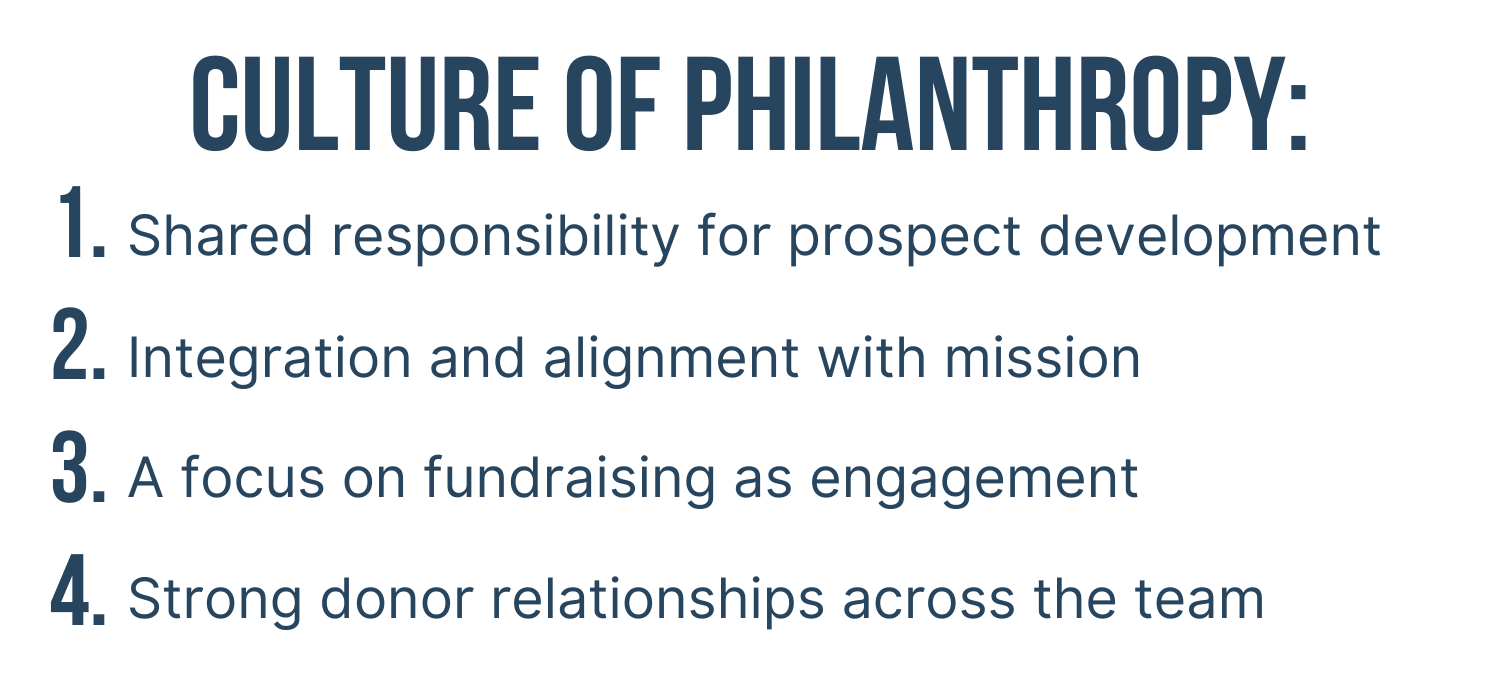
By definition, nonprofits are dependent upon philanthropy to carry out their mission and remain economically viable. When a culture of philanthropy is a core element of the organization’s broader culture, it provides a mutually reinforcing set of beliefs, accountabilities, and actions that prioritize fundraising at every level of the organization. As a result, all staff – from the top to the bottom – understand their role in advancing philanthropy within their organization and appreciate the role of philanthropy in advancing their work.
Strengthening the Donor Cultivation Cycle
The benefits of aligning development and marketing teams around a shared culture of philanthropy are visible within every stage of the donor cultivation cycle. While there are clear distinctions between annual and major giving cultivation cycles, strong partnerships between development and marketing are vital for nurturing donor relationships at all philanthropic levels.
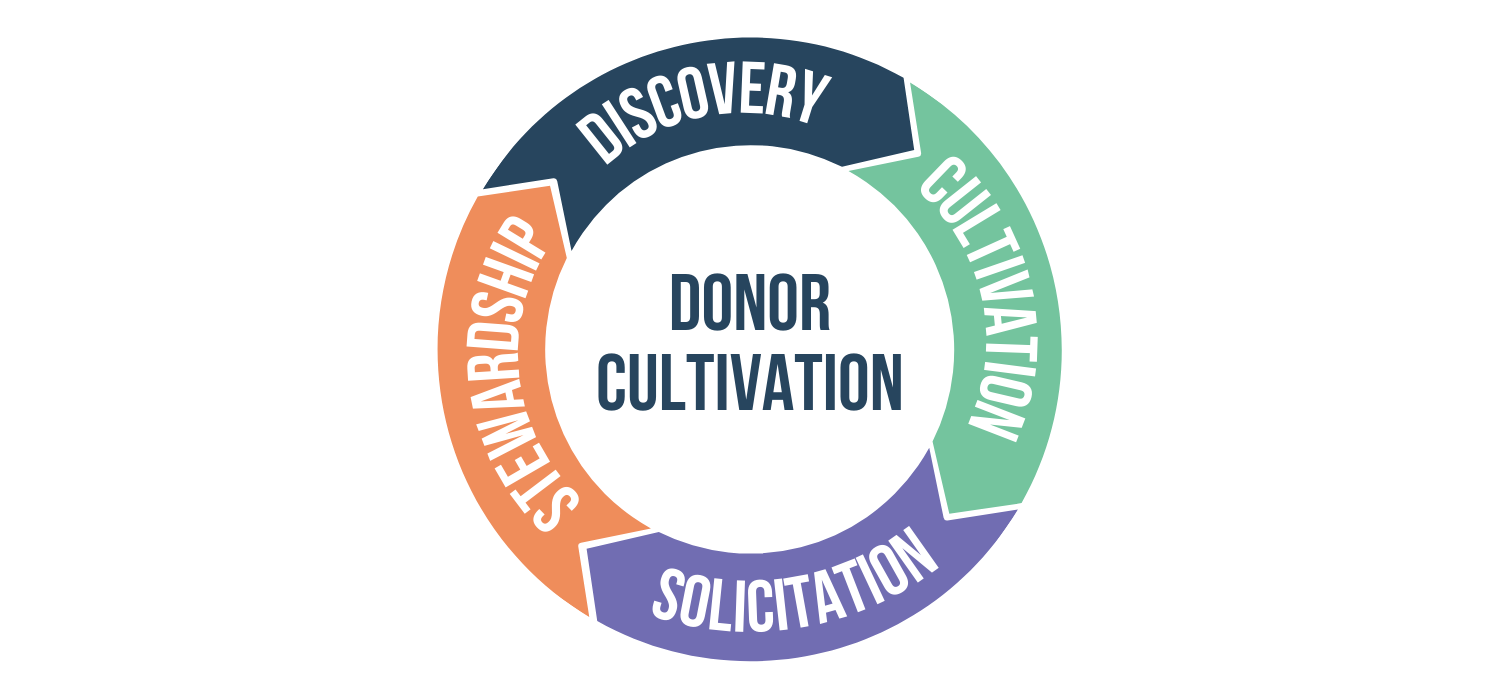
- Discovery: Marketing can offer development a relevant lead generation pipeline by reviewing data such as open rates, click-throughs, and social media activity to identify new donor prospects amongst new and highly engaged constituents.
- Cultivation: Development can partner with marketing to create and execute communication plans and donor engagement opportunities that feature a balance of program impact and philanthropic storytelling relevant to a wide range of target audiences.
- Solicitation: Marketing can support development in the design of compelling appeals, proposals, and supporting materials to inspire new, renewed, and increased giving.
- Stewardship: Development and marketing can partner to retain current donors through consistent and creative storytelling that reaches constituents through a variety of formats and channels, providing donors with various opportunities to identify with the organization.
Fostering Greater Connectivity Between Development & Marketing
Whether your organization seeks to establish a stronger culture of philanthropy or simply wants to enhance collaboration between development and marketing functions, pursuing these key steps will help move the needle on both fronts.
- Build relationships between development and marketing teams at all levels.
While few staff are eager to add another recurring meeting to their calendars, development and marketing leaders must come together to prioritize team building, support ongoing communication, and provide a clear line of sight to mutual priorities. - Establish shared goals articulated within a comprehensive development plan.
Development planning is a collaborative process that articulates the goals, strategies, activities, and accountabilities of each fundraising program. The benefits of the development planning process and resulting document extend far beyond the development team by articulating points of connection and fundraising-related accountabilities across marketing and other functions within an organization. - Identify separate leading indicators to drive specific accountabilities.
While development often gets the glory as the revenue-generating team, marketing deserves credit for their pivotal role in the fundraising success of an organization. To balance the share of credit, establish metrics that will focus actions and accountabilities within each team. Rather than relying solely on lagging indicators such as dollars raised – a metric that is often attributed solely to development – organizations can lean into activity- and outcome-based leading indicators that will distinguish the roles of development and marketing staff while actively engaging both teams throughout the donor cultivation cycle.
It is important to note that these tactics are relevant to and can be adapted for organizations with any number of development and marketing staff. Regardless of your role (development, marketing, or both) or the size of your team, establishing fundraising as a shared and integrated responsibility is sure to have a lasting impact on your organization’s internal culture and external impact.
Partner With Us
CFA’s consulting team is adept at partnering with development and marketing teams alike to enhance their organization’s culture of philanthropy while maximizing fundraising success. If you are interested in exploring how CFA can partner with your development and/or marketing teams, contact CFA today.

Kristin Love, Principal
Kristin is a proven capacity-builder, collaborator, and change-maker in the philanthropic space, with over 20 years of experience in higher education, program development, and nonprofit advancement. Prior to joining CFA, Kristin served as Vice President for Development at Loyola Marymount University in Los Angeles, California. At LMU, she oversaw efforts to evolve development structures and processes to motivate an accountability-driven environment, partnering with academic and administrative leadership to align goals and priorities in pursuit of increased philanthropy.
Before LMU, Kristin held leadership roles in the advancement offices at Colorado College and University of Denver, championing creation of new initiatives at both institutions that integrated engagement and philanthropy. Her career experience includes development roles at large national and small local nonprofits, as well as global organizations such as JDRF International. Her passion for mission-centric fundraising work and the positive impact it can have on institutions and organizations began as a work-study student in the grants office at her alma mater, Baylor University, where she earned a BBA in public administration and Spanish.
A native of Dallas, Texas, Kristin spent over two decades in Colorado before relocating with her family to the Los Angeles area in 2020. The mother of 15-year-old twins, Kristin enjoys watching her daughter’s athletic pursuits, and son’s music and acting endeavors. In her free time, she can be found traveling or at a potter’s wheel.
Kendall Carlson, Content Writer
A frequent contributor to CFA’s digital content, Kendall Carlson has spent her career advancing nonprofit organizations across the Twin Cities. With 16 years of experience, Kendall brings a balance of strategic and operational leadership spanning fundraising, program development, evaluation, and strategic planning.
Most recently, Kendall served as Development and Communications Director at Hired, where she diversified revenue for the organization’s $11M budget and increased individual giving by 60%, led a rebrand, and launched an organization-wide data for impact initiative. Prior to Hired, Kendall served at Greater Twin Cities United Way, where she led an advancement strategy team to increase investment and engagement from the organization’s top corporate and major donors. Kendall is known as a strategic, solution-oriented leader with a high capacity for detail and commitment to quality. She launched her consulting practice, Luminate Consulting, in 2022 to bring her skills in fundraising and program strategy to nonprofits seeking sustainable growth.
A Firm Foundation: Strategies for Engaging with Grantmakers

Grantmaking institutions are an essential part of a nonprofit’s fundraising strategy and come in many shapes and sizes – from corporate and private foundations, community and regional foundations, to collectives and intermediaries. According to Giving USA, foundation and corporate donations comprised 25% of all philanthropic support in 2023, underscoring the vital role grantmaking entities play within the nonprofit landscape.
While engaging with grantmakers often requires more planning and preparation than individual donors, the cultivation and stewardship strategies share many similarities. The main challenges lie in identifying the best-aligned institutions and building trusting relationships with their staff.
CFA’s Principal Mid-Atlantic Johnny Burleson with over 20 years of nonprofit advancement experience, offers recommendations for successfully engaging grantmaking institutions. Joining him is CFA’s Senior Project Manager John Teknus, who brings insights from his previous role as a portfolio analyst with the Open Society Foundation (OSF).
Identifying Aligned Opportunities
While it can be easy to fall into a pattern of engagement with a core set of funders, proactive prospect research should be a regular priority of every development team. Using online tools such as Foundation Directory, Candid, Instrumental, or DonorSearch can expedite lead generation while supplemental research via funder websites can provide other vital insights as organizations narrow their list of grantmaking prospects.
John emphasizes, “Thorough research is crucial. Understanding a funder’s priorities and giving patterns can significantly increase your chances of securing support.”
While the expanding array of information available online can result in long lists of prospective funders, strategically prioritizing institutions that are a good fit is essential. By concentrating on funders whose missions and giving patterns align most closely with your organization’s programs, target audience, and geographic focus, your research and subsequent engagement efforts will have a much stronger return on investment.
As your top priority institutions are identified, assemble a list of their board, trustees, and key staff to aid in identifying any connections your organization might request an introduction from. More on that below!
Preparing to Approach Grantmakers
Before reaching out to a grantmaker, nonprofits should be equipped with key internal plans and documents to support the next stages of engagement. Often developed in close collaboration with an organization’s leadership, finance, and program staff, grant proposals typically require detailed organizational narratives and program plans, budgets and timelines, financial and annual reports, as well as lists of board members, leaders, and funders.
“Complex funders often require detailed documentation,” notes Johnny. “Having comprehensive, up-to-date organizational documents ready can streamline the application process and demonstrate professionalism.” John adds, ” Having these documents prepared and up to date will enhance your ability to strategically and meaningfully engage with these grantmaking institutions.”
Strategies for Cultivating Grantmakers
When it comes time to make an introduction, personal connections are conducive, but not always essential, for engaging with a new grantmaking entity. Johnny advises his clients to take a proactive approach in engaging with grantmakers outside of a solicitation request; a strategy that is particularly effective for individual donors as well.
John agrees, “Building relationships with grantmaking institutions is about more than just seeking funds. Engage them as partners in your mission, and you’ll often find they offer valuable insights and connections beyond financial support.”
Identifying advocates within your network with personal or professional connections to grantmakers can help to open doors that may otherwise remain closed. However, the lack of a connection should not hinder your organization from reaching out. A concisely articulated introduction of your organization outlining your alignment to the institution’s funding priorities as well as suggested next steps for engagement will increase the likelihood of continued conversation.
Requesting a meeting and seeking the targeted advice from their staff can provide invaluable insight while building a strong foundation for future support. As CFA recommends in a recent article on Donor Cultivation and Stewardship, strategic engagement with the staff at grantmaking institutions may look similar to approaches taken with individual donors: an invitation to an upcoming event, program tour, or personalized email update on targeted initiatives or strategic plan milestones.
However your organization seeks to engage with grantmakers, these critical relationships can yield a multifaceted return on investment by engaging their staff as top shareholders in your organization’s vision and strategic direction. In addition to consistent, long-term support, these critical stakeholders bring influence, connections, guidance, and insights that can further advance the work and mission of the organizations with whom they closely engage.
Best Practices for Stewarding Grantmakers
Strong relationships with grantmaking institutions enable a robust understanding of funding priorities and a clear line of sight to upcoming funding opportunities, better positioning your organization to submit compelling and well-aligned grant proposals and increasing the likelihood of an award. Similar to individual donors, the relationship with a grantmaking institution is far from over once a grant is approved; it has really just begun.
“Effective stewardship is key to long-term partnerships,” John explains. “Regular, tailored communication that goes beyond formal reporting can help maintain and strengthen these crucial relationships.”
While many grantmaking entities will provide detailed reporting guidelines and preferences for recognition, these milestones offer the opportunity to strengthen the relationship while maximizing the investment through added expertise and connections. For example, a conversation with the grantmaker may uncover ways to bring their staff closer to the programs they are investing in to offer advice and guidance, while unique public relations and recognition ideas may offer exposure for both the funder and grantee. With a trusting relationship established, existing funders are also oftentimes able to recommend and provide leads to other grantmakers.
As your organization establishes relationships with key grantmaking personnel, creating a segmented communication strategy will enable more relevant and tailored communications through the stages of cultivation as well as stewardship. Johnny advises his clients to create stewardship plans that align to the size of the grant and distinct preferences of the funder. Building from a complementary set of communication strategies for individual donors, informational progress updates and organizational announcements in addition to personal outreach can serve as complementary strategies to strengthen the relationship.
Whether or not your organization has a history of securing significant investments from grantmaking institutions, Johnny recommends that organizations continue to proactively identify and establish relationships with new funding prospects. Seeking advice, testing ideas, and inviting funders to engage more closely will expand your pipeline, allowing your organization to remain nimble as funding levels or priorities shift while opening doors for future support.
Partner With Us
CFA’s consulting team is highly experienced in supporting all aspects of our clients’ fundraising strategy, including cultivation and stewarding institutional grantmakers. If you are interested in exploring how CFA can enhance your organization’s strategy and pipeline of grantmakers, contact CFA today.

Johnny Burleson, Principal, Mid-Atlantic
Johnny comes to CFA with over 20 years of nonprofit advancement experience in the arts and cultural, educational, and human services sectors. His proven track record of high-trust, high-performance leadership spans multiple areas of expertise, including campaign planning, major gifts, corporate and foundation relations, and government relations.
As Principal, Mid-Atlantic, Johnny oversees projects spanning CFA’s suite of fundraising counsel services. Johnny believes in aligning donors’ passions with innovative ideas, emphasizing the importance of promoting philanthropy through coalition-building and partnerships to achieve the greatest impact.
Prior to joining CFA, Johnny served as Chief Advancement Officer for North Carolina Museum of Art in Raleigh, where he successfully restructured development and membership operations and transitioned the organization from a transactional approach to an institution-wide culture of philanthropy. Johnny also oversaw the planning of the largest fundraising campaign in the museum’s history.
Prior to his role at NCMA, Johnny held the position of Director of Strategic Partnerships with the Blue Cross and Blue Shield of North Carolina Foundation, playing a pivotal role in building and stewarding local, state, and national relationships to bring philanthropic and federal resources to North Carolina in support of stronger, healthier communities. Johnny’s extensive career also includes 17 years in higher education philanthropy and advancement. He began at his alma mater, North Carolina State University, where he received a BS in Textiles with a focus on the Italian textile industry. Additionally, he held leadership positions at Appalachian State University and the University of North Carolina School of Government in Chapel Hill.
Johnny has volunteered as board member for several North Carolina nonprofits, including Preservation North Carolina, Triangle Land Conservancy, Lost Province Center for the Cultural Arts, Ashe County Chamber of Commerce, and Ashe County Arts Council. Outside of work, Johnny can be found on Old Orchard Creek, his blueberry farm located in Ashe County, NC. His farm is on the National Historic Register and is also protected by a conservation easement, reflecting his personal passion for the mountains, the arts, historic preservation, water, land, trails, local food, and sustainable agriculture.

John Teknus, Senior Project Manager
As Senior Project Manager at CFA, John is tasked with the design and implementation of organizational and information management tools and strategies to deliver best-in-class service for CFA’s team and clients.
John brings a nuanced understanding of project management that draws on his extensive background in strategic planning, grant management, and partnership development. Leveraging past experience and a deep-seated passion for relationship building, John aims to create bespoke strategies that align with the unique needs of CFA’s partners.
John has a diverse range of experience, including his time at Youth Enrichment Services and St. John’s University. As a Prevention Specialist at Youth Enrichment Services, John effectively communicated with local officials and community members, addressing issues impacting students and schools. During his tenure as a Community Partnerships Associate at St. John’s University, he successfully directed the operations of social service centers across the New York metro area while managing a cohort of dedicated undergraduate students. These experiences honed his leadership skills, community engagement expertise, and ability to navigate complex organizational environments.
Most recently, John served as a Portfolio Analyst at Open Society Foundations, where he played a pivotal role in managing grants across five portfolios in the Economic Justice Program. John excelled in building relationships with external stakeholders, internal colleagues, and organizational officials, fostering collaboration and facilitating effective communication. Furthermore, his due diligence interviews and audits on organizations provided valuable insights for decision-making processes, contributing to informed and strategic grantmaking. Through his exceptional skills in project management and stakeholder engagement, John made a significant impact on his team’s strategic goals to promote economic justice and social change.
A native of Long Island, New York, John holds a MA in International Relations and Comparative Politics from St. John’s University and a BA in Political Science from Canisius College. When he’s not working, he can be found exploring the New York area with his partner, Nora.
Kendall Carlson, Content Writer
A frequent contributor to CFA’s digital content, Kendall Carlson has spent her career advancing nonprofit organizations across the Twin Cities. With 16 years of experience, Kendall brings a balance of strategic and operational leadership spanning fundraising, program development, evaluation, and strategic planning.
Most recently, Kendall served as Development and Communications Director at Hired, where she diversified revenue for the organization’s $11M budget and increased individual giving by 60%, led a rebrand, and launched an organization-wide data for impact initiative. Prior to Hired, Kendall served at Greater Twin Cities United Way, where she led an advancement strategy team to increase investment and engagement from the organization’s top corporate and major donors. Kendall is known as a strategic, solution-oriented leader with a high capacity for detail and commitment to quality. She launched her consulting practice, Luminate Consulting, in 2022 to bring her skills in fundraising and program strategy to nonprofits seeking sustainable growth.
Liz Jellema promoted to President
January 24, 2025
Creative Fundraising Advisors (CFA) is pleased to announce the promotion of Liz Jellema to President. Since joining CFA in 2021, Liz has served as Chief Operating Officer where she effectively led the organization through a period of critical growth and development, building on past organizational achievement and positioning CFA for long term success.
CFA Founder and President Paul Johnson will transition to the role of Chief Executive Officer.
“CFA has flourished under Liz’s guidance as Chief Operating Officer. Now, as President, she will leverage her considerable leadership skills — offering vision, expertise, and experience — to implement creative business strategies to continue to expand our business. As I transition to the role of Chief Executive Officer, I look forward to our continued collaboration in service to our nonprofit client partners,” Johnson said.
In her new role, Liz will focus on scaling CFA’s capacity and deepening its impact across the social sector, positioning the firm to better serve its growing portfolio of mission-driven clients. Looking ahead, Jellema shared, “CFA exists to strengthen nonprofits that change lives. As we embark on our second decade, I’m honored to lead our firm’s next chapter while staying true to ‘The CFA Way’ — listening first and empowering our clients to achieve their vision.”
Prior to CFA, Liz was director of operations and strategic initiatives for the Rustandy Center for Social Sector Innovation at the University of Chicago Booth School of Business. Prior to joining the Booth School, Liz served as vice president of engagement for govtech firm CityBase, director of research for the city of Chicago’s economic development arm World Business Chicago, and as a senior consultant for AECOM Economics. She earned her bachelor’s degree in business administration with a concentration in real estate and economics at the University of Wisconsin-Madison, a master’s degree in urban planning at the University of Michigan, and a certificate of civic leadership at the University of Chicago Harris School of Public Policy. Liz and her husband live in Chicago with their two kids and rescue dog, Maizey.
About Creative Fundraising Advisors
Creative Fundraising Advisors (CFA) is a full-service fundraising consulting firm with more than 200 years of collective experience in philanthropy. Since its founding in 2014, CFA has raised more than $3 billion in partnership with nonprofit clients throughout the country. While CFA supports a diversity of nonprofit clients, it maintains a focus on work in the arts and culture, education, environment, and human services sectors. For a full list of clients and to learn more, visit creativefundraisingadvisors.com.
Transformational Client Moments of 2024

(Listed in chronological order)
- Science Museum of MN receives $6.5 million, its largest individual donation ever
- Every Meal finalizes purchase of new building to fight food insecurity
- San Francisco Ballet receives a $60 million anonymous gift
- United Theological Seminary announces creation of new, tenure-track, endowed faculty position through philanthropy
- Entertainment Community Fund launches the $160 million Essential Campaign
- Triangle Land Conservancy surpasses goal to conserve 25,000 acres of land in the Triangle by 2025
- 92NY launches $150 million Campaign for the Next 150 with $30 million lead gift from Jody Arnhold
- Neighborhood House opens new facility to expand community services
- Friends of the Mississippi River announces $5 million “Our River” Campaign
- Rancho Obi-Wan announces vision for the SAGA Museum
- Land of Sky P20 receives a $1.5 million YouthBuild grant to support training and apprenticeships to prepare young people to succeed in high-demand careers in Western North Carolina
A Roadmap to Transformational Gifts

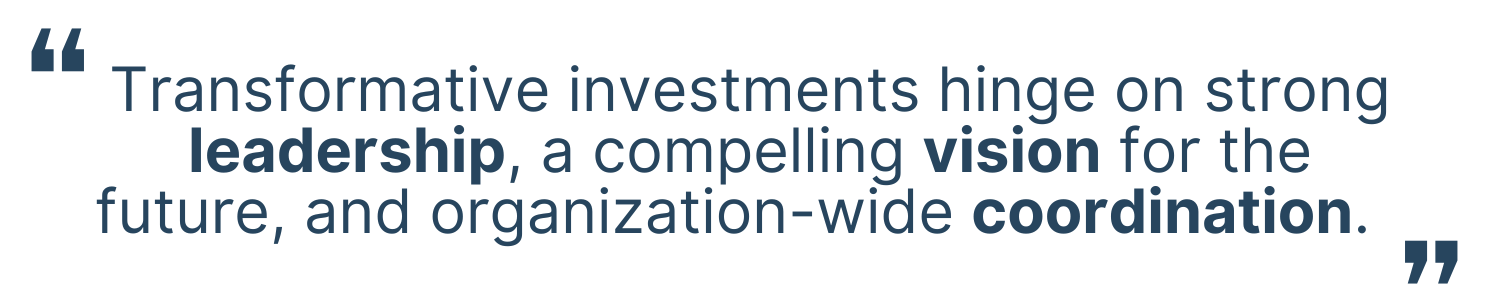
The term “transformational gift” refers to a significant donation with the potential to substantially impact an organization’s trajectory. While transformational gifts can yield highly visible results for organizations and their communities, their origins may seem mysterious, as these sizable commitments can be years in the making.
There is a critical sequence of milestones throughout the donor cultivation cycle that can help position organizations for gifts of transformational scale. Stemming from strategic planning and the cultivation of key donor prospects, securing and capitalizing on a transformative investment hinges on strong leadership, a compelling vision for the future, and organization-wide coordination.
With over 20 years of nonprofit advancement experience, CFA Principal Mid-Atlantic Johnny Burleson shares his insights on successfully pursuing transformational gifts.
Strategically Cultivating a Transformational Gift
The first step toward pursuing a transformational gift is an ambitious and compelling vision for the future. “This vision is typically formulated through a thorough planning process with the support of key internal and external stakeholders, often in preparation for a campaign,” shares Johnny. The end result serves as the basis for a fundraising case for support by quantifying impact, detailing implementation plans, and outlining the financial resources required to bring that vision to fruition.
Once internal alignment is established, there is an opportunity to bring top donor prospects to the table. As CFA recently shared in How to Approach Major Donors as Stakeholders, an organization’s most promising donors are often already in its database. With a passion for your organization’s work and mission, these donors have a demonstrated commitment through multiple years of giving, confirmed financial capacity to make a significant investment, and possible prior service as board members or volunteers.
After identifying top prospects, inviting them into the planning process creates the opportunity for active, authentic, and strategic cultivation during a pivotal stage of organizational development and campaign planning. “By bringing donor prospects into the process early and often, organizations can cultivate them as insiders while gaining critical insights based on the donors’ areas of expertise,” adds Johnny. He recommends keeping these donors close throughout this phase by regularly seeking feedback and advice on everything from the smallest of details to highly significant considerations.
- Learn how to activate your strategic plan to improve fundraising results!
Making a Transformational Ask
Through active involvement in the early stages of strategic planning and campaign feasibility studies, donor prospects may know years in advance that a big ask is coming. Within the context of a campaign’s fundraising strategy, these prospects will understand that a transformational commitment fulfilling the highest tier in the campaign’s giving pyramid will initiate a succession of future giving toward the vision that they helped to create. Strategic cultivation through this planning process brings an organization’s and donor’s shared vision into alignment while building trust and confidence along the way.
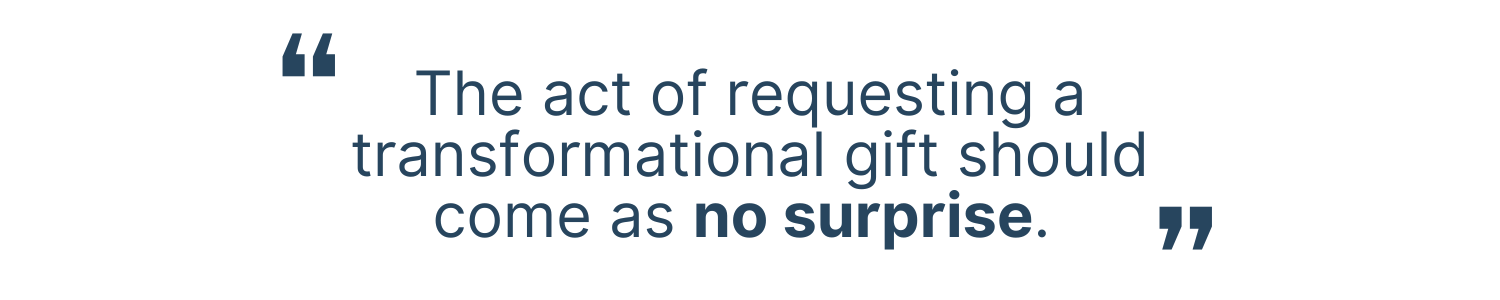
With extensive groundwork laid, the act of requesting a transformational gift should come as no surprise. Offering the donor opportunities to say “yes” along the way by asking strategic questions and continually confirming their approval throughout the cultivation process increases the likelihood that their response to a formal request for support will follow suit.
Johnny emphasizes that when it comes time to make the ask, “The organization must be very strategic, articulating the influence that this gift will have on the organization’s trajectory and the impact it will make in specific and quantifiable terms.” And while the exact size of a transformational gift will vary from one organization to another, Johnny shares that, “It is more about strength of alignment and shared vision for the overarching impact that the campaign will embrace.”
As CFA recently shared, “Whether the donor responds with a ‘yes’, ‘no’, or ‘not right now,’ the path to a stronger donor relationship requires a graceful, grateful response, and a willingness to learn, gathering insights that will keep the door open for future engagement.” If a donor indicates the timing is not right, then the moment becomes about continuing to steward that ask until the timing aligns.
- Organizations that receive an unexpected transformational gift may be less prepared to leverage the investment for long-term stability. CFA frequently partners with organizations seeking to leverage a specific gift to build alignment and test the feasibility of a broader case for support.
Leveraging a Major Gift’s Transformative Potential
Once a transformational commitment is made comes a pivotal moment: advancing the organization’s vision for the future by inspiring additional generosity. “Securing a transformational gift becomes a significant opportunity to elevate the organization’s brand and mission through organic media coverage,” shares Johnny.
With clear internal alignment established during the strategic planning stage between core organizational functions, fundraising, communications, finance, and program teams will be ready to seize the opportunity if and when a transformational gift is committed.
- Looking to develop a consistent, compelling communications plan built around your campaign’s case for support? Check out CFA’s Donor Communications & Outreach Guide for more details about creating a donor communications plan to support your campaign.
Subsequent communications will depend on the donor’s interest for recognition and exposure, while key audiences and communication channels for announcing this transformational gift will depend on the stage and goals of the organization’s vision. For organizations that do not yet have a fundraising goal ready to publicize, the organization’s history of success and future vision that influenced the gift can serve as key messages. “This becomes a significant storytelling moment for the organization, reflecting back on the organization’s trajectory while setting the stage for its future impact,” adds Johnny.
For organizations kicking off a broader campaign, securing a transformational gift may signal a transition to a public phase of a campaign. As CFA Senior Manager of Campaigns Anne Spears shared in a recent article, “The key to public phase fundraising success hinges on a smooth passing of the baton from an organization’s development team to their marketing team.” While the decision to transition into a campaign’s public phase is highly nuanced, Anne advises clients to weigh their progress, momentum, and anticipated timeline as they consider the most strategic course forward.
Stewarding Transformational Investments
Continued donor engagement throughout each stage of a campaign and subsequent implementation plans are critical to the ongoing stewardship of a transformational gift. Delivering on the clear plans and quantifiable impact that secured the transformational investment requires the ongoing commitment and collaboration between the organization’s fundraising, communications, finance, and program teams.
And while certain details within the plan may shift in response to environmental factors or opportunities, organizations can sustain a high level of donor trust through regular communications along with continual opportunities to witness, advise, and engage in the work ahead.
Partner With Us
CFA’s consulting team brings vast experience in major giving strategies and a nuanced approach to conducting campaigns for each organization we serve. If you are interested in exploring how CFA can help position your organization to secure gifts of a transformative scale, contact CFA today.
Johnny Burleson, Principal, Mid-Atlantic
Johnny comes to CFA with over 20 years of nonprofit advancement experience in the arts and cultural, educational, and human services sectors. His proven track record of high-trust, high-performance leadership spans multiple areas of expertise, including campaign planning, major gifts, corporate and foundation relations, and government relations.
As Principal, Mid-Atlantic, Johnny oversees projects spanning CFA’s suite of fundraising counsel services. Johnny believes in aligning donors’ passions with innovative ideas, emphasizing the importance of promoting philanthropy through coalition-building and partnerships to achieve the greatest impact.
Prior to joining CFA, Johnny served as Chief Advancement Officer for North Carolina Museum of Art in Raleigh, where he successfully restructured development and membership operations and transitioned the organization from a transactional approach to an institution-wide culture of philanthropy. Johnny also oversaw the planning of the largest fundraising campaign in the museum’s history.
Prior to his role at NCMA, Johnny held the position of Director of Strategic Partnerships with the Blue Cross and Blue Shield of North Carolina Foundation, playing a pivotal role in building and stewarding local, state, and national relationships to bring philanthropic and federal resources to North Carolina in support of stronger, healthier communities. Johnny’s extensive career also includes 17 years in higher education philanthropy and advancement. He began at his alma mater, North Carolina State University, where he received a BS in Textiles with a focus on the Italian textile industry. Additionally, he held leadership positions at Appalachian State University and the University of North Carolina School of Government in Chapel Hill.
Johnny has volunteered as board member for several North Carolina nonprofits, including Preservation North Carolina, Triangle Land Conservancy, Lost Province Center for the Cultural Arts, Ashe County Chamber of Commerce, and Ashe County Arts Council. Outside of work, Johnny can be found on Old Orchard Creek, his blueberry farm located in Ashe County, NC. His farm is on the National Historic Register and is also protected by a conservation easement, reflecting his personal passion for the mountains, the arts, historic preservation, water, land, trails, local food, and sustainable agriculture.
Kendall Carlson, Content Writer
A frequent contributor to CFA’s digital content, Kendall Carlson has spent her career advancing nonprofit organizations across the Twin Cities. With 16 years of experience, Kendall brings a balance of strategic and operational leadership spanning fundraising, program development, evaluation, and strategic planning.
Most recently, Kendall served as Development and Communications Director at Hired, where she diversified revenue for the organization’s $11M budget and increased individual giving by 60%, led a rebrand, and launched an organization-wide data for impact initiative. Prior to Hired, Kendall served at Greater Twin Cities United Way, where she led an advancement strategy team to increase investment and engagement from the organization’s top corporate and major donors. Kendall is known as a strategic, solution-oriented leader with a high capacity for detail and commitment to quality. She launched her consulting practice, Luminate Consulting, in 2022 to bring her skills in fundraising and program strategy to nonprofits seeking sustainable growth.
Fundraising Stability in Times of Leadership Transitions

Did you know that 75% of nonprofit leaders are expected to leave their current positions within the next 10 years?Transitions amongst executive leaders are occurring at a growing rate as baby boomers are reaching the age of retirement (an estimated 10,000 per day through 2030) and others are leaving the nonprofit sector altogether. Despite these trends, a recent survey by BoardSource reported that only 29% of nonprofits have written succession plans in place.
Whether well-planned or unforeseen, leadership transitions can render significant ramifications for an organization’s present stability and future trajectory. With more than 25 years of experience spanning higher education, program development, and nonprofit advancement, CFA Principal Kristin Love offers the following guidance for maintaining fundraising stability during transitions in organizational leadership.
Preparing for Leadership Transitions
Whether anticipated in the near-term or distant future, leadership transitions are a time to focus on sustaining an organization’s current work and most critical priorities. As Kristin shares, “Documenting present-day organizational strategies and accountabilities as well as future succession plans will contribute to increased stability and continuity when change inevitably occurs.”
Development Plans
Formulated through a collaborative process, development plans are an organizational document summarizing quantitative and qualitative fundraising goals, strategies, activities, accountabilities and resources for each fundraising program within an organization’s fundraising team.
Development plans serve as an essential tool for both current and future leaders. As CFA Senior Consultant Rob Ruchotzke recently shared in How Development Plans Can Generate Fundraising Results, “Development plans provide organizational stability and a foundation for future growth by clearly outlining goals and strategies, illuminating key fundraising actions and accountabilities, and defining milestones and metrics.”
Development plans can be a vital resource for new or interim leaders seeking to understand and support core efforts and accountabilities.
Succession Plans
Preparing for leadership transitions through deliberate succession planning will position organizations for increased stability when the inevitable occurs. By folding succession planning into other processes, such as annual planning or multi-year strategic planning, organizations can normalize the process and develop a regular cadence for maintaining and updating plans.
Kristin shares that, “By addressing transitions at every level of an organization, leaders can find confidence in the essential role they play and the importance of sustaining their contributions if and when it comes time for them to transition.”
Communications Plans
The tone, delivery, and cadence of communication is paramount during times of organizational transition. Clear and timely internal communication allows staff the time and space to digest, adjust, and plan for the transition before the news is shared with key external stakeholders such as partners and donors.
When it comes to preparing external communications strategy regarding a leadership transition, Kristin recommends positioning the occasion to celebrate the outgoing leader’s legacy and impact while focusing on the work ahead. “During these moments of significant change, organizational communications should always center what remains constant: their mission-critical work,” shares Kristin.
The departure of a consequential leader presents an important time to engage every level of organizational constituents. Personal contact with an organization’s top donors provides an opportunity to acknowledge the donor’s role in supporting the outgoing leader’s legacy. These connections can also instill confidence in the future of the organization by initiating a strong relationship with the new or interim leader that will shepherd the organization through this period of change.
Pivoting Under Interim Leadership
Interim leaders have a distinct and strategic role to play as their organization searches and prepares for new leadership.
Driving Fundraising Activity
Whether expected or unforeseen, the transition period between leaders can feel like a marathon for staff navigating ambiguity and shouldering additional responsibilities. Through a combination of constant communication and clearly defined objectives, interim leaders can mitigate levels of uncertainty while establishing measurable expectations that will drive activity for fundraising staff.
Kristin also advises interim leaders to establish baseline metrics for success that will drive internal fundraising activity while focusing donor support on the organization’s long-term priorities. Rather than focusing on traditional lagging indicators such as dollars raised, Kristin recently shared an approach to activity-based leading indicators featured in a CFA article How Metrics Can Help Fundraising Professionals Reach Their Goals. Leading indicators that can be measured in real time include metrics such as donor contacts, meetings, and qualifications.
In addition to using baseline metrics to shape expectations and drive accountability, Kristin encourages interim leaders to seek out and celebrate small wins along the way. “Leadership transitions can feel stagnant and prolonged, so celebrating progress and productivity can help to reenergize staff and generate a renewed focus on the organization’s future.”
Sustaining Donor Engagement
An organization’s prevailing priorities and essential infrastructure become focal points for donor engagement during leadership transitions.
Fundraising conversations can be focused on fundamental investments that will stand the test of time and support continued organizational success under new leadership, such as the annual fund, operations, and core programming. For organizations with an endowment, Kristin shares, “Endowments can be transformational in times of organizational growth and fundamental in times of organizational transition. An organization’s case for directing support to their endowment during a leadership transition is about sustaining continuity of mission and core programs.”
These periods of change can also be an opportunity to introduce other key leaders, including board members or key program experts, to expand donor connections within the organization while creating continuity and increasing confidence. While board members are not always closely engaged in the impact of philanthropy and fundraising for their organization, leadership transitions can represent a significant opportunity to get more involved and contribute to the work ahead.
Excelling Under New Leadership
Well-executed transitions will position an organization to excel under new leadership.
Development Assessments
Kristin recommends that organizations capitalize on leadership transitions as an opportunity to baseline on mission, vision, and fundraising strategies. “Development assessments are an incredible tool for times of transition, preparing the incoming leader with an objective understanding of the opportunities ahead.”
As CFA Head of Consulting & Principal, Midwest, Jake Muszynski recently shared in What Is a Development Assessment, and Why Do I Need One?, “Development assessments are a powerful way to energize your organization’s fundraising efforts.” Whether conducted prior to or after the arrival of a new leader, development assessments provide a direct path to actionable strategies that result in more successful, consistent, and sustainable fundraising results.
Envisioning the Organization’s Future
The introduction of a new leader creates a unique opportunity for organizations to revisit their top strategies and renew connections with key internal and external stakeholders. After undergoing a period of significant transition, organizations are poised to invite critical and transparent conversations from key constituents.
As Kristin shares, “Personal introductions to an organization’s top donors are an opportunity for new leaders to listen and solicit advice that can inform the organization’s future vision while sustaining and elevating mission-critical relationships.” By bringing all stakeholders along in envisioning the organization’s thriving future, leadership transitions can be leveraged as a launch pad for new beginnings.
Partner With Us
CFA serves nonprofits across the country, taking the time to learn about their unique challenges and opportunities, and identifying sustainable solutions to advance their missions. If you are interested in exploring how CFA can support your organization through a leadership transition, contact CFA today to see how we can help.
Kristin Love, Principal
Kristin is a proven capacity-builder, collaborator, and change-maker in the philanthropic space, with over 20 years of experience in higher education, program development, and nonprofit advancement. Prior to joining CFA, Kristin served as Vice President for Development at Loyola Marymount University in Los Angeles, California. At LMU, she oversaw efforts to evolve development structures and processes to motivate an accountability-driven environment, partnering with academic and administrative leadership to align goals and priorities in pursuit of increased philanthropy.
Before LMU, Kristin held leadership roles in the advancement offices at Colorado College and University of Denver, championing creation of new initiatives at both institutions that integrated engagement and philanthropy. Her career experience includes development roles at large national and small local nonprofits, as well as global organizations such as JDRF International. Her passion for mission-centric fundraising work and the positive impact it can have on institutions and organizations began as a work-study student in the grants office at her alma mater, Baylor University, where she earned a BBA in public administration and Spanish.
A native of Dallas, Texas, Kristin spent over two decades in Colorado before relocating with her family to the Los Angeles area in 2020. The mother of 15-year-old twins, Kristin enjoys watching her daughter’s athletic pursuits, and son’s music and acting endeavors. In her free time, she can be found traveling or at a potter’s wheel.
Kendall Carlson, Content Writer
A frequent contributor to CFA’s digital content, Kendall Carlson has spent her career advancing nonprofit organizations across the Twin Cities. With 16 years of experience, Kendall brings a balance of strategic and operational leadership spanning fundraising, program development, evaluation, and strategic planning.
Most recently, Kendall served as Development and Communications Director at Hired, where she diversified revenue for the organization’s $11M budget and increased individual giving by 60%, led a rebrand, and launched an organization-wide data for impact initiative. Prior to Hired, Kendall served at Greater Twin Cities United Way, where she led an advancement strategy team to increase investment and engagement from the organization’s top corporate and major donors. Kendall is known as a strategic, solution-oriented leader with a high capacity for detail and commitment to quality. She launched her consulting practice, Luminate Consulting, in 2022 to bring her skills in fundraising and program strategy to nonprofits seeking sustainable growth.
Are You Ready to Work with a Fundraising Consultant?

Hiring a fundraising consultant is a significant investment with tremendous potential impact on the future of your organization. CFA takes deep pride in the partnerships we develop, the customized solutions we offer, and the unparalleled results we deliver to each client we serve. Adept at spotting emerging trends and scaling successful models, our team of consultants brings vast experience across sectors and regions, offering each client the most relevant solutions tailored to their needs.
While most organizations plan for the financial investment of engaging a fundraising consultant, the commitment of staff time is also an important consideration in order to maximize the opportunity and position your organization for future fundraising success.
The following recommendations will help your organization make the most of a partnership with a fundraising consultant such as CFA.
When to Engage a Fundraising Consultant
There are several points of inflection when organizations benefit most from the expertise of a fundraising consultant:
- When an organization has a big idea or vision that will require significant resources to fulfill.
CFA is a valuable partner to organizations whose leaders are considering a campaign to realize an aspirational vision. Through our campaign readiness and feasibility studies, our team assesses the organization’s ability and readiness to effectively execute the campaign, providing key recommendations to build capacity and shape a compelling case for support based on stakeholder feedback. - When an organization’s fundraising has plateaued.
CFA offers development assessments for organizations that are likely capable of raising more money and are seeking to make a strategic investment in their fundraising team and resources that will generate the strongest return on investment, whether or not in preparation for a campaign. - When an organization is unable to effectively leverage fundraising data to inform strategy.
CFA provides a range of data and research services to enhance an organization’s data strategy, improve data integrity, and uncover priority prospects. CFA often uncovers opportunities for our clients to strengthen their data strategy during the campaign feasibility or development assessment process, and provides tailored support that leads to stronger, more sustainable fundraising results.
While there is no right or wrong time to engage the support of a fundraising consultant, organizations should also consider the timing of other key institutional priorities and events when determining their ideal timeline and capacity to engage with a consultant.
Building an Effective Team of Internal Liaisons
While fundraising consultants are often sought and hired by an organization’s top leaders, CFA typically partners most closely with other key staff in our day-to-day work. Organizations can set the stage for a highly effective partnership by selecting the appropriate team of internal liaisons and initiating the consulting relationship with clear communication.
By building a liaison team that brings a balance of leadership, content expertise, and execution, organizations will ensure that their work with a fundraising consultant results in:
- Relevant and Customized Strategies
While fundraising consultants bring expertise, they rely on collaboration with internal staff who understand the organization’s mission, culture, and relationships, and can provide valuable insights into past fundraising efforts, donor data, and internal resources. Effective partnerships with pertinent staff enable CFA consultants to craft realistic, yet customized strategies to meet an organization’s specific needs. - Sustainable Solutions
CFA’s consultants offer guidance, strategy, and support. Active staff engagement builds internal capacity and expertise, ensuring improved execution and long-term sustainability of the strategies and plans implemented.
Prior to initiating a project with a fundraising consultant, internal communication from an organization’s top leaders should convey the goals, timeline, scope, roles, and responsibilities throughout the process to establish an effective partnership.
Preparing to Onboard Your Fundraising Consultant
When CFA starts a new project, our consulting team is prepared to dive in on day one and counts on that same level of readiness and commitment from our clients.
In order to quickly gain a comprehensive understanding of each organization we serve, CFA requests preliminary discovery data and background information. These documents enable our consultants to become insiders on an organization’s fundraising journey and effective partners in steering the organization’s fundraising trajectory.
Data requested may include:
- Historic Organizational Data: Financial reports, annual reports, budgets, board composition and giving rates
- Fundraising Trends: Revenue sources, year-over-year comparisons, giving trends and retention rates, fundraising results by program and fund
- Development Strategy & Structure: Strategic plans, development plans, staff job descriptions and department charts, donor communications and appeals
While this list of documents can seem intimidating, having the right data and materials ready from the start will equip our team with a complete and holistic understanding of the organization so that our real work can begin.
Ready to Take the Next Step?
CFA’s partnerships come with tremendous potential to amplify an organization’s work and mission.
While some projects like development assessments or feasibility studies are time-limited, other efforts such as a capital campaign require a marathon-like approach to reach the finish line.
Regardless of a project’s duration or scope, CFA’s utmost priority is to sustainably advance our clients’ future fundraising capabilities; and we know our clients will realize a far greater return on investment when they come as ready to roll up their sleeves as we are.
CFA serves nonprofits across the country, taking the time to learn about their unique challenges and opportunities, and identifying sustainable solutions to advance their missions. If you are interested in exploring how CFA can support your organization’s fundraising efforts, contact CFA today to see how we can help.
Kendall Carlson, Content Writer
A frequent contributor to CFA’s digital content, Kendall Carlson has spent her career advancing nonprofit organizations across the Twin Cities. With 16 years of experience, Kendall brings a balance of strategic and operational leadership spanning fundraising, program development, evaluation, and strategic planning.
Most recently, Kendall served as Development and Communications Director at Hired, where she diversified revenue for the organization’s $11M budget and increased individual giving by 60%, led a rebrand, and launched an organization-wide data for impact initiative. Prior to Hired, Kendall served at Greater Twin Cities United Way, where she led an advancement strategy team to increase investment and engagement from the organization’s top corporate and major donors. Kendall is known as a strategic, solution-oriented leader with a high capacity for detail and commitment to quality. She launched her consulting practice, Luminate Consulting, in 2022 to bring her skills in fundraising and program strategy to nonprofits seeking sustainable growth.
What Is a Development Assessment, and Why Do I Need One?

Development assessments are a term used to describe a comprehensive review of an organization’s fundraising programs. These rigorous assessments offer distinct benefits for organizations of all sizes and at varying points in the fundraising cycle. Whether your organization is undergoing a leadership transition or preparing for a period of significant growth, a development assessment will uncover new opportunities based on where your organization is today and tangible steps aligned to your goals for the future.
While CFA’s highly tailored approach varies based on each client’s unique circumstances, priorities, and growth trajectory, our development assessment findings share a common denominator in the form of specific and actionable short- and long-term recommendations to sustainably enhance an organization’s fundraising success.
ADVANTAGES OF ENGAGING EXTERNAL SUPPORT
A simple online search yields a plethora of DIY assessment tools designed to help organizations internally evaluate their fundraising programs. For example, the Fundraising Effectiveness Project (FEP) offers free reports, resources, and tools to help organizations measure their individual donor fundraising efforts against more than 100 performance indicators. Similarly, MarketSmart offers a Fundraising Report Card that provides performance dashboards with key metrics on donor acquisition and retention, donation growth and frequency, and much more.
While these tools can provide helpful data visuals and comparative benchmarks, their resulting insights are directly correlated to an organization’s internal capacity for self-assessment. These tools also rely solely on quantitative measures, limiting their results to scientific measures of success without addressing the qualitative art of fundraising. This is where engaging external support can help.
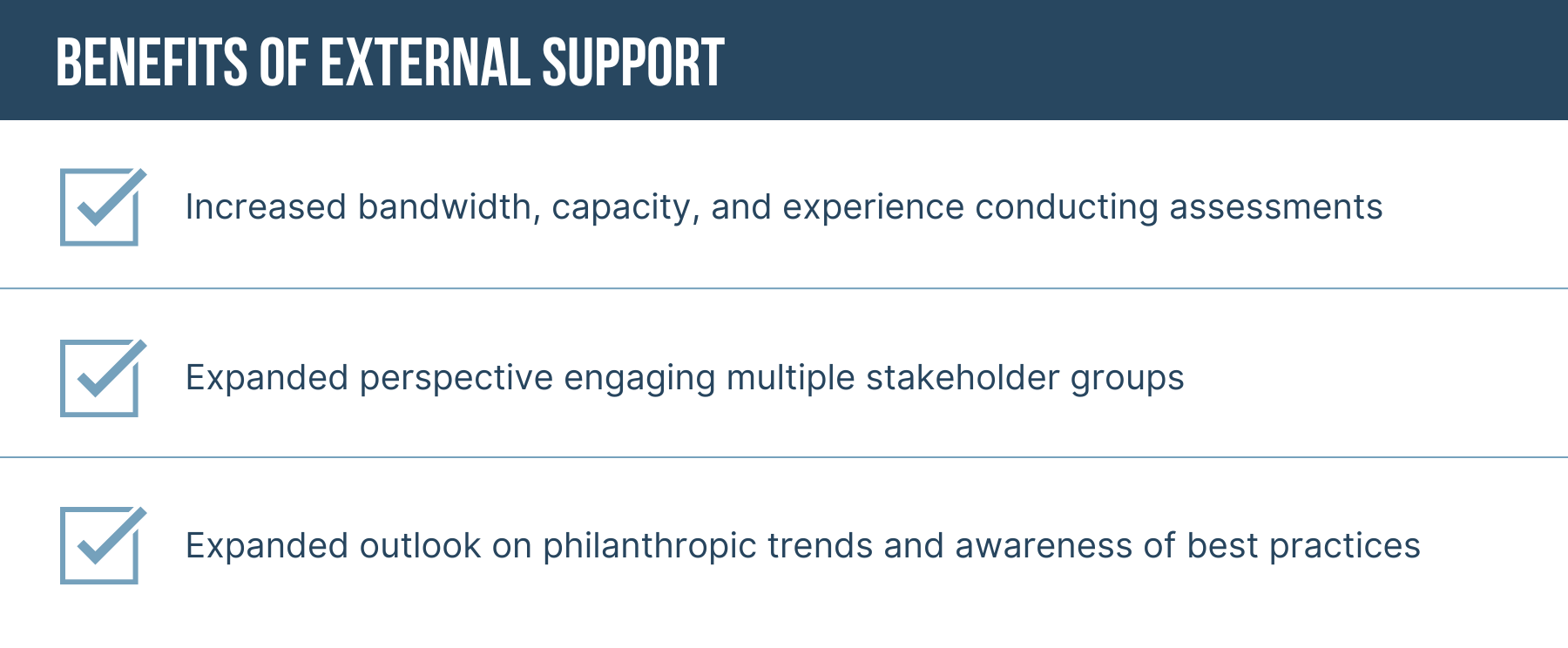
CFA’s consulting team brings valuable external perspective and a systematic approach to the development assessment process. With projects and partnerships spanning all facets of fundraising, our team is well-versed in established fundraising best-practices and current philanthropic trends. And with vast experience conducting development assessments, our team is positioned to engage the right stakeholders and pinpoint the datasets that will yield the greatest insights.
WHEN TO CONDUCT A DEVELOPMENT ASSESSMENT
Development assessments provide vital insight for organizations seeking to evaluate the efficacy of their development program and can maximize a team’s fundraising potential during points of inflection. Development assessments are uniquely valuable and most often implemented during stages of significant organizational growth and change, such as:
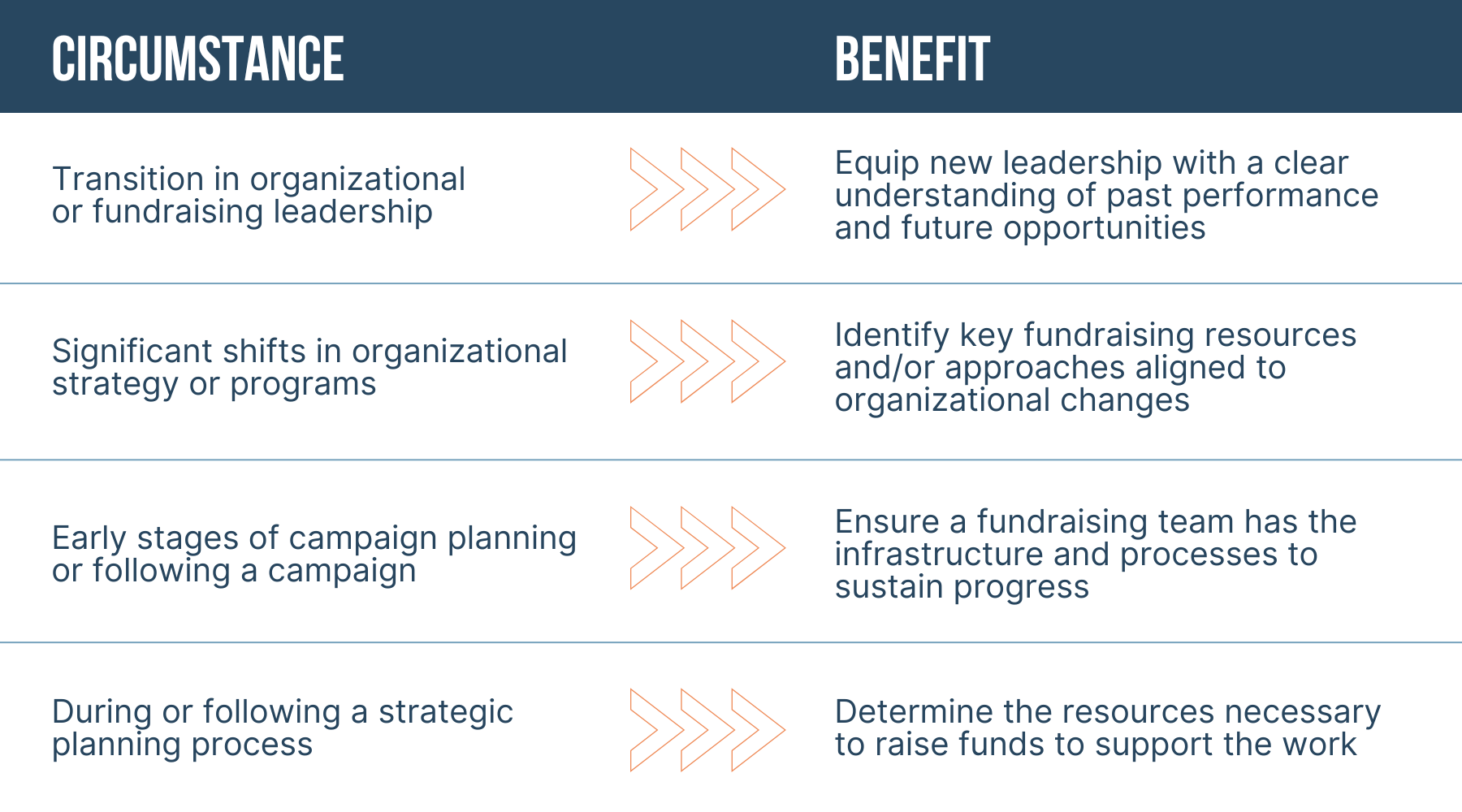
While development assessments can be conducted at any point in time, CFA Head of Consulting and Principal-Midwest Jake Muszynski encourages organizations to consider their readiness to fully engage in the process. “We work hand-in-hand with our clients and need them to approach the work with open minds and open hearts. While CFA does most of the heavy lifting, they must be open to embracing what the process reveals.”
DEVELOPMENT ASSESSMENT PROCESS
CFA balances the art and science of fundraising through data-driven strategies coupled with unique, case-by-case solutions. While CFA offers a customized approach to every development assessment, our process includes the following core components designed to uncover the most significant fundraising challenges and opportunities for growth for each organization we serve:
Kickoff Meeting
The project team meets with the organization to discuss a proposed project timeline, share upcoming deliverables, and identify scheduling considerations.
Materials Request
CFA conducts an audit of the organization’s development programs, donor communications, systems, and strategies to assess fundraising capacity and potential.
1:1 Interviews
CFA interviews the organization’s Executive Director, development or advancement staff, key leadership staff, and board members with insights into the fundraising programs and/or deep institutional knowledge.
Data Meetings
CFA’s Data and Research Team partners with the organization’s database administrator(s) or related staff to identify their data needs while assessing their database infrastructure and data strategy. Following an extensive donor wealth and engagement screening resulting in custom inclination scores, our team also provides segmentation recommendations for assigned portfolios, targeted appeals, and other tailored fundraising strategies.
Specialized Services
Because we know that each client’s needs are unique, we activate specialized services to ensure our work remains highly tailored. These services can range from surveys to understand stakeholder motivations, a deep analysis of donor trends, case for support development, campaign readiness, and much more depending on the client’s need.
Check-In Meetings
CFA meets regularly with key organizational stakeholders to provide ongoing counsel and share insights through the process.
Final Report
CFA provides a comprehensive report with specific recommendations and goals based on the organization’s unique priorities and opportunities, outlining clear and actionable strategies to enhance fundraising results.
ACTIVATING YOUR STRATEGY
CFA’s work is far from complete after sharing the findings from a development assessment. As Jake shares, “The organizations we partner with often have the answers, but the challenge comes in deciding what to do next. That is where CFA comes in, bringing the art to the science of development assessments and partnering with our clients to create action plans to carry the work forward.”
CFA has supported dozens of organizations to implement customized action plans based on the findings and recommendations culminating from their development assessments. Learn more about CFA’s recent development assessments.
PARTNER WITH US
Development assessments are a powerful way to energize your organization’s fundraising efforts. Engaging an external consultant offers the added expertise, bandwidth, and perspective to yield actionable yet transformational insights. At a time when most fundraising teams are stretched thin yet challenged to accelerate organizational growth, development assessments provide a direct path to actionable strategies that will result in more successful, consistent, and sustainable results.
When you partner with CFA, you are accessing the collective expertise of our entire team. As an organization seeking to continuously improve, our consultants meet regularly to identify trends, share learnings, assess the efficacy of our strategies, and scale promising practices. We bring the best of these insights through a highly-customized approach to each development assessment we complete and every client we serve
If you are interested in exploring what a development assessment might look like for your organization, contact CFA today to see how we can help.
Jake Muszynski, Head of Consulting & Principal, Midwest
Jake is a highly experienced fundraising and consulting professional with over 15 years of combined experience in the industry. He began his successful career in major gifts at higher education institutions and has since provided counsel to over 40 clients at CFA.
In this role, Jake leads major projects across the United States, including campaign readiness and feasibility studies, campaign planning and counsel, and development assessments. He takes a holistic approach to fundraising, considering organizational health from all perspectives and applying a mix of soft skills and data-driven decision-making to each unique situation.
A native of Perham, Minnesota, Jake holds a bachelor’s degree in communication from Concordia College. He and his wife have two children and share a love of folk and jazz music.
Kendall Carlson, Content Writer
A frequent contributor to CFA’s digital content, Kendall Carlson has spent her career advancing nonprofit organizations across the Twin Cities. With 16 years of experience, Kendall brings a balance of strategic and operational leadership spanning fundraising, program development, evaluation, and strategic planning.
Most recently, Kendall served as Development and Communications Director at Hired, where she diversified revenue for the organization’s $11M budget and increased individual giving by 60%, led a rebrand, and launched an organization-wide data for impact initiative. Prior to Hired, Kendall served at Greater Twin Cities United Way, where she led an advancement strategy team to increase investment and engagement from the organization’s top corporate and major donors. Kendall is known as a strategic, solution-oriented leader with a high capacity for detail and commitment to quality. She launched her consulting practice, Luminate Consulting, in 2022 to bring her skills in fundraising and program strategy to nonprofits seeking sustainable growth.
In Conversation with CFA: Data Integrity

This webinar offers tips for strengthening your data strategy to increase your fundraising results, as well as a self-assessment to identify steps you can take to enhance your organization’s data infrastructure and capabilities.
Data Self-Assessment
Learn if you are ready to update your data strategy using CFA’s self-assessment.
Moving to the Campaign Public Phase

When is it time for your campaign to go public? Because the quiet phase occurs largely behind closed doors, the transition into the public phase of a campaign can seem complex and mysterious. The art and science behind successful campaigns play prominently in the decision to shift gears from one phase to the next.
The most effective campaign quiet phases are far from a well-kept secret. Rather, the quiet phase is a distinct point of inflection when a campaign’s most significant work is underway.
As CFA shared in A Closer Look at the Campaign Quiet Phase, the quiet phase serves as a litmus test for a campaign’s vision and case for support, deeply engaging top priority donors while building confidence amongst fundraising staff and donors alike. The quiet phase also confirms what is often the most uncertain component of any campaign: the fundraising goal. By testing the case for support and gaining insight from an organization’s closest supporters, the quiet phase provides a period of flexibility before setting the final bar to achieve success.
TRANSITIONING FROM THE QUIET PHASE
The determination to enter a campaign’s public phase is more nuanced than simply surpassing a predefined fundraising threshold.
CFA Senior Manager of Campaigns Anne Spears brings over a decade of fundraising experience, offering strategic guidance to organizations throughout each stage of their campaigns and supporting progress toward their campaign goals. CFA takes a customized approach to each client we serve, and there are a variety of factors Anne considers when providing counsel at this strategic period in a campaign:
- Fundraising Progress: While most nonprofits raise between 50-80% of their overall goal before going public, campaigns quickly raising a significant percentage of funds may choose to set their sights higher than the original internal goal, while those experiencing fewer commitments or gifts lower than anticipated may establish a more feasible fundraising goal before entering the public phase.
- Campaign Momentum: An organization’s pace toward their fundraising goal can also influence the decision to go public. Organizations quickly raising funds with a strong prospect pipeline may choose to take their campaign public early on to sustain the excitement. Conversely, organizations experiencing a decline in fundraising momentum may go public more quickly to broaden their pipeline of potential supporters. For organizations with a commitment to equity, the decision to promptly take their campaign public creates access early on for donors and stakeholders at all levels.
- Anticipated Timeline and Trajectory: An organization’s capacity to implement and sustain a campaign will influence the duration and eventual finish line of their campaign. Some organizations with a smaller donor base and modest fundraising goal may strive for an expedited campaign relying on their current staffing structure, while organizations with ambitious goals may expand their fundraising team and set out on a lengthy campaign to reach their final destination.
CFA provides customized counsel to each organization we serve, weighing these factors alongside the organization’s history, base of support, and vision for the future. While each campaign follows a unique course, having a direct line of sight to the fundraising goal – defined by a strong base of donors and promising prospects in the pipeline – before publicly announcing the campaign is the surest path to success.
SUSTAINING MOMENTUM IN THE PUBLIC PHASE
Regardless of the depth of an organization’s development team or the extent of its fundraising goal, campaigns are a comprehensive undertaking that require sustained stamina and capacity to complete. As critical donor engagement activity progresses in the quiet phase, there is important groundwork to be laid internally to sustain progress in the public phase.
Creating a Communications Plan
“The key to public phase fundraising success hinges on a smooth passing of the baton from an organization’s development team to their marketing team,” according to Anne. For smaller organizations, these efforts may be housed under one department or even shared amongst a few staff. Larger organizations will require increased cross-functional coordination as the marketing team prepares the public facing communications plan. “When organizations decide to go public quickly, there is significant work happening simultaneously – securing leadership gifts while also targeting stakeholders at varying giving levels. So, it’s critical that organizations have their campaign communications plan ready as activity ramps up.”
- A consistent, compelling communications plan should be built around the campaign’s case for support, complete with content and collateral to expand awareness, garner additional interest, and support individual donor cultivation. Check out CFA’s Donor Communications & Outreach Guide for more details about creating a donor communications plan to support your campaign or annual fund.
Engaging Staff and Volunteers
As organizations transition into the campaign public phase, the initial motivation and enthusiasm driving early fundraising wins can wane amongst staff and volunteer committee members. Establishing SMART goals tied specifically to the quiet and public phases of a campaign can support fundraising staff as they continue to make meaningful progress and sustain momentum within their own portfolios. As CFA’s Principal-West Coast Kristin Love shared in a recent article on fundraising metrics, relying on activity- and outcome-based leading indicators will drive results by informing time management, improving accountability, and ultimately increasing giving.
The roles of volunteer committee members naturally transition and often decline in the campaign public phase, with involvement becoming more sporadic and event-based. The campaign public phase often involves peer-to-peer fundraising, which can also be a chance for volunteers to leverage their networks in new and exciting ways. To replenish the excitement of the campaign committee, Anne often advises clients to create space for new committee members as campaigns go public. “Allowing committee members to roll off and bringing in new, fresh energy can help to galvanize the team in the midst of a marathon of a campaign.”
ACHIEVING FUNDRAISING SUCCESS IN THE PUBLIC PHASE AND BEYOND
Sustained fundraising success requires consistent planning for the future. Just as organizations prepare for their campaign public phase during the quiet phase, it is equally important to establish systems to ensure proper gift acknowledgement and data integrity during the public stage. Internal capacity building can be one of the most impactful, enduring efforts of any campaign.
CFA guides our clients to ensure gift recognition processes, donor data entry, and reporting systems are prepared and ready for an influx of gifts. These vital systems provide real-time insights to inform fundraising strategies while enabling sustained donor engagement and stewardship post-campaign. With accurate donor records and consistent donor moves management strategies, organizations will be positioned to sustain future fundraising success.
CONTACT US
Campaigns are an extensive undertaking that require a balance of organizational strategy, experience, and stamina. At CFA, we have partnered with more than 100 organizations throughout the planning, execution, and sustaining of transformative campaigns. If your organization is interested in support to launch a successful campaign, contact CFA today to explore how we can help.
Anne Spears, Senior Manager of Campaigns
An experienced fundraiser with over a decade of experience in education, religious, and social service based nonprofit fundraising, Anne is passionate about the work being done by nonprofit organizations. She is energized and inspired by working side by side with our nonprofit partners as a project manager for fundraising campaigns.
Most recently Anne was the Director of Development at the Episcopal Diocese of West Texas where she oversaw a multitude of initiatives including capital campaigns for Diocesan camp facilities from the South Texas Coast to the Colorado Rockies, campaigns to assist asylum seekers traveling from Mexico to the U.S., and consulted with the 87 Diocesan churches regarding their fundraising needs.
Previously Anne was the Chief Development Officer for Ascension DePaul Services of San Antonio and the Development Coordinator at St. Thomas Early Learning Center in College Station, Texas. She also worked for the State of Montana as a social services specialist serving indigenous and rural populations.
Anne has a B.S. in Sociology, a M.S. in Family and Child Studies, along with a Master of Public Administration. She also is a Certified Fundraising Executive (CFRE). Anne lives in San Antonio, Texas, with her husband and three children.
Kendall Carlson, Content Writer
A frequent contributor to CFA’s digital content, Kendall Carlson has spent her career advancing nonprofit organizations across the Twin Cities. With 16 years of experience, Kendall brings a balance of strategic and operational leadership spanning fundraising, program development, evaluation, and strategic planning.
Most recently, Kendall served as Development and Communications Director at Hired, where she diversified revenue for the organization’s $11M budget and increased individual giving by 60%, led a rebrand, and launched an organization-wide data for impact initiative. Prior to Hired, Kendall served at Greater Twin Cities United Way, where she led an advancement strategy team to increase investment and engagement from the organization’s top corporate and major donors. Kendall is known as a strategic, solution-oriented leader with a high capacity for detail and commitment to quality. She launched her consulting practice, Luminate Consulting, in 2022 to bring her skills in fundraising and program strategy to nonprofits seeking sustainable growth.
How to Approach Major Donors as Stakeholders

While individual giving has fallen in recent years, comprising 64% of all philanthropic contributions in 2023, a significant percentage (88%) of those gifts came from a very narrow segment of individual donors (12%). The value of these leading contributions from a small group of donors underscores the importance of a strong major gifts strategy.
Successful major giving programs build relationships with people who share an affinity for an organization’s vision and have both the desire and ability to advance the organization’s mission. Yet nearly 60% of nonprofits report not having a major gift strategy and 68% do not have a dedicated major gift fundraiser on staff, according to a survey conducted by Bloomerang.
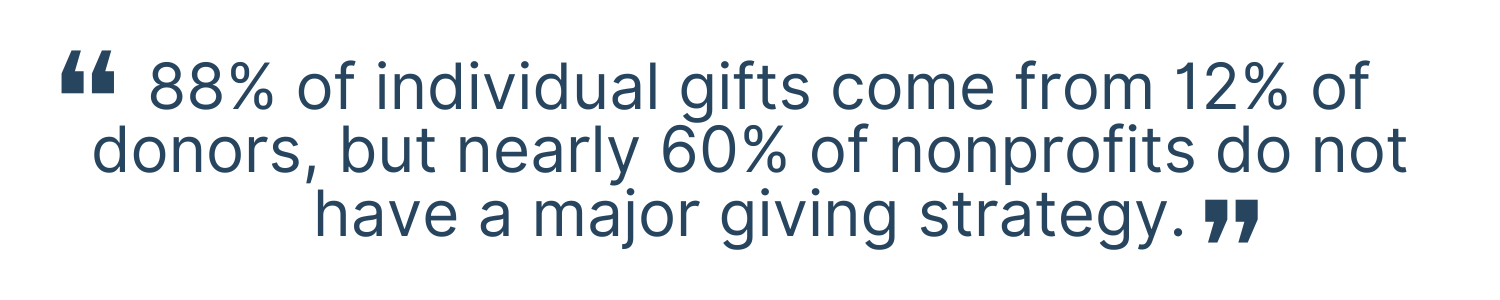
Whether your organization has an established major gifts program or is seeking to strengthen your pipeline of major donors, approaching donors as key stakeholders will establish the foundation for meaningful relationships while maximizing the opportunity for transformational contributions.
IDENTIFYING MAJOR DONORS
Every organization defines their own giving threshold for major donors based on their size, budget, and fundraising capacity. As CFA highlighted in an article about major donor cultivation strategies, some may consider $1,000 to be a significant gift and work to cultivate relationships that lead to that level of giving, while others may focus on gifts of $50,000+ as their target for nurturing deeper donor relationships.
CFA Managing Director Nathan Urbach brings 20 years of professional experience, which includes leading major giving programs and managing fundraising campaigns for large legacy arts and cultural institutions. Having achieved significant fundraising success by approaching donors as stakeholders in an organization’s future, Nathan now brings this experience to his work with a vast array of CFA clients.
According to Nathan, an organization’s most promising donors are already in its database and typically share the following characteristics:
- Passion for your organization’s work and mission
- Commitment to your organization with 3-5+ years’ giving history
- Demonstrated financial capacity and recent increases in giving
- Communicative and highly engaged, often serving as a board member or volunteer
Organizations can complete an analysis of their database on their own or work with a partner like CFA to discover opportunities within their existing donor pipeline. Once prospective major donors have been identified, the key is taking time to get to know them on a personal level to gain insights that will deepen the relationship and open up opportunities to invest in the future of the organization.
CULTIVATING & STEWARDING STAKEHOLDERS
Engaging in regular communication is key when cultivating and stewarding donors. As CFA shared in an article about recent trends impacting philanthropy, today’s donors and philanthropists are experiencing and responding to societal shifts in a variety of ways. “Despite external forces of change impacting the nonprofit sector, effective fundraising remains centered on relationship-building and authentic donor engagement.”
Acknowledging current levels of uncertainty, Nathan encourages organizations to take a thoughtful and strategic approach to communicating with donors. “In addition to 76 elections globally, plus our nation’s upcoming election, donors are also dealing with continued social unrest, inflation, and other world conflicts that are impacting domestic communities. These factors create additional calls to action that may redirect a donor’s attention. However, it is important to remember that your donors are still listening.”
- Bottom line: Organizations need to stay mission-focused, remaining present and strategically part of the noise while connecting their work to the broader issues at hand.
Nathan considers personal, yet professional, relationships with major donors absolutely essential for success. “While major giving begins and ends with an organization’s mission, connections mature thanks to meaningful relationships with those who fulfill the organization’s goals and priorities.” Nathan also encourages organizations to continually keep donors close, treating them as shareholders in the work through transparent communications. “Donors want to hear about the good, and they also want to hear about challenges. It’s important to remember that major donors care as much as we do and want the organization to succeed.”
By understanding what motivates a donor’s philanthropy and how they would like to engage, a gift officer can take an individualized approach to meeting their philanthropic interests and financial priorities by:
- Identifying personal factors and financial commitments that may impact a donor’s giving (e.g., children attending college or the sale of a business).
- Assisting major donors in exploring and implementing gift planning vehicles as appropriate (i.e. bequests, donor-advised funds, charitable remainder or lead trusts) to sustain or deepen their commitment based on changes to their financial situation.
- Identifying specific programs or priorities that align most closely with a donor’s philanthropic passions.
- Moving the conversation beyond the cycle of annual fund renewals to positioning a comprehensive, multi-year request that will expand the donor’s overall commitment by encompassing their annual gifts and a focused above-and-beyond investment.
SOLICITING TRANSFORMATIONAL GIFTS
Successful solicitations for transformational gifts should be highly tailored and personalized. In addition to leveraging organizational data and prospect research to inform an ask, transformational investments are the product of personal relationships and focused conversations that reveal critical insights validating the investment amount, timing, purpose, and giving vehicles. As Nathan shares, “Asking for a meaningful contribution should never come as a surprise to the donor. You’ve already shared the organization’s needs, what the investment will achieve, and identified the level and perimeters of investment that align with the donor’s interests and capacity.”
As stated in CFA’s Guide to the Major Gifts Cultivation Cycle, the request “should stretch the donor respectfully while also offering them the opportunity to dream big with the organization.” Once a request has been articulated, Nathan coaches his clients to stop talking and be ready to listen. “Whether the donor responds with a ‘yes’, ‘no’, or ‘not right now,’ the path to a stronger donor relationship requires a graceful, grateful response, and a willingness to learn, gathering insights that will keep the door open for future engagement.”
CFA IS HERE TO HELP!
Major giving is a long-term, relationship-building strategy that brings key donors to the inside of an organization’s work and impact while unlocking transformational investment opportunities that align with their philanthropic passions.
By approaching major donors as strategic shareholders, nonprofits can fully leverage the multifaceted return on investment generated by building strategic partnerships with their top shareholders. In addition to consistent, long-term support, major donors bring influence, connections, strategic guidance, and insights that can further advance the work and mission of the organizations they care deeply for. It is the culmination of these offerings that make major donors an irreplaceable asset to the organizations willing to dedicate the time and resources to engage them.
CFA supports organizations at every stage of the major gifts cultivation cycle. If you are interested in exploring how CFA can support your organization’s major giving strategy, contact CFA today to see how we can help.
Nathan Urbach, Managing Director
Nathan comes to CFA with 20 years of experience working with nonprofit organizations, primarily within the arts and culture sector. He is an ardent believer in the positive effects of engaging with his community and energizing others to achieve their goals.
Nathan’s most recent role was Vice President of Principal and Campaign Giving for the New York Philharmonic, where he previously served as Vice President of Inaugural Activities and Director of Development. During his tenure, Nathan led the planning efforts for the activities surrounding the grand opening of the new David Geffen Hall and successfully secured over $17 million in funding for two inaugural galas. In addition to his contributions to the New York Philharmonic, Nathan also served as the Interim Chief Advancement Officer at the New York Botanical Garden.
Before his involvement with these New York legacy institutions, Nathan served as an Executive Director at CCS Fundraising. In this capacity, he collaborated with noteworthy organizations such as the Vietnam Veterans Memorial Fund, Westport Library, Film at Lincoln Center, multiple Manhattan-based independent schools, and the Akilah Institute, a nonprofit college for women in Kigali, Rwanda. Across these roles, Nathan worked closely with organizational leadership and board members to manage fundraising campaigns ranging from $15 million to over $100 million, and he also strategically built and strengthened several principal giving programs.
Nathan’s career began with a role in the artistic department at the New York City Opera; since then, he has partnered with five of the 11 constituent organizations on the campus of Lincoln Center. Prior to transitioning into the fundraising field, he managed the Metropolitan Opera’s Lindemann Young Artist Program, where he collaborated with musical luminaries such as James Levine, Renata Scotto, Dame Kiri Te Kanawa, and Sir Thomas Allen.
Nathan has been a guest speaker at Opera America, the League of American Orchestras, NYU’s School of Professional Studies, and Columbia University. He serves on the Board of Old Westbury Gardens and is recognized as a distinguished alum of the Crane School of Music.
Nathan lives in New York City, where he is a collector of decorative arts and was featured on an episode of Homeworthy, a program dedicated to sharing stories of individuals and their homes. Outside of working with nonprofits, he is an avid traveler and enjoys reading and running.
Kendall Carlson, Content Writer
A frequent contributor to CFA’s digital content, Kendall Carlson has spent her career advancing nonprofit organizations across the Twin Cities. With 16 years of experience, Kendall brings a balance of strategic and operational leadership spanning fundraising, program development, evaluation, and strategic planning.
Most recently, Kendall served as Development and Communications Director at Hired, where she diversified revenue for the organization’s $11M budget and increased individual giving by 60%, led a rebrand, and launched an organization-wide data for impact initiative. Prior to Hired, Kendall served at Greater Twin Cities United Way, where she led an advancement strategy team to increase investment and engagement from the organization’s top corporate and major donors. Kendall is known as a strategic, solution-oriented leader with a high capacity for detail and commitment to quality. She launched her consulting practice, Luminate Consulting, in 2022 to bring her skills in fundraising and program strategy to nonprofits seeking sustainable growth.
Keeping Pace With Trends in Philanthropy

Societal trends and global dynamics are accelerating in complexity across multiple fronts and changing human behaviors at a faster pace than ever before. As forces for change increase, proactive nonprofit leaders are pursuing strategies to keep their fundraising teams ahead of the curve.
CFA Principal, Mid-Atlantic Johnny Burleson brings more than 20 years’ experience spanning arts and culture, education, and human services as he guides CFA clients to navigate shifting philanthropic trends. While understanding the importance of local and global dynamics, Johnny encourages organizations to prioritize meaningful donor relationships by infusing a culture of philanthropy throughout their organizational architecture. Ultimately, it will be these relationships that sustain organizations during the most tumultuous of times.
- Culture of Philanthropy: A set of organizational beliefs, practices, and priorities that consider fundraising and philanthropy a shared responsibility that must be fully integrated across programs, finance, and operations. Through a disciplined approach rooted in engaging and meaningful relationships with donors, a culture of philanthropy leads to increased investments that ultimately advance an organization’s mission and work.
RECENT TRENDS IMPACTING PHILANTHROPY
From rapid technological advancements and climate change, to heightened economic and political uncertainty, there is no shortage of developments on the forefront in the United States and around the world. Today’s donors and philanthropists are experiencing and responding to these societal shifts in different ways.
According to the 2023 Giving USA report, donations from individual donors have fallen significantly over the past 40 years, now comprising only 64% of all philanthropic giving compared to 81% in 1982. For some donors, economic and geopolitical uncertainty is contributing to decreased giving. For others, the rise in virtual engagement and unending streams of nonprofit content are leaving them disconnected from causes they care about. For others still, the seemingly insurmountable nature of society’s challenges can create a sense of apathy.
Despite the plethora of challenges and resulting headwinds, there is a recognition that people and organizations need to come together to create solutions that are more expansive than any single entity can accomplish alone. According to Johnny, these rapid shifts are motivating some philanthropists to seek deeper levels of engagement in the causes they care about. “This depth and breadth of change has not been experienced by previous generations…and this moment represents great potential for the nonprofit sector.”
With information at their fingertips, Johnny notes, donors today have a deeper understanding of the issues at hand and a greater sense of an equitable future. “Now more than ever, active philanthropists are thinking about their giving from a business perspective, with themselves as shareholders in the societal return on investment.”
Donors also want to be more authentically engaged as part of the solution. “Younger generations of donors want to roll up their sleeves and truly get involved, to contribute both financially as well as intellectually to the problems at hand.” These generational and behavioral trends present an important opportunity for organizations seeking to sustain and increase giving amongst individual donors.
SUSTAINING FUNDRAISING SUCCESS DURING TIMES OF CHANGE
Successful fundraising begins with a compelling vision that unites staff, volunteers, and donors around a shared goal. With a strong case for support, organizations with an agile infrastructure instilled with a culture of philanthropy will be poised to navigate significant periods of change while keeping donors closely engaged.
Cohesive Organizational Architecture
A true culture of philanthropy permeates not only the development team, but also marketing, operations, and programs. As Johnny shared in a recent webinar A Generation of Change hosted by APS Group and CFA, “Organizations must design their culture from the ground up around relationships and donor engagement.”
By embedding a culture of philanthropy into every facet of an organization, the responsibility for relationship cultivation, strategic engagement, and stewardship becomes shared amongst staff and extends to the board and volunteers as well. This cultural paradigm enables deeper levels of donor stewardship, safeguarding relationships and serving as a protective factor against internal and external shifts.
Deep Donor Engagement
Despite external forces of change impacting the nonprofit sector, effective fundraising remains centered on relationship-building and authentic donor engagement. As CFA recently shared in an article exploring campaign committees, “While virtual communications and social content may reach a broader audience of potential supporters, these strategies are less likely to sustain and increase giving without developing personal donor connections.” In this era of digital engagement, trust can be built more quickly through consistent storytelling that creates an emotional connection to an organization’s work and impact, however top priority relationships will only go as deep as their personal connections to the humans making that impact possible.
Key trends are emerging in response to declines in individual giving as organizations seek to build stronger pipelines of supporters. According to The Chronicle of Philanthropy, many organizations are prioritizing their existing supporters through personal stewardship – including phone calls, handwritten notes, and messages tailored to each donor – while also finding success leveraging the networks of current donors to attract new supporters. CFA also recommends creative stewardship techniques, such as private gatherings, customized impact reports, and exclusive experiences.
A key component of stewardship is what Johnny refers to as “radical storytelling.” Far from traditional, generic donor communications, radical storytelling is “being fully transparent with donors and emphasizing with clarity the inspirational impact an organization is achieving.” Radical storytelling requires bringing donors on the inside, authentically sharing both challenges and accomplishments, and contextualizing the organization’s work within broader regional or systemic challenges. It is this kind of frequent and in-depth storytelling that provides proof of impact, creating strong connections and increasing levels of engagement.
CFA IS HERE TO HELP!
While so much in the nonprofit sector and the broader world around us is evolving, one constant remains: the importance of building relationships.
Donor relationships are foundational to our work at CFA and remain ever critical to the fundraising success of our clients. Whether we are conducting a development assessment, strengthening an annual giving program, or launching a campaign, we support our clients to establish the groundwork for a strong culture of philanthropy at every level of their organization.
With a shared organizational understanding of what is possible through philanthropy, and by intentionally building teams with the skill sets and capacities to meaningfully and consistently engage donors, organizations will be prepared to withstand future shifts while tapping into the transformational generosity that is driven by human connections and our shared desire for a better world.
If you are interested in exploring how CFA can support your organization to navigate shifting philanthropic trends and deepen donor relationships, contact CFA today.
Johnny Burleson, Principal, Mid-Atlantic
Johnny comes to CFA with over 20 years of nonprofit advancement experience in the arts and cultural, educational, and human services sectors. His proven track record of high-trust, high-performance leadership spans multiple areas of expertise, including campaign planning, major gifts, corporate and foundation relations, and government relations.
As Principal, Mid-Atlantic, Johnny oversees projects spanning CFA’s suite of fundraising counsel services. Johnny believes in aligning donors’ passions with innovative ideas, emphasizing the importance of promoting philanthropy through coalition-building and partnerships to achieve the greatest impact.
Prior to joining CFA, Johnny served as Chief Advancement Officer for North Carolina Museum of Art in Raleigh, where he successfully restructured development and membership operations and transitioned the organization from a transactional approach to an institution-wide culture of philanthropy. Johnny also oversaw the planning of the largest fundraising campaign in the museum’s history.
Prior to his role at NCMA, Johnny held the position of Director of Strategic Partnerships with the Blue Cross and Blue Shield of North Carolina Foundation, playing a pivotal role in building and stewarding local, state, and national relationships to bring philanthropic and federal resources to North Carolina in support of stronger, healthier communities. Johnny’s extensive career also includes 17 years in higher education philanthropy and advancement. He began at his alma mater, North Carolina State University, where he received a BS in Textiles with a focus on the Italian textile industry. Additionally, he held leadership positions at Appalachian State University and the University of North Carolina School of Government in Chapel Hill.
Johnny has volunteered as board member for several North Carolina nonprofits, including Preservation North Carolina, Triangle Land Conservancy, Lost Province Center for the Cultural Arts, Ashe County Chamber of Commerce, and Ashe County Arts Council. Outside of work, Johnny can be found on Old Orchard Creek, his blueberry farm located in Ashe County, NC. His farm is on the National Historic Register and is also protected by a conservation easement, reflecting his personal passion for the mountains, the arts, historic preservation, water, land, trails, local food, and sustainable agriculture.
Kendall Carlson, Content Writer
A frequent contributor to CFA’s digital content, Kendall Carlson has spent her career advancing nonprofit organizations across the Twin Cities. With 16 years of experience, Kendall brings a balance of strategic and operational leadership spanning fundraising, program development, evaluation, and strategic planning.
Most recently, Kendall served as Development and Communications Director at Hired, where she diversified revenue for the organization’s $11M budget and increased individual giving by 60%, led a rebrand, and launched an organization-wide data for impact initiative. Prior to Hired, Kendall served at Greater Twin Cities United Way, where she led an advancement strategy team to increase investment and engagement from the organization’s top corporate and major donors. Kendall is known as a strategic, solution-oriented leader with a high capacity for detail and commitment to quality. She launched her consulting practice, Luminate Consulting, in 2022 to bring her skills in fundraising and program strategy to nonprofits seeking sustainable growth.
Campaign Committees: Love Them or Leave Them?

Fundraising at its core is about human connections and personal relationships: two things that are paramount during campaign planning and campaign committee formation.
As relationships with donors evolve in an increasingly virtual world, traditional approaches to campaign planning are becoming less broadly applicable. When it comes to campaign committees, or any other fundraising program or strategy, CFA does not shy away from questioning the status quo or finding new solutions that will yield results in today’s philanthropic environment.
With more than a decade of experience in nonprofit development, CFA Senior Manager of Campaigns Anne Spears works alongside clients as a partner in their campaigns. “Campaign committees have been a mainstay in campaign execution, and the thought of navigating a campaign without one feels like uncharted territory,” shares Anne. “But they are not always essential – and occasionally detrimental – to the fundraising process.”
Whether your organization has a campaign on the horizon or is seeking to strengthen your major gifts program, consider how deeper relationships with key donors can advance your mission in the present while setting up your organization for future fundraising success.
DONOR RELATIONSHIPS ARE EVOLVING
Some organizations are turning away from traditional, relationship-based fundraising methods in favor of mass communication and online engagement. While virtual communications and social content may reach a broader audience of potential supporters, these strategies are less likely to sustain and increase giving without developing personal donor connections. Real connections simply cannot happen without person-to-person interactions and conversations.
Anne shares, “Younger generations are pulled in even more directions than before, and people are choosing to spend their time differently. Authentic donor engagement and relationship-building is evolving and we need to give donors the opportunity to be known as people.” This confluence of trends, resulting in an increased breadth and decreased depth of donor relationships, poses a significant challenge for organizations preparing for a campaign.
CAMPAIGN COMMITTEES MAY NEED TO EVOLVE, TOO
Successful campaigns remain largely unchanged in their reliance on a focused set of influential relationships. Traditionally, campaigns are led by one or more committees comprised of key organizational stakeholders and influential, high-capacity donors. Effective campaign committees bring an infusion of energy and passion for the campaign’s vision and leverage personal and professional connections to expand the campaign’s reach.
- CFA’s Guide to an Effective Nonprofit Campaign Committee offers key considerations for organizations seeking to assemble a more traditional volunteer committee that will serve as the driving force behind their campaign.
Yet, traditional guidance for recruiting a campaign committee does not account for the nuanced and evolving relationships organizations may have with supporters. Anne has supported many CFA clients to successfully conduct campaigns and brings a unique perspective to the forces impacting campaign committee selection. “The assumption is that organizations are sustaining and intentionally deepening relationships with influential and high-capacity donors, and that is not always the case.”
For organizations with a nontraditional set of key stakeholders, such as highly engaged volunteers with limited connections to high-capacity donors, Anne advises her clients to be realistic and work with the relationships and connections they have to achieve their goals.
RETHINKING CAMPAIGN COMMITTEES
Campaign committees require strategic coordination from development staff, and a commitment to both the campaign AND the organization’s mission to be successful. As campaign committees shift in their purpose and strategy, Anne encourages her clients to evaluate their relationships with donors before engaging a campaign committee. “At the end of the day, you really need people to open doors, get meetings, and make connections.” Thinking expansively about the organization’s stakeholders, audiences, and beneficiaries – including both present and past generations – can reveal leaders and volunteers willing to rise to the occasion.
A common misstep is recruiting individuals with a high capacity to give but without the passion or personal bandwidth to assume the additional responsibility. As Anne shares, “Ultimately, individuals want to add value beyond their checkbook, to be seen as authentic partners in the work.” If the relationship has not been cultivated over time, or if the connection to the organization’s mission and leadership is not strong, it will become evident when campaign activity gets underway.
As organizations identify prospective volunteers, CFA encourages authentic conversations to identify how each volunteer envisions supporting the campaign. Not every volunteer needs to assume the same traditional campaign activities (i.e. requesting meetings, soliciting donors), but by creating an intentional volunteer engagement plan for each committee member, organizations can maximize their skill sets, value add, and level of engagement in the campaign.
For organizations considering campaign committee alternatives, one or more of the following options may produce a stronger return on investment:
- Establishing a committee in name only to provide a vote of confidence for the organization and campaign.
- Partnering with select volunteers such as board members and loyal donors to make introductions, request meetings, and host cultivation events.
- Relying on internal staff capacity to cultivate and solicit donors.
With or without a campaign committee, relationships are fundamental to fundraising success. As Anne attests, “Organizations need external partners that bring financial resources, volunteer capacity, influence and advice to guide the organization’s trajectory.” Ultimately, organizations that have invested early on in these relationships, by engaging their board members, donors, and key stakeholders, will find a much smoother path to reaching their campaign goal.
CFA IS HERE TO HELP!
While so much in philanthropy is evolving, one constant remains: the importance of relationships, not only in campaigns, but across every facet of fundraising. Relationships still take time to develop, and there is no time like the present to deepen relationships with your organization’s most important supporters.
At CFA, we believe there is “no one size fits all” when it comes to planning campaigns and selecting the committees that run them. That’s where our combination of art, science, and custom solutions comes in, because each organization we serve is as unique as the individuals that lead and support them. Our consultants offer coaching, strategic guidance, and custom tools for effectively deploying campaign committees (or finding more successful alternatives!) that will engage donors and inspire support.
If you are interested in exploring how CFA can support your organization’s donor engagement strategy or next campaign, contact CFA today to see how we can help.
Anne Spears, Senior Manager of Campaigns
An experienced fundraiser with over a decade of experience in education, religious, and social service based nonprofit fundraising, Anne is passionate about the work being done by nonprofit organizations. She is energized and inspired by working side by side with our nonprofit partners as a project manager for fundraising campaigns.
Prior to joining CFA, Anne was the Director of Development at the Episcopal Diocese of West Texas where she oversaw a multitude of initiatives including capital campaigns for Diocesan camp facilities from the South Texas Coast to the Colorado Rockies, campaigns to assist asylum seekers traveling from Mexico to the U.S., and consulted with the 87 Diocesan churches regarding their fundraising needs.
Previously, Anne was the Chief Development Officer for Ascension DePaul Services of San Antonio and the Development Coordinator at St. Thomas Early Learning Center in College Station, Texas. She also worked for the State of Montana as a social services specialist serving indigenous and rural populations.
Anne has a B.S. in Sociology, a M.S. in Family and Child Studies, along with a Master of Public Administration. She also is a Certified Fundraising Executive (CFRE).
Anne lives in San Antonio, Texas, with her husband and three children.
Kendall Carlson, Content Writer
A frequent contributor to CFA’s digital content, Kendall Carlson has spent her career advancing nonprofit organizations across the Twin Cities. With 16 years of experience, Kendall brings a balance of strategic and operational leadership spanning fundraising, program development, evaluation, and strategic planning.
Most recently, Kendall served as Development and Communications Director at Hired, where she diversified revenue for the organization’s $11M budget and increased individual giving by 60%, led a rebrand, and launched an organization-wide data for impact initiative. Prior to Hired, Kendall served at Greater Twin Cities United Way, where she led an advancement strategy team to increase investment and engagement from the organization’s top corporate and major donors. Kendall is known as a strategic, solution-oriented leader with a high capacity for detail and commitment to quality. She launched her consulting practice, Luminate Consulting, in 2022 to bring her skills in fundraising and program strategy to nonprofits seeking sustainable growth.
Is Data Integrity Impacting Your Fundraising Results?

If you have experienced frustration, disappointment, or confusion in managing donor data, welcome to the club! According to the 2023 Nonprofit Tech for Good report, 67% of nonprofit organizations rely on a donor database to track donations and manage donor communications; yet few fundraising professionals enter the field with experience in database management.
As the nonprofit sector becomes more data-driven, organizations that are equipped to leverage their donor data have a significant advantage in an increasingly competitive fundraising environment. Whether your organization is seeking to boost your annual fund or preparing for a campaign, consider how a data strategy and data integrity can advance your fundraising efforts.
CFA Definitions:
- Data Strategy: An organization’s articulated objectives, established practices, standards, and protocols to consistently collect a defined set of data to power insightful reporting and inform decision making.
- Data Integrity; Data Hygiene: The ongoing process of ensuring that data stored in a database is consistent, accurate, up-to-date, and error-free.
DATA INTEGRITY’S IMPACT ON FUNDRAISING
While data integrity may seem far removed from an organization’s fundraising results, having streamlined, centralized, and error-free donor data is directly correlated to dollars raised and offers a strong return on investment for organizations willing to roll up their sleeves.
With more than 10 years’ experience in prospect management and data analytics, CFA Senior Manager of Prospect Management Stephanie Willis partners with nonprofit organizations to refine their data strategy and improve data hygiene. “While data cleanup may not be as glamorous as other fundraising strategies, accurate and consistent donor data enables fundraising teams to deploy resources effectively and increase their productivity,” notes Stephanie.
According to Stephanie, valid data unlocks fundraisers’ ability to improve donor retention and build stronger relationships with donors at scale through segmentation and personalization; however, customized donor outreach is only as impactful as the data is accurate. Correctly listing donor names and addresses, eliminating duplicate entries, identifying donors who are part of the same household, and removing recently deceased donors from a mailing list, for example, are critical to maintaining close ties with top donors.
Having reliable donor data also enables fundraising leaders to analyze trends to inform their future fundraising strategies while at the same time gaining a deeper understanding of their organization’s current and potential donors. CFA Senior Manager of Data Solutions Dan Alberti leads data analysis components of CFA projects and collaborates with Stephanie to assess specific data needs of CFA clients. As Dan shares, “Consistently maintained donor data enables organizations to prospect from within their database, identifying promising and sometimes surprising donors from their existing constituents.”
Bottom line: Data integrity plays a pivotal role at every stage of the donor cycle, from identifying new prospects to cultivating and sustaining relationships with current donors.
COMMON DONOR DATA PITFALLS
Despite the proliferation and advanced capabilities of donor database applications and platforms, corresponding tools and reporting capabilities cannot make up for defective data or deficient data management. Challenges associated with donor data typically stem from:
- Poor data integrity (i.e. unformatted addresses, improper capitalization of names, undocumented gift intent);
- Inconsistent data organization (i.e. data in multiple databases, inconsistent use of fields); or,
- Both, which is usually associated with a deficient organizational data strategy.
Organizations confronting challenges with reporting or data inaccuracies tend to assume there is a better donor database out there to meet their needs. While switching to a new database may seem like a quick fix, doing so without addressing underlying issues is akin to fixing a broken arm with a band-aide. As Stephanie shares, “Databases are ultimately a user-generated product. It comes down to consistent data practices and making the most of the system you have.”
In working closely with a variety of nonprofits to identify the root cause of their data inconsistencies, Stephanie has helped each organization design customized, comprehensive data strategies with step-by-step recommendations for how to clean data and build processes to ensure the data remains clean going forward. For one client, this also involved cleaning the data in preparation for a database migration to a new system.
Before investing the time and energy in a database migration, which can compromise data integrity when data input fields are not aligned between disparate systems, organizations should first diagnose the problem they are seeking to solve and identify what they are hoping to accomplish with data. The answers to these questions become the foundation of an organization’s data strategy.
IMPROVING DONOR DATA STARTS WITH STRATEGY
The prospect of cleaning up donor data can feel overwhelming and ambiguous, especially for fundraising teams with limited capacity or expertise in database management. Taking a step back to assess your data integrity and outline your data strategy will pay dividends when it is time to clean up your data.
According to Dan, an organization’s data strategy should be grounded in the data needs, responsibilities, and capabilities of all staff members. To ensure consistency and completeness of data collected, an organization’s data strategy should document:
- Purpose: Why data is collected.
- Process: Who collects the data and where it is stored.
- Protocols and Definitions: How data is recorded and formatted.
While a documented data strategy is critical to sustainable data hygiene, donor data must be championed by leadership with buy-in from all team members. CFA typically conducts interviews and convenings for all data stakeholders to build understanding, bridge gaps, and create buy-in around solutions that span the needs of all data users. “Our goal is to ensure that the solutions we provide are universal and evergreen,” shares Stephanie.
By adopting a future-orientation to donor data (i.e. capturing and organizing data in a way that will be resonant to and pertinent for future staff), organizations will leverage the benefits of complete donor data in the present while laying the groundwork for future fundraising success.
A PHASED APPROACH TO CLEANING DATA
Once your data strategy is defined, a donor data audit will illuminate specific gaps and opportunities for improvement based on current hygiene levels. CFA’s data audits usually include an analysis of demographic information, giving data, portfolio usage, and moves management processes accompanied by specific cleaning solutions based on the type of data and extent of cleanup required.
When the time comes for data cleaning, CFA advises a tiered approach by categorizing data points according to level of priority and donor segment to break the process into manageable phases while ensuring the strongest return on investment throughout the cleanup process.
While CFA provides customized recommendations to each client based on their unique goals, objectives, and significant data disparities, the following example illustrates a three-tiered approach based on the data’s degree of influence on fundraising:
- High priority fields often include deceased individuals, contact information, constituent codes, and giving details.
- Medium priority fields can include portfolios, events, relationships, birthdate, marital status, and titles and prefixes.
- Low priority fields may include opportunities, actions, notes, and other custom fields.
Pinpointing the specific types of data that may be hindering productivity or limiting a fundraising strategy can be helpful in prioritizing the data cleanup process as well. Ultimately, an organization’s data strategy and the fields prioritized for data cleanup must be maintainable in order to meaningfully advance fundraising results.
CONTACT US
Building your organization’s data strategy and improving donor integrity requires a long-term commitment at all levels. As Stephanie and Dan can attest, updating data fields may be time-intensive, but determining the strategy is often the hardest part.
By taking an approach centered on the donor data that will inform and enhance fundraising, organizations will ensure their data cleaning efforts will result in a strong present-day return while setting up their organization for future fundraising success.
If you are interested in exploring opportunities to improve your donor data strategy, contact CFA today to see how we can help.
Stephanie Willis, Senior Manager, Prospect Development
Stephanie is passionate about helping nonprofits understand the “science” of fundraising, and how to effectively use data and research to enhance the “art” of fundraising. Stephanie has over ten years of experience in prospect research, prospect management, and data analytics at both higher education and nonprofit organizations.
Most recently, Stephanie was the Senior Manager of Research and Data at Marian University in Indianapolis, Indiana. In this position, her primary responsibilities included serving as the database administrator and providing prospect research and management support for Marian University’s Forging Leaders Campaign. Prior to Marian University, Stephanie worked at the United Way of Central Indiana where she was tasked with creating a new prospect research unit within the fundraising department.
At CFA, Stephanie’s main responsibilities are establishing strategy, procedures and processes for the areas of prospect research, prospect management, and data analytics, while also providing operational support for client campaign initiatives.
Stephanie is Blackbaud certified in Raiser’s Edge NXT and Raiser’s Edge, and has a master’s degree in library science. Additionally, Stephanie is a Gallup-certified Strengths coach and helps others understand, apply and integrate CliftonStrengths results into their lives and work.
Originally from Detroit, Michigan, Stephanie currently resides in Three Rivers, Michigan.
Dan Alberti, Senior Manager, Data Solutions
Dan comes to CFA with over 15 years of experience in nonprofit management, community engagement, and corporate social responsibility.
As Senior Manager of Data Solutions, Dan leads all data analysis components of CFA projects and collaborates with Stephanie Brouwer, Senior Manager of Prospect Development, on assessing the specific data needs of each CFA client. Dan enjoys taking the complicated and making it simple, and showing how anyone can use data in their work.
Most recently, Dan served as Director of Impact Analytics at City Year Chicago, where he developed data strategies, analyzed student performance data, and trained young adults in how to read and utilize data.
Dan began his nonprofit career after serving in AmeriCorps*NCCC during Hurricane Katrina recovery efforts. After moving to Chicago, he started working for Chicago Cares as Director of the Corporate Volunteer Program, where he consulted with corporate partners on community engagement and employee engagement programs while overseeing Serve-a-thon, Chicago’s largest day of service. Since then, Dan’s career has given him the ability to work in a wide variety of areas such as education, environment, food security, veteran services, economic development, arts, and community services.
Dan earned his MPA from University of Illinois at Chicago with a focus in public policy and data analysis. His graduate research included statistical methodology to analyze property assessment data and measuring effective urban policies.
Dan pulls a diverse skill set and takes a multidisciplinary approach to any challenge. Dan has been an axe throwing coach, private investigator, high school counselor, karaoke DJ, plumbing apprentice, community affairs in professional baseball, and amateur woodworker. He lives in Chicago with his wife, son and dog, Bones.
Kendall Carlson, Content Writer
A frequent contributor to CFA’s digital content, Kendall Carlson has spent her career advancing nonprofit organizations across the Twin Cities. With 16 years of experience, Kendall brings a balance of strategic and operational leadership spanning fundraising, program development, evaluation, and strategic planning.
Most recently, Kendall served as Development and Communications Director at Hired, where she diversified revenue for the organization’s $11M budget and increased individual giving by 60%, led a rebrand, and launched an organization-wide data for impact initiative. Prior to Hired, Kendall served at Greater Twin Cities United Way, where she led an advancement strategy team to increase investment and engagement from the organization’s top corporate and major donors. Kendall is known as a strategic, solution-oriented leader with a high capacity for detail and commitment to quality. She launched her consulting practice, Luminate Consulting, in 2022 to bring her skills in fundraising and program strategy to nonprofits seeking sustainable growth.
How Development Plans Can Generate Fundraising Results

Development plans are an essential tool for nonprofits seeking strategic, sustainable annual fundraising growth. According to a survey of 2,722 nonprofits conducted by CompassPoint, 93% of organizations considered to be “top performers” operated their fundraising program with a formal development plan. While development plans take many shapes and sizes on paper, the most effective plans are measured by the actions and an organizational culture of philanthropy they inspire off the page.
At CFA, we regularly partner with nonprofits to conduct development assessments to elevate key fundraising programs, such as annual giving or major gifts, while simultaneously strengthening their operations in anticipation of future campaigns. Our comprehensive assessments, recommendations, and support are customized based on the unique needs and opportunities of each organization we serve.
Whether your organization has an established approach for development planning or is starting from scratch, consider the following key principles for creating or refreshing, implementing, and sustaining an actionable development plan that will generate fundraising results.
What is a Development Plan?
An organizational document summarizing quantitative and qualitative fundraising goals, strategies, activities, accountabilities, and resources for each fundraising program within an organization’s fundraising team.
What is a Development Planning Process?
A collaborative process in which every member of a fundraising team takes responsibility for the goals assigned to them and contributes to the overall effort of reaching those objectives.
Building Blocks of an Actionable Development Plan
Structure is paramount when it comes to creating a development plan that will drive action – both in terms of the planning framework itself as well as the process used to articulate the plans behind the fundraising strategy.
CFA Senior Consultant Rob Ruchotzke brings more than a decade of annual giving experience and offers strategic guidance to organizations creating and implementing development plans. “While there is no ‘one-size- fits-all’ approach, development plans should always reflect an organization’s mission and goals, structure, and strategies,” shares Rob. Development plans require clear and attainable fundraising goals established in collaboration with organizational leadership and tied to specific programmatic needs and strategic priorities. Most importantly, development plans must be user-friendly and actionable with clear milestones and responsibilities.
When creating a development plan that will work best for your team and organization at large, consider the level of detail necessary based on the experience of your staff, co-dependencies within the team or broader organization, and other internal stakeholders that will reference the plan. Rob encourages organizations to use bookmarks within longer planning documents to allow for easy navigation, in addition to integrating work management tools to track progress on a tactical level throughout the year. For organizations with an existing development plan, Rob suggests a close review to ensure the plan meets this criteria and is structured in an accessible format.
Once a development plan framework has been finalized, determine the categories within each fundraising program as well as any important strategies to document. These categories, which may be organized by department, donor segment, strategy, or a combination (i.e. major gifts, annual giving, foundation giving, planned giving, memberships, events, etc.), will provide an overarching framework for the plan and identify staff responsible for completing or contributing to certain sections of the document.
Engaging Your Team in Development Planning
With defined fundraising goals, a structured development framework, and through an intentional planning process, your team will gain increased clarity and alignment as you work together to chart the course toward your organization’s fundraising goals.
The creation of a development plan should involve your full fundraising team and any other staff involved on a day-to-day basis. Start with a team meeting to introduce the purpose and objectives, review the plan framework, and discuss roles and next steps. Rob recommends facilitating the process of documenting fundraising programs and strategies by asking staff to draft the plan section(s) they are responsible for, either individually or in small groups, based on areas of accountability. Rob has also had success using surveys to centralize and streamline the collection of inputs from each team member contributing to the plan.
However you go about collecting information, once complete, compile the details into one cohesive document. As the development plan is finalized, engage staff to make adjustments while identifying any important mechanisms or processes that require further documentation or clarification (i.e. stewardship, moves management, segmentation, partnerships, engagement, specific appeals, events, giving initiatives, etc.).
Executing & Sustaining Your Development Plan
With a solid plan on paper, the real work of activating your fundraising programs and overseeing the plan’s implementation begins. “The last thing you want is a robust development plan that sits on a shelf for the rest of the year,” shares Rob. By establishing a detailed implementation plan with specific touchpoints and a regular cadence for review and updates, your development plan will remain a dynamic tool reflecting work underway, capturing learnings, and tracking progress toward targets and milestones.
To maintain the plan’s relevance and reflect the evolving nature of fundraising efforts, Rob suggests reviewing the plan as a team quarterly, in addition to more frequent use within cross-functional teams and one-on-one meetings between staff and supervisors to capture updates, ensure continued alignment and accountability, and adjust the plan as needed throughout the year.
Benefits of Development Planning
The benefits of the development planning process, as well as the resulting document, extend beyond any fundraising team by advancing an overall organizational culture of philanthropy. Development planning lays the foundation for future organization growth by:
- Clarifying goals by outlining key strategies, milestones, and progress measures.
- Encouraging confidence in the development team, demystifying the fundraising process and reinforcing the complexity and nuances of fundraising.
- Promoting buy-in and increased accountability by illuminating key actions and support needed from key stakeholders to reach certain targets.
- Allowing executive and board leadership to monitor and measure progress toward the goals of the development office.
- Providing structure for the work of the board development committee and insight to the full scale of the development effort.
Development planning is an important process to introduce and revisit on an annual basis to support your organization’s annual fund growth. Even for organizations with a consistent fundraising strategy year over year, development planning breaks down silos, eliciting creative approaches and increased connectivity between efforts to maximize fundraising results. Establishing a regular practice of annual planning also sets the foundation for developing longer-range fundraising plans to tackle larger endeavors.
Whether your organization has an existing development plan or is creating one for the first time, refer to CFA’s Development Planning Guide to ensure that your planning framework and process result in an active and relevant tool that will guide your team toward fundraising success.
CONTACT US
If you are interested in support to assess your development program and develop an actionable development plan, contact CFA today to explore how we can help.
Rob Ruchotzke, Senior Consultant
As a Senior Consultant with CFA, Rob focuses on providing annual giving strategy, development assessments, campaign feasibility studies and campaign counsel. Rob uses his past annual giving experience and passion for building relationships to find the right solution for CFA’s partners.
Since joining CFA in 2022, Rob has provided counsel to clients including the Community School of Naples, Goodwill-Easter Seals of Minnesota, the Jacques Pépin Foundation, Quarry Hill Nature Center, and the University of Northern Iowa Foundation.
Rob brings more than nine years of annual giving experience in higher education and university organizations. His career began at Ruffalo Noel Levitz as a Project Center Manager (PCM) for Missouri S&T. In that role, Rob supervised student fundraisers and became a PCM trainer and mentor. Then, he joined the Missouri S&T Advancement team as an Annual Giving Officer, managing his own portfolio of donors and assisting with multi-channel mass donor outreach.
Most recently, Rob served as the Director of Annual Giving at Wartburg College and then at his alma mater, the University of Northern Iowa (UNI). As Director of Annual Giving, Rob led multi-channel campaigns, developed crowdfunding platforms, served as the primary contact for annual giving vendors, redesigned giving forms for ease of use, supported annual giving staff leading the student engagement center outreach and served as the lead for UNI’s Day of Giving strategy.
A native of Camanche, Iowa, Rob holds a BA in Public Relations from UNI. He currently resides in Cedar Falls, IA, enjoying virtual meeting appearances from his cat Loki and participating in any outdoor activity.
Kendall Carlson, Content Writer
A frequent contributor to CFA’s digital content, Kendall Carlson has spent her career advancing nonprofit organizations across the Twin Cities. With 16 years of experience, Kendall brings a balance of strategic and operational leadership spanning fundraising, program development, evaluation, and strategic planning.
Most recently, Kendall served as Development and Communications Director at Hired, where she diversified revenue for the organization’s $11M budget and increased individual giving by 60%, led a rebrand, and launched an organization-wide data for impact initiative. Prior to Hired, Kendall served at Greater Twin Cities United Way, where she led an advancement strategy team to increase investment and engagement from the organization’s top corporate and major donors. Kendall is known as a strategic, solution-oriented leader with a high capacity for detail and commitment to quality. She launched her consulting practice, Luminate Consulting, in 2022 to bring her skills in fundraising and program strategy to nonprofits seeking sustainable growth.
Joanne Curry Promoted to Head of Client Success and Principal
Creative Fundraising Advisors (CFA) is pleased to announce the promotion of Joanne Curry to Head of Client Success and Principal. Since joining CFA in 2021, she has served as Vice President of Client Success by providing strategic fundraising counsel and building sustained relationships with CFA’s nonprofit client partners.
“Joanne has helped shape our campaign consulting practice and build a team around delivering best-in-class strategy and solutions throughout the client journey,” states Founder and President Paul Johnson. “I am thrilled to recognize her for being a fearless leader and charting a path to help CFA realize this bold vision.”
At CFA, Joanne has participated in more than 25 campaign counsel and fundraising consulting projects, including engagements with the Entertainment Community Fund, Friends of the Mississippi River, Headlands Center for the Arts, North Carolina Museum of Art, National Black Theatre, Triangle Land Conservancy, and United Theological Seminary of the Twin Cities.
Rev. Dr. Cindi Beth Johnson, Vice President for Advancement at United Theological Seminary, notes that, “Joanne’s work has been instrumental to the success of United Seminary’s Comprehensive Campaign. She has been a trusted advisor, careful listener, and a creative thinker. Her expertise, organization, and thoughtful approach to our comprehensive campaign has made our work successful and meaningful.”
In her new role, Joanne will lead CFA’s Client Success team, ensuring that all aspects of CFA’s client partnerships are grounded in the company’s core values of collaboration, transparency, integrity, creativity, and change. Joanne will continue to provide CFA’s clients with counsel on campaign planning and management, prospect development and strategy, and fundraising programs. She will serve as an accountability partner for clients, grounded in her expertise in mentoring development staff and team leadership coaching.
Joanne states, “I am thrilled to step into this new role at CFA. With our values at the forefront, I am excited to lead our Client Success team in delivering impactful strategies. Together, we will continue nurturing relationships and driving positive change through effective fundraising.”
Joanne began her nonprofit career as Director of Operations and Rehearsal Assistant for two contemporary ballet companies in Missouri, Missouri Contemporary Ballet and Owen/Cox Dance Group, where she managed operations for fundraising and donor management, communications and marketing, and performance and educational outreach programs. She then went on to work as a Certified QuickBooks ProAdvisor Accountant with Support Kansas City, providing accounting services and training to nonprofits throughout Kansas City.
Before joining CFA, Joanne served as Head of Revenue and Interim Head of Development at the McNay Art Museum in San Antonio, Texas, where she oversaw strategy for earned revenue and development. At the McNay, Joanne was responsible for the database, membership, special events, visitor services, and museum store. Additionally, she launched a monthly membership program and developed and implemented a prospect management system.
A native of Port Jefferson, New York, Joanne holds a BFA in Ballet Performance and Teaching from the University of Utah. She currently resides in New Jersey with her husband and rescue dog.
How Metrics Can Help Fundraising Professionals Reach Their Goals

The start of a new year is an optimal time for fundraising professionals to evaluate progress and make adjustments to reach their goals in the coming year. If you are ready to refresh your fundraising strategy, fundraising metrics can play a transformative role in assessing progress toward individual, departmental, and organizational fundraising goals.
Importance of Fundraising Metrics
While fundraising may be an art, it is improved by the science of data. By using data to define success, fundraisers can create accountability-driven plans that lead to increased philanthropy.
CFA Principal Kristin Love has more than 20 years of experience of applying fundraising metrics in higher education, program development, and nonprofit advancement. According to Kristin, “The right combination of quantitative and qualitative data brings focus, promotes accountability, and ultimately helps drive a culture of philanthropy.”
Data can encourage productivity for a fundraising team. “What gets measured, gets done,” says Kristin, adding, “Regular analysis of key metrics can impart value and enable progress toward an organization’s top priorities.”
Identifying Effective Fundraising Metrics
Traditionally, organizations have relied on lagging indicators, such as dollars raised, to evaluate the performance of fundraising staff. These indicators are reflective of past—not current—activities, which means they are not the most accurate points to assess current fundraising behaviors.
For a more accurate depiction of current fundraising progress, Kristin recommends instead relying on activity- and outcome-based leading indicators that measure moves management in real time, such as:
- Modes and rates of donor engagement
- New donor qualifications
- Solicitations at appropriate giving levels
- Percentage of overall portfolio giving
These leading metrics can inform time management, improve accountability, and increase giving and donor retention. By coupling quantitative indicators with qualitative measures of organizational values and team culture, an organization can build comprehensive and predictive measurement systems to drive future fundraising success.
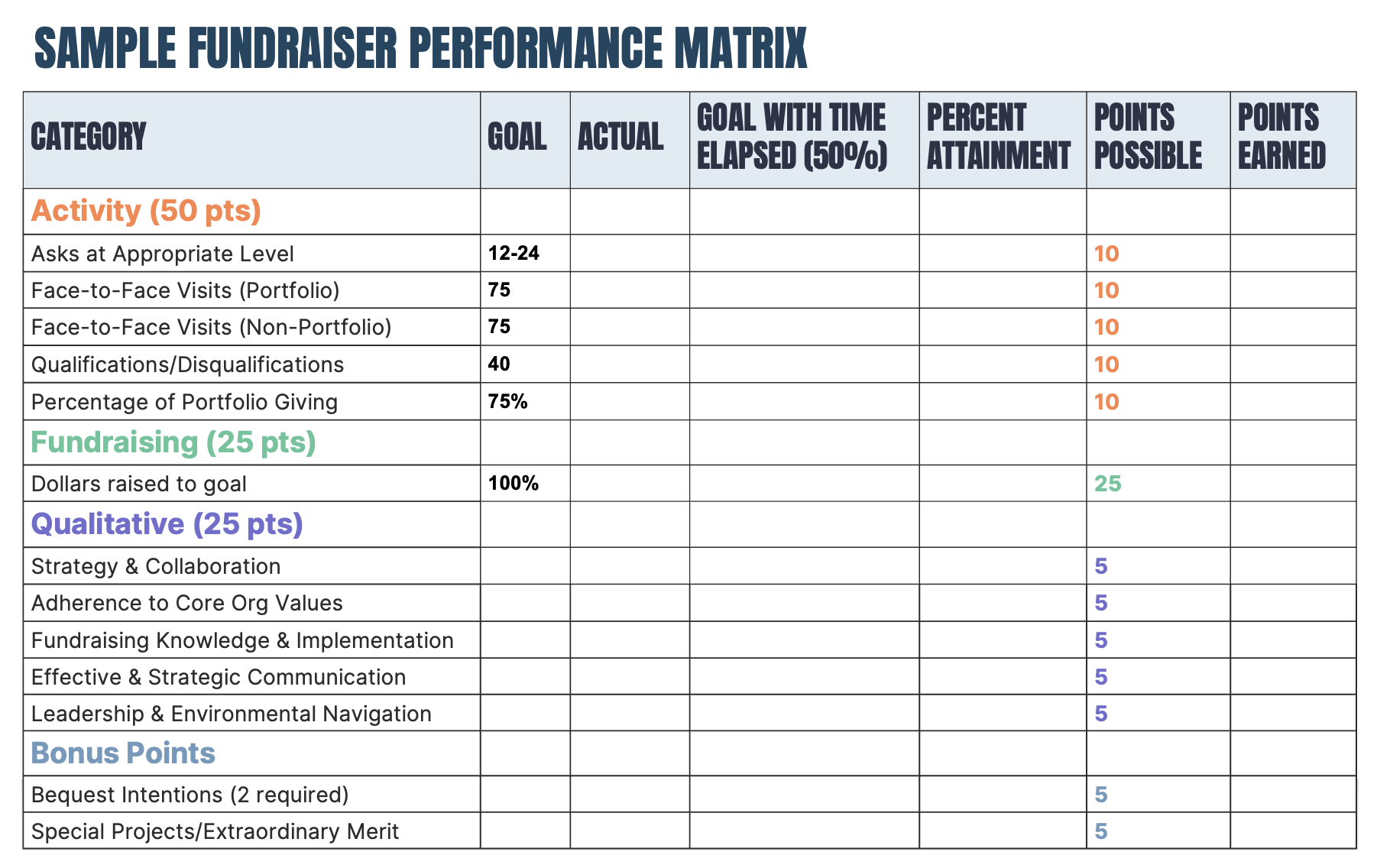
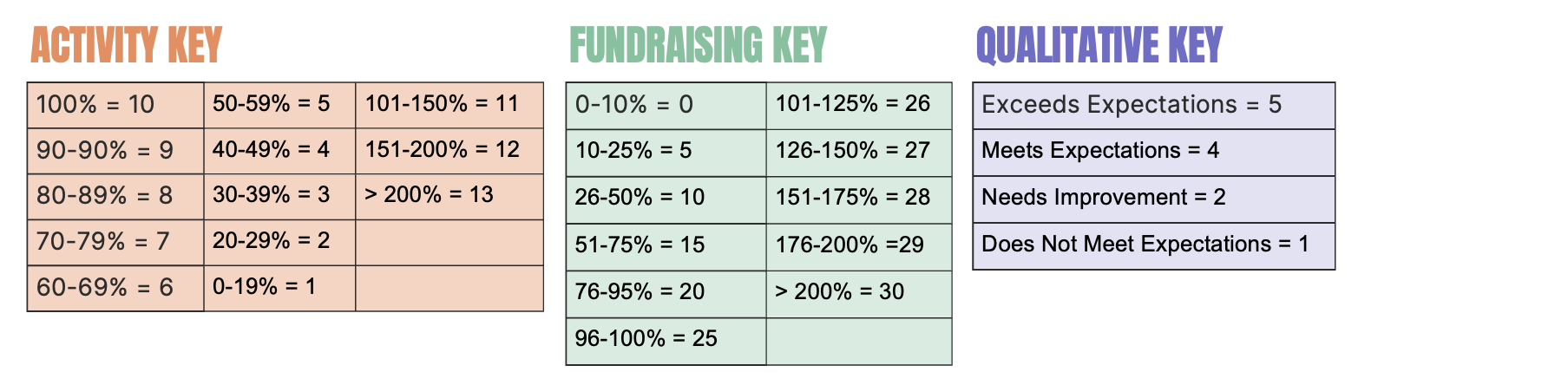
Implementing a Fundraising Measurement Plan
If you are ready to implement metrics into your fundraising plan, Kristin recommends identifying a clear starting point for introducing them into a team’s workflow, emphasizing that, “It is incumbent upon leaders to establish a new beginning for integrating fundraising metrics as part of a broadscale reset.”
A testing period can validate data with input from team members while also establishing new cultural norms and baselines for new metrics. Kristin suggests starting with data that is readily available and consistently tracked. A full integration of fundraising metrics requires buy-in at all organizational levels, clear and consistent methods for reviewing and applying data insights, and a commitment to continuous improvement and accountability.
Consistent use of key fundraising metrics has distinct benefits at all levels of an organization:
- For frontline fundraisers, a data-driven approach enables purposeful, strategic check-ins with managers and endorses productive fundraising behaviors. The consistent use of leading indicators also contributes to more consistent moves management and donor engagement across an organization.
- For fundraising leaders, the combination of leading indicators supplemented by qualitative, organizational metrics provides a strong foundation for hiring, decision-making, training, and portfolio optimization. For example, analyzing fundraising data between team members enables leaders to pinpoint activities that lead to success. Leveraging these insights enables leaders to intentionally celebrate and encourage effective fundraising behaviors while identifying training opportunities and scaling effective strategies through cross-collaboration.
Integrating key fundraising metrics into regular practice requires a commitment to continuous improvement and tracking of the metrics themselves, as well as data-informed fundraising strategies. As fundraising momentum builds, Kristin encourages fundraising leaders to continue refining and evolving their data to ensure ongoing relevance, provide sustained accountability, and identify new insights that will continue to drive fundraising results.
CONTACT US
CFA offers a customized, capacity-building approach to help organizations elevate their fundraising strategy through increased data integrity, sustainable reporting systems, and data insights. If your organization is interested in integrating fundraising metrics to drive philanthropic results, contact CFA today to explore how we can help.
Kristin Love, Principal
Kristin Love comes to CFA as a proven capacity-builder, collaborator, and change-maker in the philanthropic space, with over 20 years of experience in higher education, program development, and nonprofit advancement. Prior to joining CFA, Kristin served as Vice President for Development at Loyola Marymount University in Los Angeles, California. At LMU, she oversaw efforts to evolve development structures and processes to motivate an accountability-driven environment, partnering with academic and administrative leadership to align goals and priorities in pursuit of increased philanthropy.
Before LMU, Kristin held leadership roles in the advancement offices at Colorado College and University of Denver, championing creation of new initiatives at both institutions that integrated engagement and philanthropy. Her career experience includes development roles at large national and small local nonprofits, as well as global organizations such as JDRF International. Her passion for mission-centric fundraising work and the positive impact it can have on institutions and organizations began as a work-study student in the grants office at her alma mater, Baylor University, where she earned a BBA in public administration and Spanish.
A native of Dallas, Texas, Kristin spent over two decades in Colorado before relocating with her family to the Los Angeles area in 2020. The mother of 15-year-old twins, Kristin enjoys watching her daughter’s athletic pursuits, and son’s music and acting endeavors. In her free time, she can be found traveling or at a potter’s wheel.
Kendall Carlson, Content Writer
A frequent contributor to CFA’s digital content, Kendall Carlson has spent her career advancing nonprofit organizations across the Twin Cities. With 16 years of experience, Kendall brings a balance of strategic and operational leadership spanning fundraising, program development, evaluation, and strategic planning.
Most recently, Kendall served as Development and Communications Director at Hired, where she diversified revenue for the organization’s $11M budget and increased individual giving by 60%, led a rebrand, and launched an organization-wide data for impact initiative. Prior to Hired, Kendall served at Greater Twin Cities United Way, where she led an advancement strategy team to increase investment and engagement from the organization’s top corporate and major donors. Kendall is known as a strategic, solution-oriented leader with a high capacity for detail and commitment to quality. She launched her consulting practice, Luminate Consulting, in 2022 to bring her skills in fundraising and program strategy to nonprofits seeking sustainable growth.
In Conversation with CFA: Exploring Nonprofit Endowments
CFA Head of Client Success & Principal Joanne Curry and Operations & Business Manager Kayla Boye hosted a LinkedIn Live discussion about how nonprofit endowments can be leveraged to ensure long-term organizational sustainability. They explored common endowment misconceptions and related their personal experiences working with clients and establishing and managing endowments. As a follow up to that discussion, CFA has compiled six key takeaways and a Guide to Endowments:
Exploring Nonprofit Endowments:
Key Takeaways
- Involve board and legal expertise. While endowment terms may be written and approved by your board, an attorney should review policies before they are finalized. Once an endowment is established, it is important that your board creates an investment committee to actively track portfolio performance and make decisions about brokerage options.
- It takes time and resources to maintain an endowment. If a donor has made a major gift to establish a named endowed fund, your organization must regularly report progress to that donor to ensure continued stewardship. A bank, community foundation, or other partner can also help with endowment management and reporting, typically for a small fee.
- Legacy giving is a powerful motivator. Supporting an endowment is one of the most impactful acts of philanthropy; by naming an endowed fund, a donor can ensure their legacy while supporting the organization in perpetuity.
- Bundle your endowment effort with another campaign. You can enhance the appeal of an endowment by including it as a component in a capacity building campaign or adding it to a capital campaign to support ongoing maintenance and operations costs of a new building.
- There is no time like the present to establish your organization’s endowment. The sooner an endowment is established, the sooner investments can grow.
- Endowments can help your organization pursue a transformational vision. An endowment can provide additional annual income that can help free up your organization’s frontline fundraising staff to focus on developing new donor relationships, deepening existing ones, and preparing asks for transformational gifts.
Learn More
If you missed CFA’s webinar on “Exploring Endowments,” click to view a recording:

Considering starting an endowment? Contact CFA today to help envision and implement your endowment fundraising strategy. For more articles related to philanthropy and fundraising, check out CFA’s Insights page.
A Closer Look at the Campaign Quiet Phase

At CFA, we believe successful campaigns are driven by big ideas. At their core, campaigns are encapsulated in relationships and numbers, artfully woven together, and informed by data and intuition.
While each phase of a campaign serves an important purpose – laying the groundwork, gathering critical information, and engaging donors – the campaign quiet phase is a distinct inflection point in a campaign during which the art and science behind transformational campaigns comes fully into view.
THE IMPORTANCE OF QUIET PHASES
Also known as the “silent phase” of a campaign, quiet phases are often when the most significant work takes place. Quiet phases are uniquely important for several reasons:
- Momentum – Quiet phases are a focused yet flexible point in a campaign centered on building buy-in and securing early commitments from lead donors to set the tone for the campaigns’ success by inspiring gifts at similar levels and encouraging other donors to follow suit.
- Refinement – Quiet phases allow organizations to fine-tune their strategies, goals, and case for support based on insights gathered from major donors and stakeholders, enhancing the effectiveness of the public campaign.
- Financial Foundation – Quiet phases ensure a solid financial base by securing a substantial portion of the fundraising goal before launching publicly, increasing confidence and credibility, and motivating additional participation.
Quiet phases are not exclusive to capital campaigns, and serve a critical purpose during endowment and comprehensive campaigns as well. The quiet phase sets the stage for a successful campaign by securing a number of lead gifts from a small set of close and active donors. These gifts comprise the top of a campaign’s giving pyramid and chart the course toward the most important number associated with any campaign: the fundraising goal.
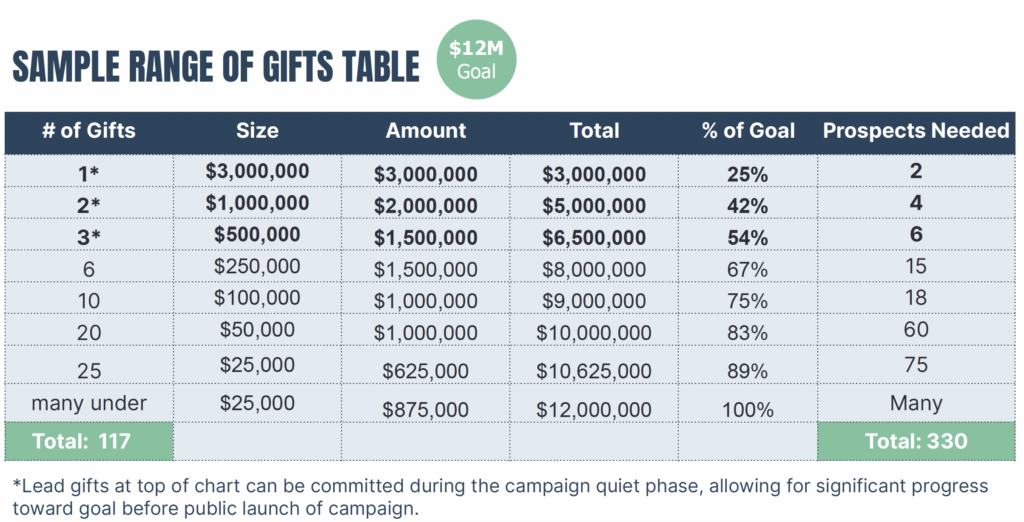
CFA Senior Manager of Campaigns Anne Spears brings over a decade of fundraising experience, offering strategic guidance to organizations throughout each stage of their campaigns and supporting progress toward their campaign goals. According to Anne, “The quiet phase serves as a litmus test for a campaign’s vision and case for support. It provides sure footing for a fundraising team and the campaign while building buy-in and deeply engaging donors closest to the organization.”
Identifying donors to include in the quiet phase relies on fundraising intuition validated by prospect research and the campaign’s feasibility study. Anne recommends starting with the first donors that come to mind before even looking at a donor list. Donors at the top of a campaign pyramid will require in-depth prospect research to inform the appropriate ask amount, which is not often realistic for the majority of a campaign’s prospects.
Cultivating transformational gifts from lead donors requires significant time. The quiet phase allows fundraisers to focus on these close and critical donors while offering a period of flexibility in the campaign’s early development. The nature and tone of conversations with donors during this stage are inherently different, allowing more time and space to test ideas and ask for advice before goals, vision, and timeline are fully established and publicly announced. “Without a quiet phase dedicated to individually engaging these major donors early on, they are much less inclined to give at their full capacity,” shares Anne.
“Giving Inspires Giving”
The quiet phase also enables fundraisers to gain experience in the art of asking for large investments. “These will be your friendliest donors with the strongest affinity for your organization,” Anne states. Cultivation conversations with these close donors becomes an exercise in articulating the campaign’s vision and goals while asking insightful questions. Soliciting transformational gifts also comes down to knowing when the time is right to make “the ask.”
Significant contributions secured in the quiet phase can have a multiplying effect as a campaign gets underway. “Giving inspires giving,” comments Anne. “Donors are more likely to give meaningful gifts when others are giving at similar levels, and early gifts help to set the bar for future gifts.”
Hybrid Quiet Phases
The form and function of the campaign quiet phase is inherently exclusive because it focuses on a small set of high-capacity donors; a factor that is often necessitated by the limitations of a fundraising team’s capacity to equally and deeply engage donors at all giving levels. As a result, organizations seeking to align their campaigns with organizational values of equity and inclusivity can find the quiet phase to be problematic.
While some organizations may consider skipping the quiet phase in favor of a fully public campaign, CFA often advises organizations to take a hybrid approach by conducting a more inclusive feasibility process and identifying a few lead gifts following the feasibility study that can build confidence and catalyze additional giving as the public phase gets underway.
Regardless of the phase in which these early conversations and campaign commitments take place, they become an important source of validation by increasing donor confidence, motivating additional support, and building a solid foundation for a successful campaign.
CONTACT US
Campaigns are an extensive undertaking that require a balance of organizational strategy, experience, and stamina. At CFA, we have partnered with more than 50 organizations throughout the planning, execution, and sustaining of transformative campaigns. If your organization is interested in support to launch a successful campaign, contact CFA today to explore how we can help.
Anne Spears, Senior Manager of Campaigns
An experienced fundraiser with over a decade of experience in education, religious, and social service based nonprofit fundraising, Anne is passionate about the work being done by nonprofit organizations. She is energized and inspired by working side by side with our nonprofit partners as a project manager for fundraising campaigns.
Most recently Anne was the Director of Development at the Episcopal Diocese of West Texas where she oversaw a multitude of initiatives including capital campaigns for Diocesan camp facilities from the South Texas Coast to the Colorado Rockies, campaigns to assist asylum seekers traveling from Mexico to the U.S., and consulted with the 87 Diocesan churches regarding their fundraising needs.
Previously Anne was the Chief Development Officer for Ascension DePaul Services of San Antonio and the Development Coordinator at St. Thomas Early Learning Center in College Station, Texas. She also worked for the State of Montana as a social services specialist serving indigenous and rural populations.
Anne has a B.S. in Sociology, a M.S. in Family and Child Studies, along with a Master of Public Administration. She also is a Certified Fundraising Executive (CFRE). Anne lives in San Antonio, Texas, with her husband and three children.
Kendall Carlson, Content Writer
A frequent contributor to CFA’s digital content, Kendall Carlson has spent her career advancing nonprofit organizations across the Twin Cities. With 16 years of experience, Kendall brings a balance of strategic and operational leadership spanning fundraising, program development, evaluation, and strategic planning. Most recently, Kendall served as Development and Communications Director at Hired, where she diversified revenue for the organization’s $11M budget and increased individual giving by 60%, led a rebrand, and launched an organization-wide data for impact initiative. Prior to Hired, Kendall served at Greater Twin Cities United Way, where she led an advancement strategy team to increase investment and engagement from the organization’s top corporate and major donors. Kendall is known as a strategic, solution-oriented leader with a high capacity for detail and commitment to quality. She launched her consulting practice, Luminate Consulting, in 2022 to bring her skills in fundraising and program strategy to nonprofits seeking sustainable growth.
Johnny Burleson Joins Creative Fundraising Advisors as Principal, Mid-Atlantic Region
November 20, 2023
Creative Fundraising Advisors (CFA) is pleased to announce that Johnny Burleson will join the firm as Principal, Mid-Atlantic, where he will oversee projects spanning CFA’s suite of fundraising counsel services. Based in North Carolina, Johnny comes to CFA with over 20 years of nonprofit advancement experience in the arts and cultural, educational, and human services sectors.
“We are thrilled to welcome Johnny to the CFA consulting team,” said CFA Founder and President Paul Johnson. “He brings extensive experience that has prepared him to serve our nonprofit client partners, with particular expertise in campaign planning, major gifts, corporate and foundation relations, and government relations. Like CFA, he believes in aligning donors’ passions with innovative ideas to inspire philanthropy to achieve the greatest impact. We are very excited about the role Johnny will play in building CFA’s presence on the East Coast and amplifying the missions of our nonprofit client partners.”
“I am excited to join the CFA team for several compelling reasons,” said Johnny. “First and foremost, I am inspired by the opportunity to further CFA’s mission of client-centric impact and its efforts to foster creativity and innovation in the world of fundraising. I believe philanthropy’s fundamental purpose is to enhance people’s lives, making our communities stronger, healthier, and more creative.”
Johnny comes to CFA from North Carolina Museum of Art (NCMA) in Raleigh, where he served as Chief Advancement Officer. Johnny successfully restructured development and membership operations and transitioned the organization from a transactional approach to an institution-wide culture of philanthropy. Johnny also oversaw the planning of the largest fundraising campaign in the museum’s history.
Prior to his role at NCMA, Johnny held the position of Director of Strategic Partnerships with the Blue Cross and Blue Shield of North Carolina Foundation, playing a pivotal role in building and stewarding local, state, and national relationships to bring philanthropic and federal resources to North Carolina in support of stronger, healthier communities. Johnny’s extensive career also includes 17 years in higher education philanthropy and advancement. He began at his alma mater, North Carolina State University, where he received a B.S. in Textiles with a focus on the Italian textile industry. Additionally, he held leadership positions at Appalachian State University and the University of North Carolina School of Government in Chapel Hill.
Johnny has volunteered as board member for several North Carolina nonprofits, including Preservation North Carolina, Triangle Land Conservancy, Lost Province Center for the Cultural Arts, Ashe County Chamber of Commerce, and Ashe County Arts Council. Outside of work, Johnny can be found on Old Orchard Creek, his blueberry farm located in Ashe County, NC. His farm is on the National Historic Register and is also protected by a conservation easement, reflecting his personal passion for the mountains, the arts, historic preservation, water, land, trails, local food, and sustainable agriculture.
About Creative Fundraising Advisors (CFA)
CFA is a full-service fundraising consulting firm with more than 200 years of collective experience in philanthropy. As professional fundraisers and consultants, the CFA consulting team has raised or partnered on more than $3 billion in philanthropic investments. Since CFA was founded in 2014, it has grown from a sole practitioner practice to a nationally focused, strategic fundraising firm. While CFA supports a diversity of nonprofit clients, it maintains a focus on work in arts and culture, education, environment, and human services sectors. Highlights of CFA’s client portfolio include: Entertainment Community Fund, Fabric Workshop & Museum, The Garden Conservancy, Lincoln Center Theater, Minneapolis College of Art & Design, McNay Art Museum, Munson, Community School of Naples, Nashville Public Radio, National Black Theatre, North Carolina Museum of Art, Plains Art Museum, Portland Museum of Art, Triangle Land Conservancy, The Music Center of Los Angeles County, University of Northern Iowa Foundation, Wichita Art Museum, and numerous others. For a full list of clients, and to learn more, visit creativefundraisingadvisors.com
Annual Giving: A Fresh Perspective on Year-End Appeals

The arrival of fall, the anticipation of the holiday season, and the imminent approach of the calendar year-end means one thing for nonprofit fundraising professionals: end-of-year appeals.
Whether your organization is already in the thick of appeal planning or just getting started, and regardless of your organization’s level of experience with year-end appeals, CFA Consultant Rob Ruchotzke offers encouragement and insight to enhance your annual giving strategy.
Reframe Urgency as Opportunity
Year-end appeals are often accompanied by a sense of urgency as fundraising professionals are driven by the pressure to reach certain fundraising targets, to create something new and compelling, and to deliver a personalized appeal to donors before the end of the year.
With nearly a decade of experience leading annual giving campaigns, Rob serves as one of CFA’s in-house annual giving experts and is familiar with the challenges that accompany year-end appeals. He often supports his clients to leverage urgency without letting it dominate the appeal planning process.
“The purpose of an appeal is to engage with your audience,” says Rob. “It’s an opportunity to share why your organization matters and how your work is meaningful.”
Rob advises nonprofits to step back and focus on the main objective. “There are a thousand ways to write an appeal, but the most important thing is telling a story that resonates,” says Rob. Staying grounded in the purpose of an appeal allows fundraising teams to shift their focus from urgency to opportunity.
For nonprofits writing appeals, the answers to these questions can help identify compelling content and tangible examples to complete your case for support:
1. What is our organization’s purpose?
2. Why does our work matter?
3. Who are the people our work impacts?
4. What are the positive outcomes of our work?
- Consultant Tip: For more guidance in creating a strong case for support, consider these 10 steps outlined in CFA’s recent article, “How to Write a Fundraising Case Statement,” to help you define your organization’s distinct value proposition.
Focus on Factors that Drive Increased Annual Giving
In addition to making a compelling case for support, Rob highly encourages nonprofits to focus on personalization. While nonprofits can personalize appeals in a variety of ways, ask amounts are one of the most critical details to customize in an appeal letter. If your organization has access to data on your donors’ giving history, Rob recommends including specific ask amounts aligned with recent gifts and patterns of giving to encourage increased support. Fundraising priorities, such as increasing the number of recurring donors or moving donors toward certain giving levels or societies, can help inform specific ask amounts as well.
Nonprofits can also personalize appeals by acknowledging the donor’s relationship to their organization and including distinguishing details – such as number of years of support, volunteer service, or last gift amount. Simple touches like hand-addressed envelopes, hand-written signatures, and personal notes not only strengthen relationships with your donors, but also help your appeal stand out from other generic requests.
While personalization lends itself more readily to mailed appeal letters, emails with tailored subject lines and similar distinguishing donor details are equally as important. Customizing any donor communication requires additional staff capacity, so Rob recommends strategies to personalize at scale – such as mail merge – that will enable your team to focus on your organization’s top donors.
- Consultant Tip: Personalization is a key fundraising strategy that nonprofits can integrate year-round to strengthen donor engagement and retention. With individual giving declining by 6.4% in 2022, according to Giving USA, personalized communications that address donors by name and reference their past involvement with your nonprofit will strengthen their connection to your organization and increase the likelihood of continued support.
Keep It Simple
Rob underscores the importance of keeping year-end appeal processes simple and timelines achievable. In addition to staying focused on the appeal’s main objective and prioritizing factors that will increase giving, Rob encourages nonprofits to strive for a balance between consistency and creativity.
“It’s common for organizations to get in a rut around what to feature in their appeals,” shares Rob. Rather than starting from scratch or attempting to recreate the wheel every year, nonprofits can save time and money by adhering to a consistent appeal structure while introducing nuanced stories into their appeals. “Nonprofits shouldn’t shy away from featuring success stories or updates from their leader year-after-year,” advises Rob. Rather, these components can provide consistent structure to the appeal while introducing new stories and examples of your organization’s work and impact.
As nonprofits develop their year-end project plans and timelines, CFA recommends leveraging a multichannel strategy for any year-end appeal. In a recent CFA article, “Optimizing Multichannel Fundraising,” Rob states that “multichannel appeals allow you to reach donors through a variety of channels and donors are more likely to respond via the channel of their preference.” As a result, multichannel campaigns are a cost-effective way to reach a donor where they are most likely to see your message and engage with your organization.
Consultant Tip: Check out CFA’s Guide to theAnnual Giving Cultivation Cycle.
Even with advanced planning and significant experience, executing year-end appeals can be stressful for fundraising professionals. By establishing realistic timelines, personalized messaging, and reframing urgency into the opportunity to tell your story, nonprofit fundraising teams can keep their most important audience – the donor – at the center of the appeal process from start to finish.
CONTACT US
Donor appeals are a critical component of a strong annual giving program. If your organization is interested in enhancing your annual giving strategy, contact CFA to explore how we can help.
Rob Ruchotzke, Senior Consultant
Rob Ruchotzke focuses on annual giving strategy, development assessments, campaign feasibility studies, and campaign counsel. Rob comes to CFA with nearly a decade of annual giving experience in higher education institutions. Most recently, Rob served as the director of annual giving at the University of Northern Iowa (UNI), where he led multichannel campaigns, developed crowdfunding platforms, managed annual giving vendors, and served as the strategy lead for UNI’s Day of Giving (#LivePurpleGiveGold). A native of Camanche, Iowa, Rob holds a BA in Public Relations from the UNI and resides in Cedar Falls, Iowa.
Kendall Carlson, Content Writer
A frequent contributor to CFA’s digital content, Kendall Carlson has spent her career advancing nonprofit organizations across the Twin Cities. With 16 years of experience, Kendall brings a balance of strategic and operational leadership spanning fundraising, program development, evaluation, and strategic planning. Most recently, Kendall served as Development and Communications Director at Hired, where she diversified revenue for the organization’s $11M budget and increased individual giving by 60%, led a rebrand, and launched an organization-wide data for impact initiative. Prior to Hired, Kendall served at Greater Twin Cities United Way, where she led an advancement strategy team to increase investment and engagement from the organization’s top corporate and major donors. Kendall is known as a strategic, solution-oriented leader with a high capacity for detail and commitment to quality. She launched her consulting practice, Luminate Consulting, in 2022 to bring her skills in fundraising and program strategy to nonprofits seeking sustainable growth.
Donor Cultivation Cycles: Major Gifts and Annual Giving

Every nonprofit organization seeks to build relationships with people who share their vision and want to help carry out their work. By the same token, nonprofit development officers and volunteer fundraisers are keen to understand how to drive increased donor engagement to catalyze their organization’s mission. A solid method for a successful outcome is to follow a Donor Cultivation Cycle.
In this article, we focus on two important types of Donor Cultivation Cycles: Major Gifts and Annual Giving. These cycles are often used simultaneously, but with varying prospect segments. Using these cycles will help organizations sustain and increase philanthropic support and cultivate repeat donors to become major funders over time.
What is a Donor Cultivation Cycle?
A Donor Cultivation Cycle gives structure to nurturing relationships between an organization and potential donors and helps systemize the solicitation of an individual or group of donors for philanthropic support.
What are the Benefits of a Donor Cultivation Cycle?
Stability and Consistency. The time you dedicate to following a Donor Cultivation Cycle will help sustain the connections between your organization and your donors. Each time a donor “moves” through the cycle, you enhance their alignment with your organization’s mission and deepen their commitment to your impact. Over time, the goal is for donors to become consistent and visionary partners.
Timing. Understanding when and how to solicit gifts (and knowing how much to ask for) is the primary benefit of investing time into each step in the Donor Cultivation Cycle. Laying out a plan for each prospective donor will help you identify and leverage the most effective timing and ask amount for solicitation.
Staff and Board Engagement. Aligning your board members, staff, and volunteers around your Donor Cultivation Cycle will arm everyone who helps fundraise with consistent messaging, goals, and milestones to guide relationship-building with donors and prospects.
Donor Engagement. Nurturing individual donors and showing your organization’s appreciation through communications, recognition, events, and one-on-one meetings leads to growth in their personal involvement and the likelihood of repeat giving.
Donor Retention. Finding new donors is a necessary part of development work as donors lapse and new people wish to support your work, but it can take two to three times the amount of time and effort to secure new donors as compared to retaining donors. Calculate your donor retention rate by dividing the number of repeat donors this year by the total number of donors from the previous year. A drop in donor retention rate year over year can impact overall funds raised.
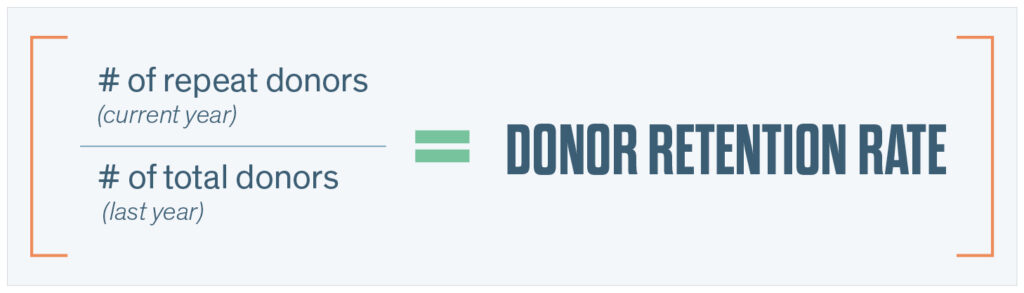
Comparing Donor Cultivation Cycles
While there are similarities in the steps to raising dollars for major gifts and annual giving, the type of gift, giving cycle stages, and timelines are slightly different. Major gifts have a longer time horizon, whereas annual gift appeals must be concise to ensure the prospect connects and wants to give back during a specific timeframe.
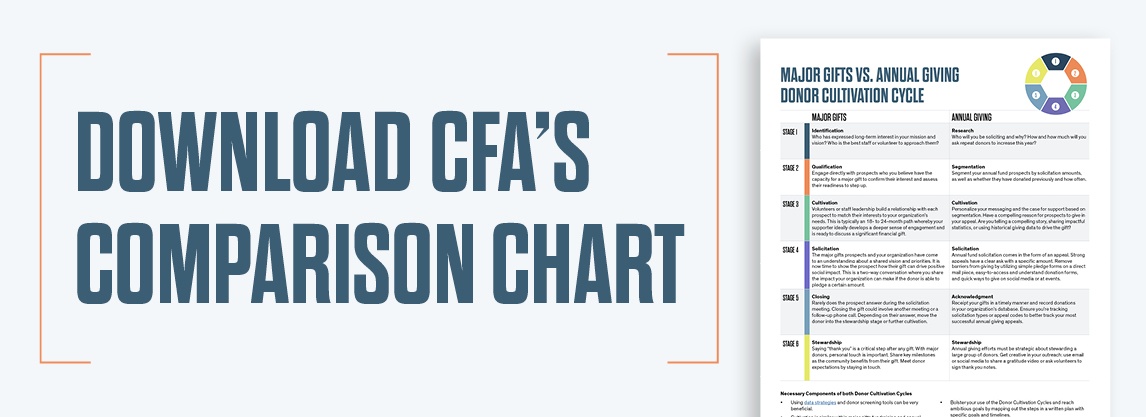
Major Gifts – Major gifts are philanthropic contributions that match the passion of a donor to a strategic initiative that is designed to move an organization toward its vision. Examples of major gifts include funding for construction, program expansion, or special equipment. A major gifts program builds connections with people who have the desire and ability to give at higher levels.
Every organization sets different thresholds for the definition of what qualifies as a “major gift” based on the size and budget of their organization. A major gift could be $1,000 and above for one organization, and $50,000 or above paid out over three to five years for another. The throughline is that a major gift reflects meaningful philanthropy derived from thoughtfully cultivated relationships.
A word of caution: When your attention is pulled to major gifts and other special campaigns, don’t forget your annual needs and your smaller donors. The annual operating campaign is the lifeblood of your nonprofit.
- Check out CFA’s Guide to the Major Gifts Cultivation Cycle
Annual Giving – Annual gifts are one-time contributions that fund operations, typically in the form of an annual fund. Annual giving is often the entry point to a donor’s philanthropic engagement with your organization. Annual donors are often an organization’s most committed supporters and can be the basis for future major gifts when cultivated and stewarded properly. Annual giving strategies are typically multi-channel (email, social media, direct mail, phone calls, etc.) and focus on reacquiring past donors and acquiring new donors to build a consistent and strong base of funding support.
- Check out CFA’s Guide to the Annual Giving Cultivation Cycle
Where Outside Expertise Can Help
The CFA team helps clients work through the full spectrum of the Major Gifts Cultivation Cycle and the Annual Giving Cultivation Cycle, including segmenting and qualifying your donor pool to ensure you know which prospect falls into which category.
When to Implement a Donor Cultivation Cycle
It’s never too early or too late to implement both cultivation cycles into your nonprofit development function. We hope the ideas above have helped you understand the process.
Please contact us at Creative Fundraising Advisors if we can help you get started today.
Activating Your Planned Giving Program: How to Engage Younger Generations of Donors

Planned giving programs and charitable instruments have been around for roughly 100 years. Yet, few nonprofits have well-established planned giving programs. If there is one thing that successful nonprofit organizations and planned giving programs have in common, it is a strong vision for the future.
For nonprofits seeking to cement their future sustainability, engaging younger generations of donors has never been more important. With philanthropy at a crossroads as Millennials succeed former generations in levels of giving and engagement, savvy nonprofits will prioritize engaging this generation of donors in both present and future planned giving opportunities.
At CFA, we regularly partner with organizations who are looking to start a planned giving program or ramp up an existing one as part of their overall fundraising strategy. For nonprofits seeking to activate and sustain a strong planned giving program, a consistent focus on their organization’s vision and, importantly, the younger generations of donors that will help make that vision a reality, is key.
Millennials’ Increasing Philanthropic Presence and Potential
While many planned giving programs have dedicated comparatively little attention to younger generations, Millennials are emerging as a prominent force in philanthropy. According to the Giving by Generations report recently published by Giving USA, Millennials surpassed Gen Xers in average household giving in 2022, donating an average of $103 more than any other generation on an annual basis.
Younger generations are also actively planning for their financial future. A study completed by Trust & Will found that 75% of Millennial respondents completed a will-based estate plan that was motivated by having a child, losing a loved one, or buying a home. These are ideal opportunities for donors to be considering their legacy and future social impact through planned giving.
And while 71% of these Millennials had a net worth of $500K or less, nonprofits would be wise to begin cultivating relationships with these donors now based on their future giving potential. In addition to the wealth that this generation will build on their own in the decades to come, it is anticipated that nearly $84 trillion will be passed down to younger generations over the next 25 years, which would be the largest wealth transfer in history. While Millennials have a formidable presence in philanthropy now, their influence and giving potential will increase exponentially in the decades to come.
Engaging Younger Donors in Planned Giving
As philanthropy experiences a shift in donor representation by generation, proactive nonprofits and successful fundraising programs will follow suit in expanding their donor engagement strategies beyond Baby Boomers to include Gen Xers and Millennials.
Balancing multiple generations of donors requires an intentional approach, according to Jake Muszynski, CFA Head of Consulting and Principal – Midwest, who notes, “There is no longer a one-size-fits-all approach when it comes to planned giving. Fundraising strategies need to be tailored to the ways each generation prefers to give to and engage with the organizations they support.” Jake recommends that organizations provide regular opportunities for planned giving for donors to learn and connect with a like-minded community of supporters.
Successful planned giving programs are centered around the future donors that will someday make their vision a reality. Engaging younger generations requires nonprofits to extend their gaze even further, constructing compelling visions well into the future. Jake recommends that “nonprofits think about their legacy and the impact they will achieve over the next 50 years or more, given that the planned gifts of younger donors may not be realized for decades to come.”
In addition to leading the way in giving, Millennials are more likely to take a hands-on approach, dedicating time as a volunteer and desiring a seat at the table by seeking roles as board and committee members. These committed volunteers are often the ideal prospect for planned gifts as an organization’s closest supporters.
According to Giving USA, Millennials want to hear regularly from the charities they support and are the most receptive of any generation to receiving monthly multi-channel communications via direct mail, email, and/or text. By providing regular communications and special events that provide planned giving donors with inside access to your organization’s strategic plan, emerging trends, and new innovative programs, nonprofits can keep this critical group of donors engaged around their shared legacy and collective future impact. Jake agrees that “although planned giving donors won’t bear witness to the impact of their generosity, nonprofits can keep these donors connected – both to the organization and to one another – through effective communications and community.”
The Best Time to Start a Planned Giving Program Is the Present
Many nonprofits often wonder when and how to launch a planned giving program, especially when current organizational resources and capacity are limited. Jake recommends incorporating planned giving into any comprehensive campaign at a minimum, which is typically centered around creating strong donor communities and collective impact. While campaigns provide an optimal launchpad for a planned giving program, organizations do not need to wait for a campaign to begin promoting planned giving. “These efforts can be woven into ongoing communications and cultivation efforts,” says Jake, “by casting a long-term vision and offering donors compelling opportunities to invest in both present-day innovation and future impact.”
And although many planned giving programs are tied to an endowment, the lack of one should not hinder a nonprofit from promoting and actively seeking planned giving commitments. It is these early planned giving commitments that become the bedrock of a future endowment. CFA recently offered a series of guiding questions for nonprofits looking to build a compelling case for their endowment, which should provide your most steadfast donors a clear and compelling opportunity to invest in a future where your organization is doing your best work.
Regardless of your nonprofit’s fundraising capacity, engaging your donors around a tangible and transformational vision will lead to increased support in the present and the future from donors spanning all generations. Nonprofits that begin cultivating authentic planned giving communities with younger generations of donors today will create a shared legacy amongst the future donors that may someday bring that legacy to life.
CONTACT US
Build a stronger foundation for your nonprofit tomorrow by activating your planned giving program today. If your organization is interested in launching or strengthening your planned giving program, contact CFA to explore how we can help.
Kendall Carlson, Content Writer
A frequent contributor to CFA’s digital content, Kendall Carlson has spent her career advancing nonprofit organizations across the Twin Cities. With 16 years of experience, Kendall brings a balance of strategic and operational leadership spanning fundraising, program development, evaluation, and strategic planning. Most recently, Kendall served as Development and Communications Director at Hired, where she diversified revenue for the organization’s $11M budget and increased individual giving by 60%, led a rebrand, and launched an organization-wide data for impact initiative. Prior to Hired, Kendall served at Greater Twin Cities United Way, where she led an advancement strategy team to increase investment and engagement from the organization’s top corporate and major donors. Kendall is known as a strategic, solution-oriented leader with a high capacity for detail and commitment to quality. She launched her consulting practice, Luminate Consulting, in 2022 to bring her skills in fundraising and program strategy to nonprofits seeking sustainable growth.
Why Investing in Fundraising Staff Pays Off

By Jake Muszynski, Head of Consulting & Principal, Midwest
When a nonprofit organization hires and retains fundraising professionals, it can yield a substantial return on investment. Nonprofit development professionals dedicate their time to nurturing the multifaceted relationships between supporters and an organization’s mission; by investing in fundraising staff, an organization can deepen donor engagement and stewardship, ensure higher donor retention rates, and build relationships with new donors.
The Case for Fundraising Professionals
In a study that took place over nine years, the Council for the Advancement and Support of Education found that increased investment in advancement functions reaps higher rewards. The 2023 Philanthropy Pulse affirmed this finding, reporting that the organizations that focused on hiring fundraising staff or increasing salary and benefits for existing staff experienced greater organizational growth than those who did not.
While there are clear benefits to investing in fundraising staff, it can take months or years before your organization realizes the full impact as it takes time to build relationships with donors before they are typically ready to make major gifts. Due to this delayed result, some nonprofits hesitate to hire additional development staff or invest in retention strategies for their existing staff; however, dedicating resources to your development team can be one of the most important steps your organization can take to ensure the long-term growth and sustainability of your mission and impact.
In the following Q&A, CFA Principal Jake Muszynski shares several ideas about why hiring and retaining fundraisers pays off.
Q&A with Jake Muszynski
What staffing trends do you see within the development assessments and campaign readiness assessments that CFA conducts for nonprofit organizations?
Jake: In so many cases, we find a team that is operating beyond maximum capacity and struggling to meet their full potential. It’s really common within the development assessments and campaign readiness and feasibility studies that we conduct that we ultimately recommend investing in our client’s fundraising team. Many organizations don’t have enough bandwidth on their team to do what they are truly capable of, or they lack the resources to carry out their vision. And, because they don’t have enough people, everyone feels strained. Limited time exists for coaching, mentorship, and professional development for the team, much less for the focused, long-term cultivation of donors.
How can a CFA development assessment help a development office prepare for departmental growth and fundraising?
Jake: One really important way is that we take the assumptions out of the picture. Staff tend to know they are overburdened and understaffed, but because of the increased pressure to meet goals, they often can’t advocate enough on their own for change. During a development assessment, we offer solutions that are grounded in data, reviewing fundraising systems, donor data, and fundraising programs to clearly articulate the growth potential that already awaits a well-staffed team. We also take the internal pulse of the organization through a thoughtful interview process that includes staff, board, and donors to understand perceptions and pressures as well as future aspirations and goals. At the end of our process, organizations we work with are not only provided a set of actionable recommendations, but they’re also empowered to succeed with the defined path we pave for their success.
My colleagues, including CFA Consultant Rob Ruchotzke, recently worked with a client where we uncovered that a primary obstacle to their fundraising growth was recent staff cuts. In an effort to reduce expenses, this organization had inadvertently limited their ability to grow relationships with their donor base. This lack of capacity also prevented the fundraising staff from being able to fully execute plans aimed at donor retention and increasing gift sizes. As part of our assessment, we put together a five-year plan to double the size of their development department. Within this proposed model, we were able to demonstrate that the cost to raise a dollar of contributed revenue decreases substantially after the initial investment in staff capacity, while the potential major gifts revenue increases significantly as those donor relationships come to fruition.
What recruiting and retention advice do you give your nonprofit clients when they are hiring development staff?
Jake: Development staff are the front line to an organization’s ability to cultivate and sustain its donor network. Make the effort to invest in the people who manage the relationships with your organization’s most valuable asset: your donors.
When I became a fundraiser straight out of college, formal degrees and training programs to help me become a nonprofit fundraising expert didn’t yet exist. Luckily, as the fundraising field has expanded, the amount of professional development and training opportunities has grown substantially. I suggest nonprofits encourage their staff to pursue continual learning such as courses offered through the Association of Fundraising Professionals (AFP). I serve on the board of the AFP Minnesota Chapter, where we have made both membership and education sessions more accessible by eliminating fees and offering a pay-what-you-can model.
Fundraisers should also seek mentorship from outside your organization. Development staff need to commiserate with others who understand the roller coaster of the profession. Also, don’t overlook opportunities for personal/professional development that come with taking on new projects and responsibilities. Research has proven that on-the-job training has a higher rate of uptake and long term impact on skills development than external training programs.
How does an organization know when it is ready for a development assessment?
Jake: Organizations often call CFA in moments of transformation or moments of crisis. My biggest piece of advice would be to not wait for a crisis to evaluate your development strategy. There are several ideal times to conduct a development assessment: immediately following the launch of a new strategic plan, 12-18 months prior to a major capital campaign, or when you have had a significant leadership change. In other words, it’s always a great time to make sure your organization is fulfilling its potential and that those tasked with ensuring your mission’s sustainability are supported and well-equipped to do their best work.
Part of the reason I love doing development assessments, “The CFA Way” as we call it, is that I get to become part of the team for a time, where I can fully engage in the organization’s mission, understand the issues and opportunities that exist, and partner alongside the staff and board to unlock the door to a better and more impactful future.
Contact Us
If your organization is ready for a development assessment or tailored campaign consulting, contact CFA today.
Jake Muszynski, Head of Consulting & Principal, Midwest
Jake is a highly experienced fundraising and consulting professional with over 15 years of combined experience in the industry. He began his successful career in major gifts at higher education institutions and has since provided counsel to over 40 clients at CFA.
In this role, Jake leads major projects across the United States, including campaign readiness and feasibility studies, campaign planning and counsel, and development assessments. He takes a holistic approach to fundraising, considering organizational health from all perspectives and applying a mix of soft skills and data-driven decision-making to each unique situation.
A native of Perham, Minnesota, Jake holds a bachelor’s degree in communication from Concordia College. He and his wife have two children and share a love of folk and jazz music.
Nonprofit Networking: How to Leverage Your Board for Fundraising Success

By Katrina Woodcox, Senior Consultant
Convincing your board to fundraise year after year, especially if it has not been a part of your organization’s culture, can be daunting. Yet, playing a role in fundraising is a necessary function of a board to ensure the long-term sustainability and future growth of an organization. While not every board member may be comfortable making a direct ask, board members can support your fundraising efforts by leveraging their personal and professional networks. Engaged board members can be one of your organization’s greatest fundraising resources–especially when they are well-prepared and equipped with the right tools.
When serving as the Executive Director of Butte Humane Society in Chico, California, we launched a capital campaign to build a new animal shelter and veterinary hospital. One month after embarking on the quiet phase of our campaign, the most destructive and deadliest wildfire in California’s history ravaged our neighboring community of Paradise, California. Within a few hours, the Camp Fire leveled 13,000 homes and decimated the community. Faced with rebuilding an entire town, the idea of fundraising for dogs and cats seemed like a lesser priority; yet, demand for our services surged as our community also grappled with the thousands of animals that were now homeless and in need of services, care, and shelter. Once our community recovered enough to inch forward, we pivoted and relaunched our campaign.
Our board campaign committee was now even more crucial to driving campaign momentum. As we sought to reinvigorate our fundraising efforts, I met with each committee member individually to discuss the campaign’s goals and solicit their involvement. These meetings were helpful in both generating enthusiasm and evaluating each board member’s unique fundraising comfort zone: Were they extroverted and comfortable making a direct ask, or did they prefer to assist by facilitating a prospect introduction?
- Consultant Tip: Check out CFA’s Guide to an Effective Nonprofit Campaign Committee
Board members were assigned a portfolio of donor prospects from their respective networks to either ask for a gift or to make an introduction. We prepared board members to become advocates for the campaign by conducting board trainings and rehearsing solicitation scenarios in both 1:1 and in group settings where I encouraged our board members to reframe their thinking about fundraising. Instead of directly asking friends and colleagues for a donation right out of the gate, I suggested that board members add meaning to their conversations by focusing on the personal impact that the organization had on their lives and how the new facility was going to save more animals and reduce overpopulation – tangible outcomes that resonate with donors and supporters. Passion and results are powerful tools for inspiring action.
- Consultant Tip: Use donor data strategies to keep a record of how board members and prospects are connected to each other.
In my experience working with board members on solicitation strategies, they often feel that asking for money is invasive, uncomfortable, and may even put a strain on a friendship. However, it is important to remind them that fundraising is not about “begging” or “arm twisting,” and often begins with “friendraising.” Having that mindset can help to alleviate some of the concern board members may have when talking to friends and colleagues about potential gifts. Board members’ motivations are born out of a passion they have for the organization, and if they can bring an authentic and transparent attitude to the conversation, it can help to inspire others to give out of that genuine connection and belief in the mission.
The Camp Fire, while devastating, brought our board campaign committee together and provided an opportunity for honest conversations and realignment. It also ignited an urgency to think creatively, to step out of comfort zones, and to engage with our broader community on an immediate level. Our board-led solicitations and introductions ultimately resulted in many of our campaign’s largest commitments. By leveraging the networks of our board members, opening doors, and introducing people to a cause we were all so passionate about, we were able to raise the funds to build a new facility when our community needed it the most.
Whether you are actively conducting a capital campaign or planning a strategy for an annual giving appeal (or everything in between!), continuous board networking is necessary to strengthen your organization’s relationship with your community and to cultivate future sources of support. Engaging your board will pay off in the long-term, even if natural disasters and other obstacles alter your carefully laid fundraising plans.
To learn more about leveraging your board for fundraising success, contact CFA today.
Katrina Woodcox, Senior Consultant
Katrina Woodcox comes to CFA with over 20 years of experience in nonprofit management, development, and community engagement. Before joining CFA, Katrina served as the Executive Director for Butte Humane Society (BHS), where she focused on creating annual campaigns, major gifts and planned giving programs, as well as fostering donor-centered, stewardship-rich development programs to help grow and sustain donor giving. Prior to BHS, Katrina was the Executive Director for the Downtown Chico Business Association. Katrina has also served as an independent consultant, working with a variety of nonprofit agencies throughout northern California to identify and achieve development and marketing goals.
As a Senior Consultant with CFA, Katrina focuses on providing Development Assessments, Campaign Feasibility Studies, Campaign Counsel and Strategic Planning. Katrina uses her past non-profit management experience, capital campaign knowledge, development acumen and her passion for storytelling to help find the right solutions for CFA’s partners.
Katrina currently resides in Chico, California, and holds a BA in Journalism/Public Relations from the California State University, Chico
Fundamental Questions to Build a Compelling Case for Your Endowment Campaign

Endowments offer distinct appeal and benefit for nonprofit organizations of all sizes. Yet, only one in nine (11.2%) nonprofits managed endowment funds as of 20171.
As a viable fundraising strategy for nonprofits with established annual giving programs, endowments can provide a sustainable source of funding in a new era of constant change and elevated uncertainty. At Creative Fundraising Advisors (CFA), we frequently partner with organizations who are looking to take their individual fundraising strategy to the next level with an endowment.
For nonprofits in the early stages of exploring or building an endowment, the answers to these fundamental questions can inform your strategy and build the foundation for a compelling case for support:
- What is our objective for starting an endowment?
The perpetual annual income provided by an endowment can be used to offset operating expenses, protect and sustain core programs, and provide overall financial stability to hedge against uncertainty and better counter longer-term forces of change.
Consider your nonprofit’s mission-critical services and core operational costs. Identify which of those priorities are consistently insufficiently funded as well as those with the lowest levels of funding diversification and greatest exposure to potential shifts in funding. These priority areas will serve as key inputs driving the overall purpose and objectives for your endowment.
Your case for support should be clearly linked to your future vision and the distinct purpose your endowment will serve. Whether your organization is seeking to sustain and expand programs, respond to emerging needs, or simply ensure long-term organizational stability, building a compelling case for support clearly tied to the purpose and impact of your endowment will increase donor confidence and inspire larger gifts.
- What is an appropriate financial goal for our endowment?
When it comes to endowments, there is no “one size fits all” approach. With an average annual payout of 5%, the impact of an endowment truly depends on the size of your nonprofit and your objectives for the fund.
For smaller nonprofits, an additional source of revenue to cover core administrative functions or support a mission-critical program is valuable at any level. For larger organizations, generating a significant percentage of the annual operating budget or sustaining entire programs or positions to allow for programmatic continuity will inform the ideal target for your endowment.
Regardless of the size, endowments are a powerful emblem of stability and permanence that can inspire visionary mindsets in organizations and donors alike.
- Do we have a strong base of donors to fund an endowment?
Endowments have the potential to inspire giving at transformational levels from current donors. The ideal endowment campaign prospects will have a demonstrated commitment to your nonprofit, usually over several years and often through engagement beyond financial support, as well as the financial capacity to give. Completing a donor wealth screening process, often completed as part of a feasibility study, will identify the strongest endowment campaign prospects based on these factors and help to establish an achievable short-term goal for your endowment fund.
As CFA shared in our recent Exploring Endowments discussion, endowment gifts can come in the form of outright investments or as deferred planned giving vehicles. An outright endowment gift gives donors the opportunity to fund their annual gifts in perpetuity while planned gifts may come as the donor’s last and largest gift.
While larger organizations may be more likely to secure larger outright endowment gifts, nonprofits of all sizes can leverage planned giving opportunities to inspire significant investments for the future. Whether gifts are made in the present or future, endowment funds are powerful in their permanence, serving as an ongoing tribute that will sustain the donor’s values and organization’s impact into posterity.
Regardless of the size of your organization, endowment building is a strategic decision that requires significant commitment, in-depth analysis, and significant understanding on the part of leaders and board. Endowment campaigns require a strong vision for the future of your nonprofit as well as strong personal relationships with a critical base of top donors. With a clear case for support, an endowment will provide your most steadfast donors a clear and compelling opportunity to invest in a future where your organization is doing your best work.
At CFA, we often recommend including an endowment campaign as a component of a capacity-building campaign, which can generate giving momentum and interest in the long-term vision for your organization. An endowment can also pair well with a capital campaign to sustain the operations of a new building, or to support a strategic initiative after a campaign has concluded.
If your organization is considering an endowment campaign, contact CFA today to explore how we can help.
Improve Donor Retention with Data

By Stephanie Willis, Senior Manager of Prospect Development
Donor retention is a constant challenge for nonprofits. In 2022, the average nonprofit retained less than half of its donors from the previous year, and the total number of donors was down 7.1% year over year, according to the Fundraising Effectiveness Project. With fewer individuals giving and less than half coming back each year, your development team’s donor retention efforts are more important than ever. Fewer returning donors also impacts the productivity of your development team; experts estimate that it can take anywhere from 2-10 times more resources to secure a new donor than keep an existing one.
Analyzing your organization’s donor data can yield powerful insights about how people interact with your organization, which types of fundraising appeals garner their attention, and what strategies you can use to repeat and increase their contributions. This knowledge will help you retain donors and increase the number of gifts people give. Prepare your team with the data and resources they need to reach all of your donors, including LYBUNTs (“last year but unfortunately not this” year).
Here are my top 10 tips on using data to improve donor retention:
1. Implement effective data management strategies to organize your donor pipeline including consistent tracking of fundraising volunteer activity.
2. Leverage donor analytics to segment and personalize appeals based on data about giving history, giving capacity, age cohort, how people have given in the past, and what the fundraising project is.
3. Utilize a moves management data tracking system by segmenting donors with your data and strategically elevating personal engagement.
4. Use data to identify your mid-level annual donors and inform a leadership giving strategy to identify who could increase their giving amount or frequency.
5. Track your organization’s multi-channel approach to ensure each of your donor segments is solicited more than once per year and understand which approach is most effective for each segment.
6. Use data to identify at risk donors and re-engage them with cultivation tools such as surveys and targeted communications. Examine your giving records and start with the most recently engaged donors and those most connected to your organization – a retired board member who has lapsed, a donor from last year, etc.
7. Understand how to navigate your database and use wealth screening for additional donor insights and improved donor segmentation.
8. Regularly clean and maintain your donor data records to ensure the accurate delivery of personalized donor communications.
9. Monitor your donor retention rate through regular data reporting to identify patterns and adjust your donor engagement practices accordingly.
10. Update your fundraising team regularly with data-informed progress reports to highlight how often people give, and to which appeals. Using data in this way will help your organization prioritize prospects and encourage recurring and increased gifts.
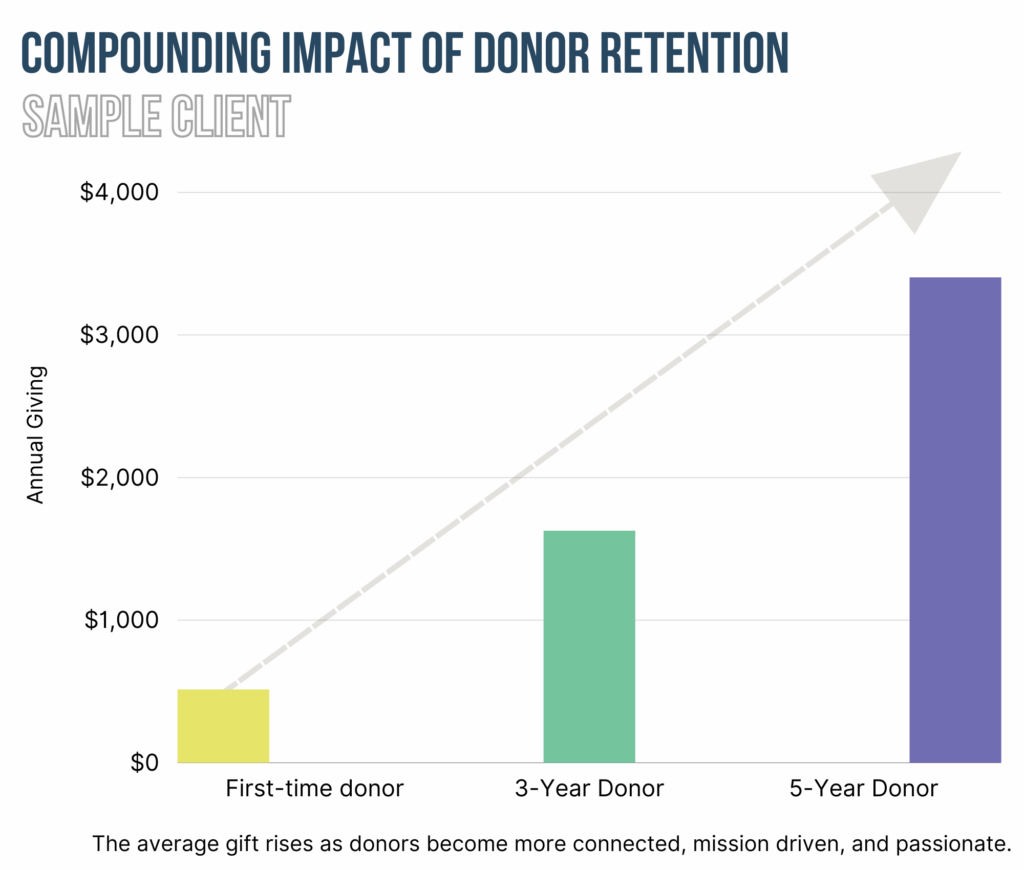
Contact Creative Fundraising Advisors today to see how we can help you harness data analytics in your fundraising strategy.
Stephanie Willis, Senior Manager of Prospect Development
Stephanie Willis has over 10 years of experience in prospect research, prospect management, and data analytics at both higher education and nonprofit organizations. At CFA, Stephanie’s responsibilities include establishing strategy, procedures, and processes for prospect research, prospect management, and data analytics. Stephanie is Blackbaud-certified in Raiser’s Edge NXT and Raiser’s Edge and has a master’s degree in library science. Additionally, Stephanie is a Gallup-certified Strengths coach and has a passion for helping others understand, apply, and integrate CliftonStrengths results into their lives and work.
In Conversation with CFA: Inside Today’s Donor Mindset
CFA Chief Operating Officer Liz Jellema led a conversation with guests Rachel Hutchisson, Chair of the Communications Task Force at The Generosity Commission, and Rick Dunham, Founder of Dunham+Company and member of The Giving Institute. The philanthropy experts discussed recent fundraising trends, and what the findings mean for nonprofit organizations trying to raise more money and positively impact their communities.
Takeaways to Address Today’s Fundraising Trends
- Mind the Millennials.
Giving by the Millennial age cohort (individuals who are between 27 and 42 years old in 2023) is on the rise, and their attitude about nonprofit organizations is positive. This finding comes from the most recent annual Giving by Generation study, conducted by Dunham+Company and published by Giving USA in 2023. The survey found that Millennial households gave 40% more, on average, to nonprofits in 2022 than they did in 2016. Another encouraging fundraising trend was the increase in the share of donors who believe that nonprofits are “doing a good job,” seen especially in the Millennial cohort who reported an 8% increase in confidence in nonprofits.
At the same time, findings from a 2023 study of donors contributing at least $20 in online giving per year revealed that 62% of surveyed donors plan to reduce their 2023 giving from the previous year, citing economic uncertainty and the toll of inflation on their personal finances. When asked how to marry these two findings, Dunham stated, “It portends probably a slower growth rate of Millennial giving, but I’m still encouraged to see how Millennials have really jumped in more significantly as donors.”
The key takeaway about the Millennial mindset is that they are proving to be tomorrow’s dedicated donors. Understand how and how much Millennials are giving at your organization so that you can set a long range strategy for this group and tailor communications and appeals for best results. - Monitor fundraising trends but focus on your own donor data management.
A recent podcast by The Economist, “Give fast, spry young: the new philanthropists,” and a related article, “How a tide of tech money is transforming charity,” explored the idea that every generation has remade philanthropy, and how an up-and-coming cohort of young, wealthy tech entrepreneurs want to “move fast and fix things” by donating to moonshot ideas with expediency and without condition.
The webinar panelists agreed that while tech entrepreneurs represent an interesting segment of donors, they represent a relatively small percentage of the national donor pool. It is important to understand the interests of your current donors and use data insights to discover opportunities to connect prospective donors to your mission.
Data helps reveal patterns that are happening over time so we can better understand donor behavior, including what motivates donors, and what methods of giving they prefer (such as being able to donate easily on a mobile device). This information helps you determine where to focus your fundraising resources. Nonprofits of all sizes must activate data management to understand what is happening with their own donors and take actions such as upgrading technology so that people can give via digital channels.
Hutchisson explained that these studies help us “look at what’s happening overall, but just because it’s happening overall doesn’t mean it’s happening right in your microcosm. You also have to look at your own data. Look at who’s giving, how they’re giving, the different characteristics, and that just helps you understand the behaviors of your best donors, and behaviors of people who aren’t giving, and sets a little bit of direction for where to look and maybe how to invest.” - Tell donors how their giving directly impacts your mission through storytelling.
Donors want to see results, and they also want to help other people. In a 2020 Hidden Brain podcast called Happiness 2.0: Surprising Sources of Joy, Dr. Elizabeth Dunn of the University of British Columbia shared her finding that people feel a greater joy of giving when they know more about how their dollars are used. Jellema noted, “It seems fairly straightforward and intuitive, but people want to know that they’re making a positive impact and altering the course of life…If you can really hone in on your specific mission and what are you uniquely resourced to address, that will set you apart.”
Hutchisson agreed and said, “We might care about data and plans and vision, but we also want to feel and see that we’re making a difference. We want to belong.” Instead of focusing on the transactional relationship of philanthropy or becoming too internally focused about what the organization is doing, appeal to your donors’ emotional connection with your mission through impact stories. Fundraisers will get better results when they use storytelling to reach various donor mindsets and illustrate outcomes related to giving. - Meet donors where they are with multichannel fundraising and communications.
Donors who engage in multiple channels—from direct mail to social media—give more often and are likely to give again. While organizations must embrace different communications channels, the core message needs to remain consistent, compelling, and – Dunham used the term “symbiotic” – or mutually reinforcing, across all channels. Blackbaud’s 2021 study about online fundraising trends found that donors become confused and frustrated when they receive a communication through one channel (such as direct mail) and then find a different message on the website. Leverage technology to determine which donors are responding to which appeals, and employ straightforward communication to donors via direct mail, text-to-give, and more. Nonprofits must invest in the infrastructure, staff, and training to effectively use these tools and make it easy for people to give.
Learn More
If you missed CFA’s webinar “Inside Today’s Donor Mindset,” click to view a recording:
For more, in-depth articles related to these topics, check out CFA’s Insights page. CFA can help your organization design and implement fundraising campaigns to engage a wider, deeper donor audience, communicate your “big idea,” evaluate your data, and ready your organization for transformational gifts. Contact CFA today for strategic fundraising counsel.
Developing Leadership Annual Giving to Drive Fundraising Success

By Rob Ruchotzke, Senior Consultant
What is Leadership Annual Giving?
Leadership annual giving is a fundraising term used to describe a nonprofit’s largest repeating philanthropic gifts. Leadership annual gifts, also referred to as mid-level gifts, represent a higher dollar segment than that of baseline annual donors. Depending on the size of your organization, leadership annual gifts typically fall in the $500-$10,000 range.
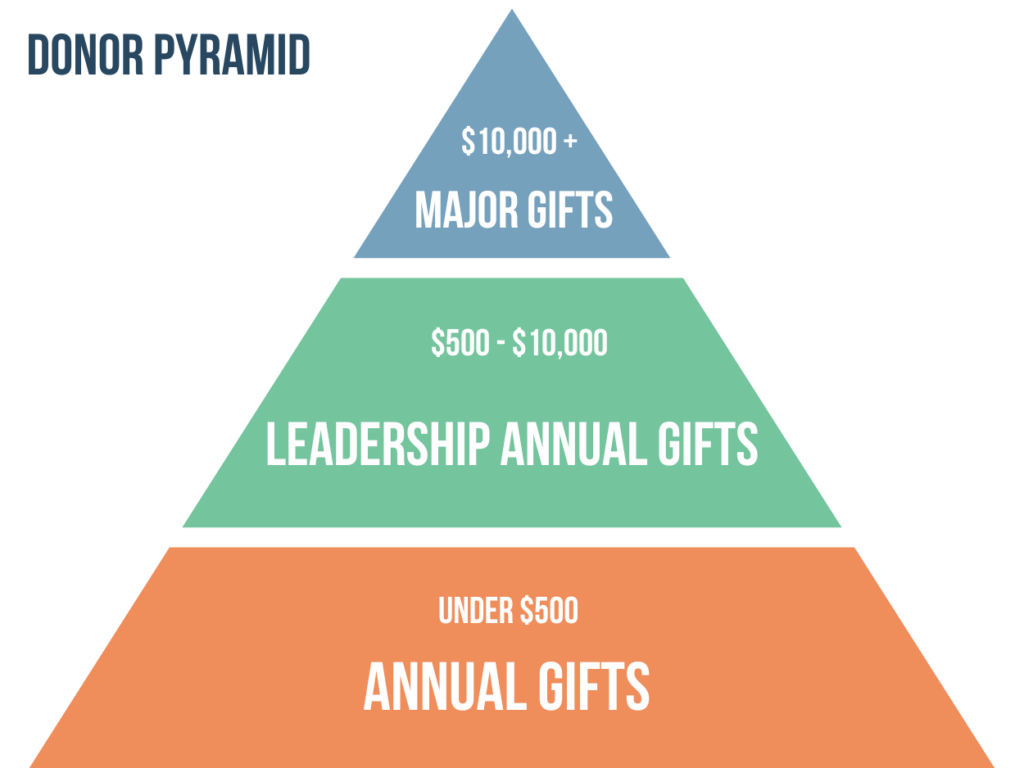
When conducting annual giving campaigns, nonprofit development professionals often focus on securing first-time gifts from the base of the donor pyramid or renewing major gifts from the top of the donor pyramid; however, gifts at the the middle of the donor pyramid are just as important. By strategically cultivating and stewarding mid-level donors for leadership annual gifts, you can increase their engagement and position your organization to ask for larger major gifts.
- Of note: According to the December 2022 AFP Fundraising Effectiveness quarterly report, annual gifts between $500-$5,000 are generated from 14% of donors and make up over 16% of total dollars raised, while gifts of $5,000+ are generated from a much smaller pool of 2.6% of donors but make up 74% of total dollars raised.
Leadership Annual Giving Tactics to Raise More Money
The following are my go-to recommendations for clients looking to increase their leadership annual giving:
1. Strategize and cultivate leadership annual giving donors through regular follow-ups utilizing a donor cultivation cycle to manage the donor journey. Assign staff members who have relationship-building skills to your top donors and prospects to personally engage with them and cultivate future gifts.
2. Monitor leadership annual giving by consistently collecting and analyzing donor data. Tracking giving patterns can help determine the appropriate time to solicit for larger major gifts within your donor moves management system.
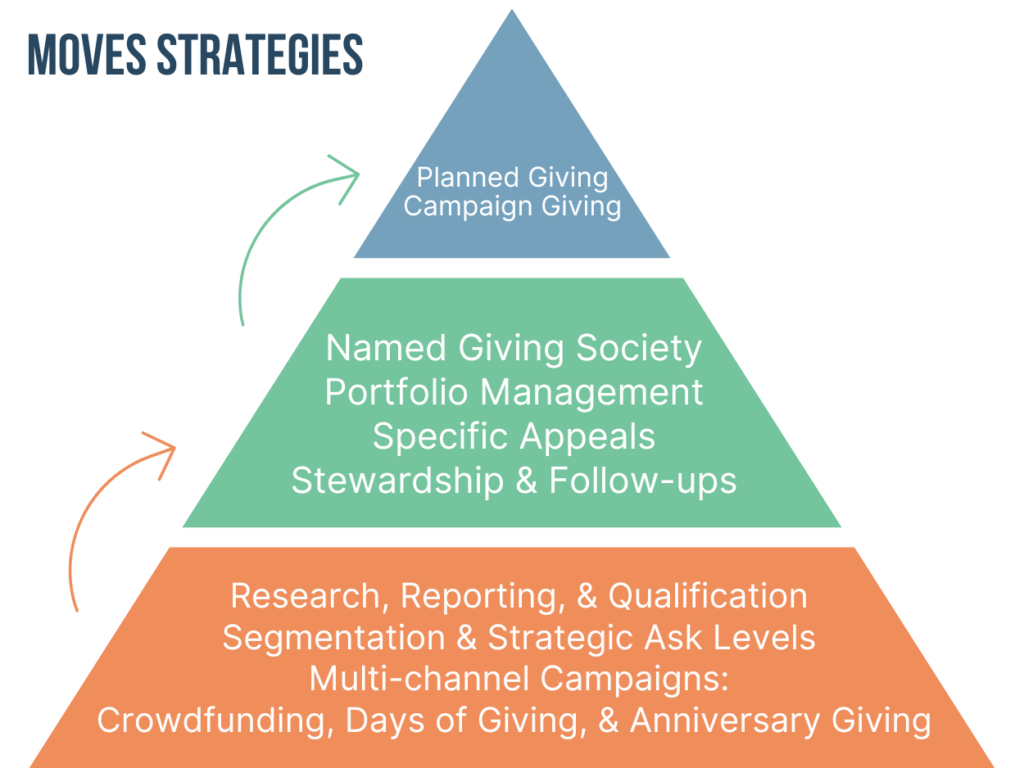
3. Launch a giving society for your organization with named giving tiers, such as: Sustainer ($500-$999 per year), Influencer ($1,000-$2,499 per year), Investor ($2,500-$4,999 per year), Founder ($5,000+ per year). Providing meaningful benefits and recognition opportunities can motivate your donors to keep giving and to move up to the next level.
- Consultant Tip: Host invitation-only events for the giving society to acknowledge leadership annual donors as well as public events where they can invite friends who have the potential to be future donors.
4. Conduct a comprehensive development assessment to analyze your current fundraising efficiencies, and/or a campaign feasibility study if your organization is considering a capital, endowment, or capacity building campaign. Both of these processes can reveal insights about the overall health of your organization’s fundraising practices and opportunities for improvements.
5. Align your frontline fundraising team by setting internal goals and reporting fundraising progress. Set a reasonable number of prospects for each of your gift officers’ portfolios, depending on the scope of the gift officer’s role, the size of your organization, and the goal of your campaign. Set a dollar goal for each gift officer to reach and celebrate wins along the way.
6. Make donating to your organization as easy and seamless as possible by leveraging a variety of fundraising channels, including mobile giving, mailed forms, and online giving pages connected to your donor database. Keep messaging specific and consistent across various fundraising platforms to clearly convey the ask.
7. Communicate with your donors to convey the impact of their gifts: once a donor contributes a leadership annual gift, they must be promptly thanked and informed of what has been made possible through their contribution. Connect via phone or video calls, thank-you letters, social media, and in-person meetings. Once a donor has made a leadership annual gift, consistent and regular donor communication is one of the best ways your organization can retain donors and increase future gifts.
Leveraging leadership annual giving is crucial for cultivating a robust pipeline of stable and increasing philanthropic support. Contact Creative Fundraising Advisors today to discuss how we can partner with you to achieve your goals.
Rob Ruchotzke, Senior Consultant
Rob Ruchotzke focuses on annual giving strategy, development assessments, campaign feasibility studies, and campaign counsel. Rob comes to CFA with nearly a decade of annual giving experience in higher education institutions. Most recently, Rob served as the director of annual giving at the University of Northern Iowa (UNI), where he led multichannel campaigns, developed crowdfunding platforms, managed annual giving vendors, and served as the strategy lead for UNI’s Day of Giving (#LivePurpleGiveGold). A native of Camanche, Iowa, Rob holds a BA in Public Relations from the UNI and resides in Cedar Falls, Iowa.
Fundraising Volunteer Engagement: Setting Up Your Campaign Committee for Success

By Joanne Curry, Head of Client Success & Principal
Capital and endowment campaigns are special, multi-year fundraising efforts tied to a visionary goal which present a special opportunity to engage your organization’s fundraising volunteers. By serving on your campaign committee, fundraising volunteers can share their affinity to your mission by influencing new contributions and garnering increased gifts. Campaigns and endowment campaigns can be a win-win for organizations and volunteers when participants are equipped to collaborate in the launch, progression, and completion of the campaign goal.
At the same time, development officers and philanthropists may struggle with sustaining motivation and enthusiasm in fundraising volunteers over the course of multi-year campaigns. Here are some suggestions to help your fundraising volunteers enjoy the campaign experience while helping reach the campaign goal:
Seven tips to set your volunteer fundraising committee up for success
1. Recruit with intention. The people on your campaign committee must work well together, be able to influence the campaign outcome, and represent diversity in as many forms as possible. Start by recruiting the campaign chair(s) and focus on your most invested and well-connected donors to join your campaign committee. Take time to meet with each person individually to share the campaign goals and a description of their roles and responsibilities.
- Read CFA’s Guide to an Effective Campaign Committee for more information on committee structure and volunteer responsibilities.
2. Provide clarity. Even the most experienced fundraising volunteers want to work toward a shared vision and align on a plan of how to achieve it. When people volunteer, they need specific tasks and clear expectations. Review your campaign plan at the first committee meeting. If you are conducting a multi-year campaign, ensure that the plan and timeline is discussed on an annual basis with all of your volunteer committee members.
Volunteers also need to understand the “why” behind the tasks you assign. For example, if you ask a volunteer to call on a colleague for a large gift, explain how the gift will help reach the campaign vision, how you came up with the solicitation amount, and why you think they are the best volunteer to help make the ask. If donor cultivation is the aim, ask one of your volunteers to set up a meeting with the prospect and explain how that will help to move the relationship forward.
- Consultant Tip: It is important to actively manage and update your donor data. Use the data you collect to keep your campaign volunteers focused on viable prospects.
3. Practice and prepare for fundraising. Volunteers may not be comfortable asking for money or cultivating donors. Demystify this task by providing fundraising training for your committee members early in the campaign. Equip your volunteers with the tools to succeed by sharing your case for support and a link to your campaign video (if applicable) and walking through these resources together in advance. To prepare a volunteer for conducting an ask meeting without a development staff partner, I recommend providing them with a personalized cover letter that details the amount of the financial request. However, in most cases, I counsel clients to have a staff member present to ensure all relevant details are conveyed.
- Consultant Tip: At campaign committee meetings, add a storytelling exercise to the agenda. I always enjoy hearing the personal stories of committee members about how they became involved in the organization or why the organization’s mission is meaningful to them. Discuss how sharing these personal experiences with campaign prospects could be fruitful.
4. Keep it simple. If you have a committee of 20 volunteers, avoid giving each member 20 tasks. Don’t expect volunteers to cull through long lists of prospects who may or may not be aligned with your mission and vision. Instead, aim for quality prospects over quantity of asks. I have found that assigning each volunteer one or two prospects at a time is ideal. Keeping people focused on a small number of set targets can help make fundraising volunteers feel accomplished.
- Consultant Tip: The best tactic for assigning roles is to identify a task that you can’t accomplish without volunteer help, or a task that is better accomplished by a volunteer. For example, if a volunteer knows the prospect because they serve on a board together, the meeting request is more likely to get a response when the volunteer, as opposed to the CEO or someone else on the staff, asks.
5. Track and meet in person. The purpose of committee meetings is to convene and share progress so that volunteers can hear from–and brainstorm with–each other. The peer accountability that occurs during in-person meetings can motivate and inspire action from your volunteers, while also allowing you to record what each committee member promises to do for the campaign. At CFA, we recommend using moves management to record interactions and plan next steps with campaign prospects.
- Consultant Tip: Cultivating major gifts is a long-term effort. Convene your campaign committee every other month to give volunteers ample time to demonstrate progress.
6. Hold volunteers accountable. Knowing when a volunteer expects to accomplish a task is essential to reaching campaign goals on schedule. This can be the toughest part of volunteer engagement! Establish a timeline as part of your campaign plan. Staff members and/or campaign chairs can follow up with volunteers individually between meetings. If it is obvious that a campaign volunteer is not likely to complete their tasks, work with campaign leadership to rethink the strategy for that volunteer’s assignments.
7. Keep volunteers motivated. Thank volunteers as often as you can and keep them informed of campaign progress. Celebrate wins along the way and recognize how a volunteer’s action translated into a contribution or a positive move for a future gift.
Capital and endowment campaigns can be a transformative time in the life of your organization when they are executed well and when your volunteer fundraisers feel ownership and success in reaching goals alongside development professionals and other staff leaders. Contact CFA today to find out how we can set you and your fundraising volunteers up for campaign success.
Joanne Curry, Head of Client Success & Principal
Joanne Curry is CFA’s Head of Client Success & Principal, focusing on campaign management, prospect development, and membership and annual giving programs. Joanne came to CFA with over 10 years of nonprofit experience in operations management, development, and accounting. Before joining CFA, Joanne served as Head of Revenue and Interim Head of Development at the McNay Art Museum in San Antonio, Texas, managed fundraising operations and communications with Missouri Contemporary Ballet and Owen/Cox Dance Group and worked with nonprofits as a Certified QuickBooks ProAdvisor Accountant with Support Kansas City. A native of Port Jefferson, New York, Joanne holds a BFA in Ballet Performance and Teaching from the University of Utah.
Fundraising Moves Management: Inspiring Philanthropy One Donor at a Time

By Anne Spears, Campaign Manager
Development professionals must build personal relationships with people who give to their nonprofit so the donor feels connected to both the mission and the people who carry it out. Donors rarely give to organizations unless they align with its philanthropic vision or have relationships with board members, staff, or other supporters. Whether they realize it or not, donors move organically through a series of stages as they become more deeply involved with an organization. Development staffers can shepherd and track this progression through a process called “moves management.”
As fundraisers, we must be comfortable cultivating donors and asking for money regularly if we are going to conduct successful campaigns. Moves management is a tracking tool that allows us to inspire donors to give in a way that is most meaningful to them.
Why use donor moves management?
Moves management is a system of operations that development staff and nonprofit leaders use to strategically elevate personal engagement with donors. Moves management can be used in annual funds, major gifts, and capital and endowment campaigns.
When I worked at a small private school in College Station, Texas, I learned why donor engagement has to be personal. It was 2012, and we didn’t have a nonprofit donor database or system for tracking donors, so we set out to create one from scratch. The head of the school and I referenced attendance rosters dating back to 1962 and began reaching out to alumni. During the process, we transferred donor information and touchpoints from a spreadsheet to an electronic database and created a centralized, streamlined system by which we could track engagement of prospective donors. We scheduled meetings and hosted tours of the school. The head of the school did a beautiful job of reengaging former families by getting to know them and learning why they loved the school. Alums were overjoyed to be back on campus and felt reconnected to their school. This fresh engagement, which began with the head of the school’s personal invitations, ultimately deepened alum involvement and the completion of a successful capital campaign.
How to implement a donor moves management system
Effective moves management involves examining donor data, tracking donor engagement, and working with staff and volunteers to plan and implement campaign activities ranging from hosting events to asking for campaign gifts.
When CFA is working with a client in campaign mode, we meet to review every lead donor’s giving history, event attendance, volunteer participation, capacity to give, and more. From there, we can gauge the donor’s engagement with the organization, determine where they fall within moves management, and look for opportunities to bring them closer to contributing. We strategize on every activity, assign tasks to staff and volunteers, and set deadlines. For example, the first step with a prospective campaign donor may be for the executive director to ask them to meet. With each successive “move,” we work side by side with our clients to determine the best next step. Many of our clients report that we keep them accountable because they know we will follow up with them on their progress.
How to track moves
Tracking moves management can be accomplished with a donor database software or a basic spreadsheet. At CFA, we offer a proprietary campaign moves management dashboard customized for each client based on the organization’s goals. Many organizations are not fully utilizing their database software for moves management, so we also provide donor data strategies and training solutions to maximize clients’ existing tools and resources and help them implement a sustainable moves management system for the long run.
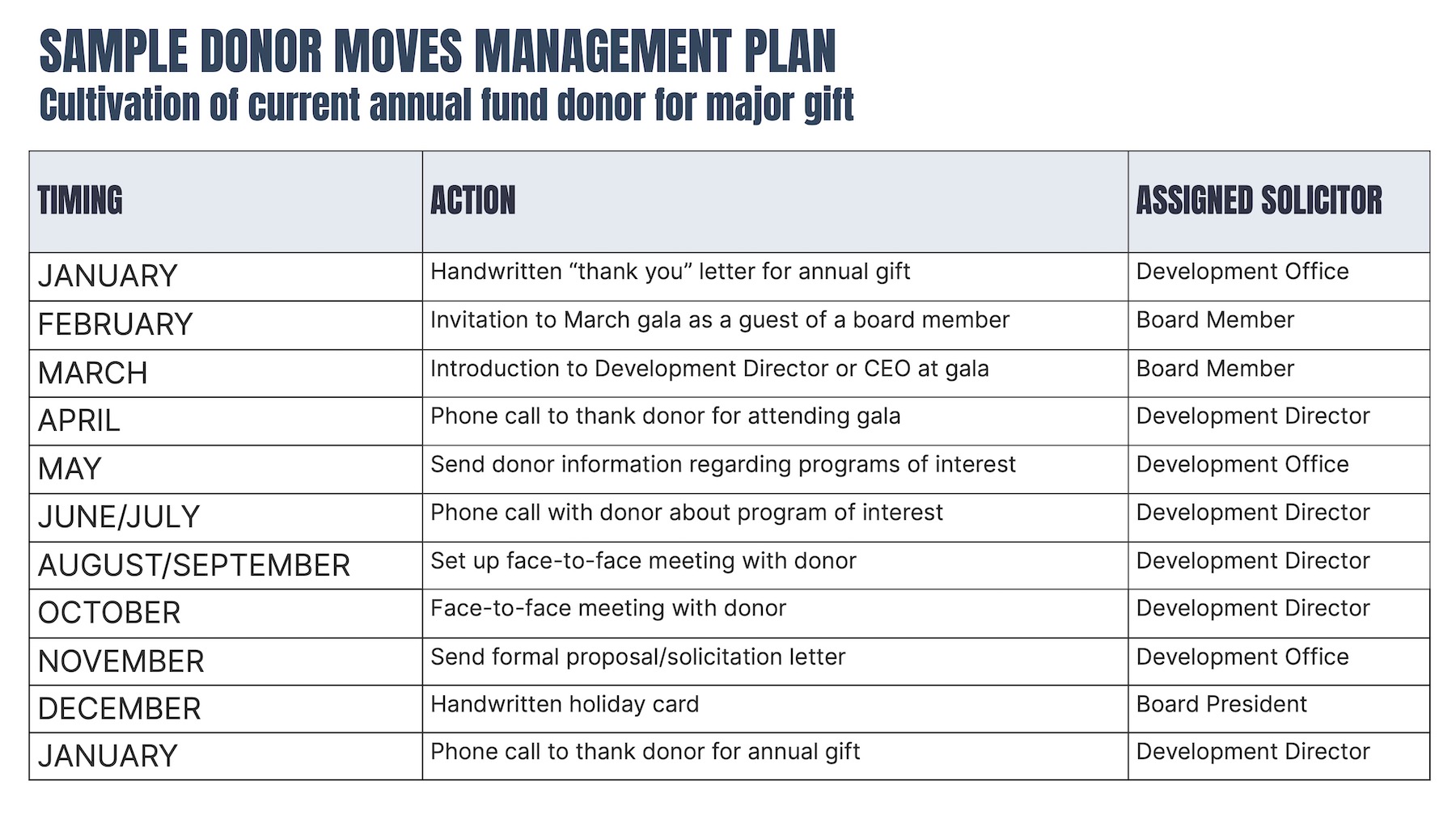
Regardless of your system, it’s important to determine and track several key items: Who is the donor prospect manager? Who is the assigned solicitor who holds the relationship with the prospective donor? How much have they given? Do they volunteer or attend events? How much are the ask amounts? What is the next step? Managing relationships, timing engagements, and tracking deadlines is vital to keeping solicitors on task and donors engaged.
- Consultant Tip: How you collect, maintain, and track donor engagement informs how you determine where a donor or prospect falls along the moves management path. Tracking engagement is also a way to uncover trends that inform the next best steps to reach your goals. Learn more about tracking donor engagement using data analytics.
Key steps in donor moves management
As a campaign manager, I see my role as the conductor who keeps the train moving forward on the tracks. Moves management is how I know which train is going where and when. Here are the five basic steps I follow:
1. Determine the “why.” Why are you acquiring more donors or seeking to increase the number or dollar amount of gifts? Your answer could be that you are growing the annual fund or raising capital for a new building.
2. Learn more about donors and prospects. Examine your data to determine each prospective donor’s motivation and capacity. If you are planning a campaign, consider conducting a wealth screening of your database.
3. Segment and strategize. Utilize the knowledge from examining your data, combined with the “why” of your campaign, to segment your prospective donors into groups and set goals for each group and each donor or prospect. Goals might be to encourage a segment to become recurring donors, to increase their annual donation, or to consider making a planned gift.
4. Engage donors and prospects. This is where the assigned solicitor personally engages prospective donors by following their inclinations and the campaign strategy. Our job at CFA is to guide our clients and help them set a strategy to cultivate and solicit personal relationships with leading prospects and donors. If you’ve done your job with cultivation, you’ll know the right time to make the ask and the right people to have in the room.
5. Track progress and next steps. It is crucial to input gifts in your donor database for historical record keeping and tax purposes, but it is equally important to track moves management and identify which strategies worked for which donor. There is always a next step. Check out CFA’s donor cultivation cycle to learn more.
Final thoughts
The goal in philanthropy is to help people engage meaningfully with organizations that address the issues they care most about. Every campaign is unique, and every donor has individual interests and levels of dedication to the mission. We can each inspire philanthropy when we give special attention to these nuances and build personal relationships with our donors.
Contact CFA to see how moves management and donor engagement can improve your fundraising efforts
Anne Spears, Campaign Manager
An experienced fundraiser with over a decade of experience in education, religious, and social service nonprofit fundraising, Anne is energized and inspired by working side by side with our nonprofit partners as a project manager for fundraising campaigns.
Most recently Anne was the Director of Development at the Episcopal Diocese of West Texas where she oversaw a multitude of fundraising initiatives including capital campaigns for Diocesan camp facilities and 87 Diocesan churches. Previously Anne was the Chief Development Officer for Ascension DePaul Services of San Antonio and the Development Coordinator at St. Thomas Early Learning Center in College Station, Texas. She also worked for the State of Montana as a social services specialist serving indigenous and rural populations.
Anne has a B.S. in Sociology, a M.S. in Family and Child Studies, and a Master of Public Administration. She also is a Certified Fundraising Executive (CFRE). Anne lives in San Antonio, Texas with her husband and three children.
CFA’s Guide to Donor Communications and Outreach
CFA has assembled a guide on donor communications to help you achieve better engagement with one of your organization’s most important audiences: your donors. Below you will find basic concepts and key steps toward implementing donor communications along with best practices to help your organization elevate its fundraising.
What are Donor Communications?
Donor communications refer to content designed to activate and cultivate connections between your organization’s mission and the people who have the inclination to support it. Donor communications include direct mail appeals, philanthropic news, and social media campaigns and are a consistent component of the fundraising and development function of any nonprofit organization.
Donors deserve gratitude for their contributions to your organization and regular updates to keep them apprised of progress toward mission delivery and the organization’s vision for the future. Prospective donors identified as having an inclination to give require ongoing engagement to increase the likelihood of a donation.
Distinction between Donor and Nonprofit Communications
Donor communications are an integral part of your overall nonprofit communications strategy. Nonprofit communications and donor communications strategies reinforce each other but are distinct. Nonprofit communications, or nonprofit public relations, are designed to reach and respond to everyone, while donor communications focus on engaging supporters and prospective donors.
When and Why to Use Donor Communications
Long-lasting donor relationships are the foundation for a nonprofit’s growth, which is why donor communications must focus on engaging donors and reaching prospects. Donor communications are a year-round initiative that is equally critical during times of success, crisis, and business as usual. CFA has found that organizations need to engage with their prospects anywhere from 10-24 times before it is time to ask for a financial commitment. These numbers are a general rule and illustrate the necessity of a comprehensive donor communications strategy. Forbes Nonprofit Council recommends engaging seven times with a donor before making the ask.
Components of a Donor Communications Strategy
The expected outcomes of donor communications include acquisition of new donors, funding for annual and special campaigns, and donor retention. A donor communications strategy is built upon an organization’s fiscal development goals and annual fundraising timeline, and key components of the strategy include data analytics, staffing and expertise, and correlation with the overall brand of the nonprofit.
Donor Data and Segmentation
To increase donor engagement and retention, nonprofits must understand and appreciate their target audience and personalize their communications approach using donor data strategies. Your organization’s development team can leverage data by segmenting donors into two or more distinct groups based on giving history and donor inclination scores. Segmentation allows for the creation of more tailored communications.
Customer relationship management (CRM), also known as donor management software, is an invaluable tool for managing donor and prospect relationships. A CRM application, or donor management software, can help your development team keep track of where donors and prospects fall within your Donor Cultivation Cycle to determine what type of communication is best to approach them and at what time.
Staff and Resources
Creating compelling appeals, managing a schedule of donor communications delivery, and designing digital and printed content requires time and expertise. It is important for an organization to plan annual and capital campaign budgets that leverage writers with storytelling expertise, visionary designers, direct mail and digital platforms, and fundraising advisors.
Coordination with Brand Identity
Brand recognition is important for several reasons, and chief among them is fundraising. When an appeal arrives at a potential donor’s doorstep or email inbox, they will be more likely to read it and contribute if the brand is known to them. Using similar content and graphics across all channels will reinforce the organization’s message and brand identity, which will increase the likelihood of a donor’s commitment.
Four Types of Donor Communications
There are four types of communication that can make up your donor communications strategy to increase donor engagement:
- Acknowledgment – Acknowledgment messages are not only important for providing donors with the appropriate tax information, but also in expressing gratitude. Read more about donor acknowledgment as part of ongoing stewardship here.
- Informational – Regular updates are imperative to donor engagement and retention. Examples of informational donor communications include annual reports, newsletters, videos, and emails that highlight donors, volunteers, and beneficiaries and illustrate how philanthropic gifts drive social impact.
- Persuasive/The Appeal – Strong fundraising appeals have a clear ask for support with a specific dollar amount or percentage increase request. Examples include sharing a campaign case for support with prospects in face-to-face meetings, direct mail solicitations with enclosed pledge forms, email messages with links to online donation forms, and social media posts with quick and easy ways to give. Follow-up messages reminding people to give are also an appropriate part of persuasive donor communications.
- Feedback – Communications is a two-way street. Organizations must be open to receiving as well as distributing information. Examples include surveys (electronic or hard copy forms), stakeholder interviews (such as those used for strategic planning and feasibility studies), social media engagement, and face-to-face conversations.
Donor Communications Methods
- Direct Outreach – Face-to-face meetings and video calls are the most effective way to communicate with top donors and prospects, and direct phone calls are a great alternative.
- Print – Printed materials are impactful and direct mail remains an effective way to raise dollars. Many people enjoy a brochure to hold in their hands and read, especially creatively designed materials that dovetail with digital efforts.
- Digital – Nonprofits must have a strong website with compelling messaging and a clear call to action to make a donation and all digital communications should lead back to this giving page. Email, digital presentations (such as PowerPoints), social media (such as Instagram, Twitter, Facebook, and LinkedIn), and digital tools (text-to-give) are examples of digital channels.
- Multichannel – Using a multichannel approach that employs more than one donor communications method is proven to have a higher success rate than using a single channel. According to Nonprofits Source, marketing campaigns that used direct mail along with one or more digital media tools experienced a 118% increase in response rate compared to those that only used direct mail.
Donor Communications Plan and Timeline
Four to six months ahead of a new fiscal year, set out a plan for donor communications that clearly states the timeline, budget, tasks, and staff member responsibilities. Plan steps for each donor segment including a calendar for which segments to approach with which communication method. Your organization’s development and public relations must collaborate to maximize brand identity and audience engagement.
Measuring Donor Communications
Tracking donor engagement will allow you to measure the return on investment of donor communications. Recording gift amounts, event attendance, and volunteer participation, along with measuring open rates, click-through rates, or conversions to gifts, informs how to segment your donor and prospect data and provides insights for the development team to assign “inclination scores” to each donor. Tracking and inclination scores are very useful for determining which types of communication resonate with each donor or prospect and what strategies to implement in future appeals to increase return on investment.
Donor Communications Best Practices
- Personalization – Marketers have found that adding personalized elements to communications resonate with donors and result in deeper engagement and higher return on investment. People are more likely to answer a call, letter, or digital communication when it arrives with their name on it and references how their contribution can or has helped your organization deliver on its mission and fundraising goals. In fact, one study found that 92% of marketers also believe that their prospects and customers expect a personalized experience.
- Storytelling – People are more likely to read and respond to content that focuses on a single individual who can benefit from their generosity. Deborah Small, Professor at the University of Pennsylvania, found that people are more likely to give to help one individual rather than an overall cause or statistic.
- Testimonials – Leverage powerful supporters and experts to encourage donors and prospects to follow their lead in supporting the cause. Testimonials from major donors, influencers, politicians, and community leaders are an extra stamp of approval.
How Outside Expertise Can Help
At CFA, we partner with you and your organization to maximize data and communications strategies and uncover the insights that elevate fundraising. We help create messaging that resonates and reflects the vision for annual, major gifts, and capital campaigns and can walk you through the best ways to pitch your prospects. We also develop case for support materials, website language, digital presentations, and more as part of our clients’ donor communications strategy.
Contact us today to get started.
Nonprofit Board Training for Fundraising

Serving on a nonprofit board is an honor and can be a rewarding way for people to give back to their communities. Board members have a shared responsibility to ensure the organization is financially stable and maximizes impact. By the same token, nonprofit leaders who provide ongoing board training can equip members with the knowledge and confidence to govern more effectively, participate in fundraising and donor stewardship, and guide the organization to advance its mission.
Empowering your nonprofit board to fundraise
What kind of skills could you help board members develop to benefit your nonprofit? Increased willingness to ask friends and associates for financial support? More relationship building with prospective and existing donors? Additional fund raising know-how? Strengthening your board and development committee is about empowering them to help your organization be successful, which includes asking fellow community members to support your organization’s mission financially.
Fundraising training to facilitate board engagement
Even the most seasoned board development committee volunteers can benefit from a refresher in the art of asking for money and inspiration from your organization’s leadership. Fundraising training on the shared campaign vision, goals, and fundraising tactics ensures everyone is aligned and confident about where the organization is going. Training can also bring together members with varying solicitation experience to discuss best practices.
The most effective board training content for fundraising
Preparation for a tailored board training is a crucial step. Your facilitator must understand the specific challenges your board perceives about fundraising in advance, what additional support the staff hopes to get from the board, and if your board is aligned on the vision and goals of the campaign you are pursuing.
According to the Ebbinghaus “forgetting curve,” people forget half of what they learn within an hour and 70% of what they learn within a day. An effective board training includes instruction, practice, debriefing, team building, and following up with board members after the training to ask what they learned. The extra step of following up helps board members recall information and also shows them that you are invested in their continued involvement.
Fundraising training is most impactful for board members if they learn fundraising principles and skills, engage in practicing as a group, and debrief in open conversation with one another, your staff, and the facilitator. Whether you choose to bring in a professional for two hours or two days, it’s important that the training is custom to your organization and your people.
Training for the ask
Many board members are accustomed to selling tickets to events and soliciting small donations, but may be intimidated by capital or endowment campaign scenarios when the ask is for a significant pledge or estate planning gift. Asking for money is not easy for everyone. Remind your board that it is a positive sign if they feel nervous; it shows they care enough about the mission and their community to make the ask.
- CFA offers Board training as part of services such as Annual Giving Counsel, Campaign Counsel, and Strategic Planning.
Good fundraising facilitators engage a board with conversation on everything from the rationale for conducting a silent phase during a capital campaign to understanding a donor cultivation cycle. Practicing asking for money can help board members overcome emotional reservations and learn how to have difficult conversations. Team building can be especially effective when you have had staff turnover or are preparing for a new significant campaign. Lastly, including specific content in the training presentation such as the campaign’s fundraising case statement allows the overall experience to be more realistic.
When the time is right for board training
When board members or campaign leaders ask for money without proper training, the organization risks doing both the board member and the prospective donor a disservice by potentially hindering the relationship with the prospect. Board training for fundraising can give your board volunteers the confidence and know-how to maximize fundraising and donor stewardship for your organization.
Reach out to CFA today to help your organization facilitate a board fundraising training.
Using Donor Analytics to Develop Your Donor Engagement Strategy

By Stephanie Willis, Senior Manager, Prospect Development
Gone are the days when nonprofit professionals and board volunteers convened around a table to hypothesize about a prospect’s inclination to give and ranked prospects based on recent giving history. While relationship insights and staff intuition remain important, there is both an art and a science to fundraising. Intuition (the art) combined with donor analytics (the science) will generate the best fundraising results.
Where to start with donor analytics
If you are like many nonprofit professionals, you know your organization needs help with your donor database, but you may not be quite sure where to start. When I begin working with a new client, I help them define the problem they are trying to solve. Once we understand your challenges, then we can help optimize your data analytics and strategy to increase your return on investment. We often utilize data to prioritize which existing donors to ask for which appeal because it is more cost effective to cultivate people who are already giving to your organization versus acquiring new donors.
CFA donor analytics can help answer:
- How can my organization maximize philanthropic investments?
- How can we optimize our organization’s database infrastructure to support our fundraising goals?
- Is anyone on my team consistently tracking and recording donor engagement data such as event attendance and volunteer participation?
- How inclined are prospects to support our organization, and how does their inclination align with their wealth capacity?
- Are there untapped pockets of opportunity in our database?
- Is our organization staffed to properly manage the scale of giving opportunities?
Analyzing data to determine a donor’s inclination to give
Inclination analysis is a way to predict which prospects have the potential to move from having capacity to give to being likely to give with the right outreach, cultivation, and engagement. We use donor inclination scores to illustrate how willing and interested the people in your database are to give to your organization based on their past behavior. We develop the scores based on a customized, data-driven points model and project the potential size of gifts by combining this information with a wealth screening of your database.
Here are examples of prospect prioritization used to prepare for a sample capital campaign.
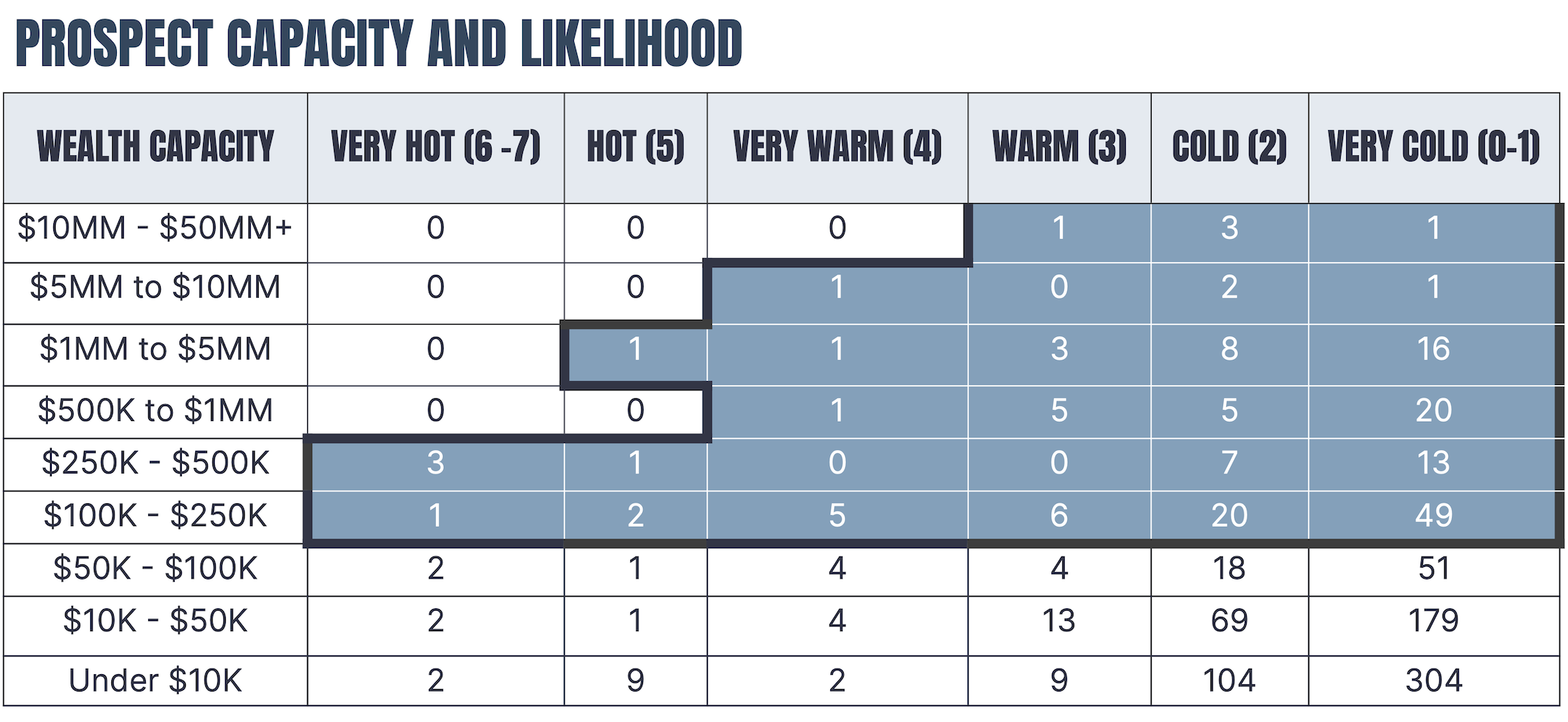
The shaded boxes represent 176 prospects from a sample core prospect list with the greatest campaign potential. The blue section represents prospects for six-figure gifts. In this example, the “cold” and “very cold” prospects will need additional cultivation to determine if they are viable prospects for a major campaign, while the “warm” to “very hot” are more likely to be ready to make a commitment soon.
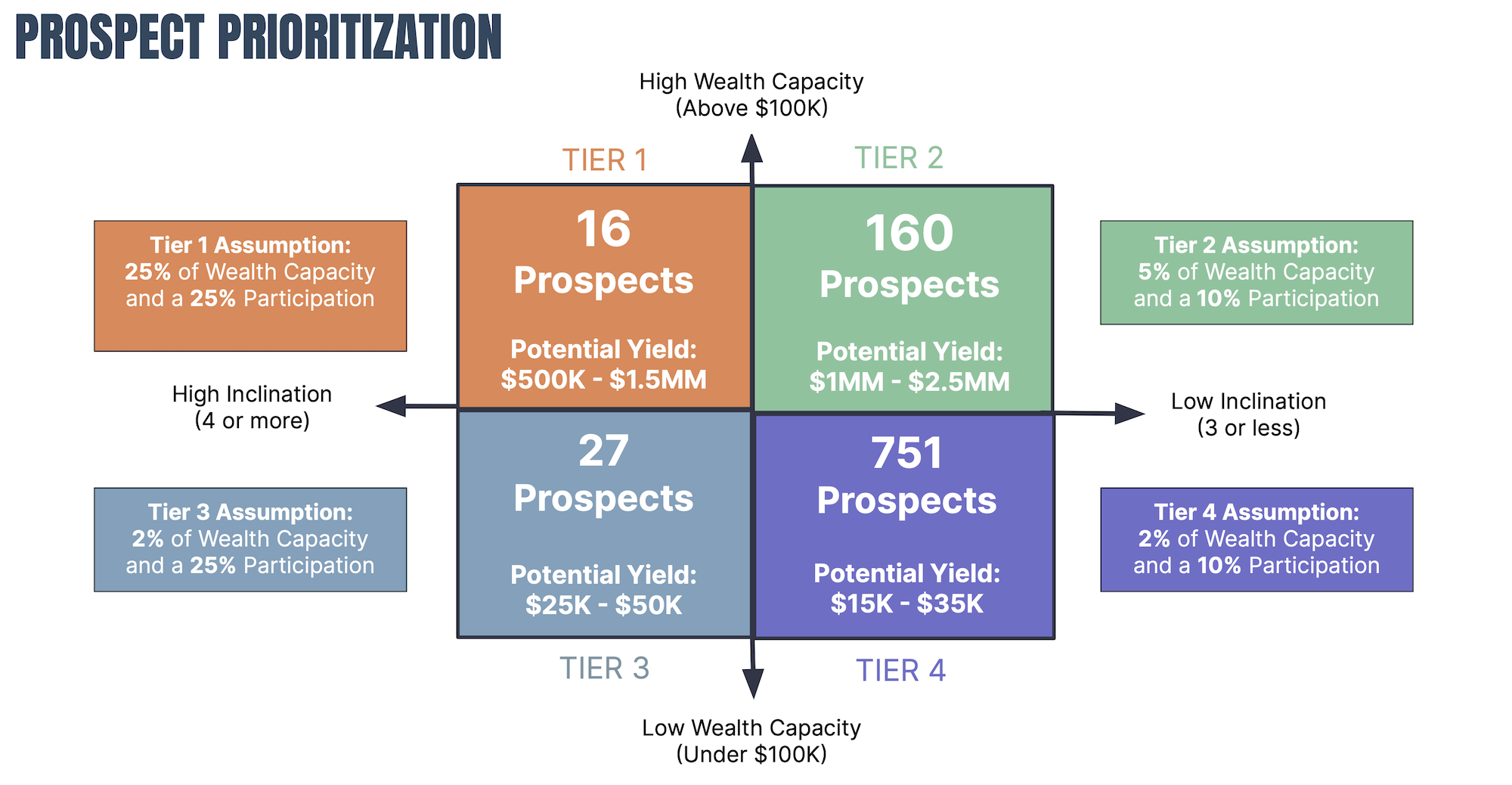
The range for these projections comes from the low and high range of the wealth capacity score, using a 5-year pledge commitment.
Most organizations discover through an inclination analysis that, on average, 75% to 90% of their donor database falls in the “cold” category. These may be lapsed or infrequent donors, but they are in your database for a reason. Many nonprofits solicit the same people again and again or buy data in pursuit of new donors instead of cultivating the “cold” prospects. Greater opportunity to move prospects from “cold” to “warm” exists when you increase engagement through strategic cultivation and donor communications.
Check out our Donor Communications Guide to learn how changing or increasing your donor communications tactics can increase your return on investment.
Most development professionals rely on a “moves management” system to track cultivation of prospects along a continuum of giving. One person might be a past donor at risk of disengagement while another has steadily increased their giving over time. At CFA, we call this system the Donor Cultivation Cycle, and data analytics plays a key role in determining where your prospects lie within the cycle. Today’s technology tools bring increased accuracy to data analytics and can help you track when you have engaged with a prospect.
- Consultant Tip: Have one person on staff assigned as data manager or prospect manager. This role is especially crucial during any campaign outside of your regular annual giving effort. Ensure that this person is trained in the concept of moves management and how to maximize database tools.
Good tracking is key
How you collect, maintain, and track donor engagement informs how you determine and refine a donor’s inclination score. Tracking donor engagement is also a way to uncover trends that inform the next best steps to reach your goals. Tracking does not have to be cumbersome, and it must be done year-round.
Many software applications will allow you to tag database records to enable you to match individuals with gifts and appeals. This is a great way to build new insights about your donors. For example, if you know that Donor A gave $100 through a text-to-give initiative but has never responded to direct mail solicitations, or that Donor B pledged $1,000 to a major gifts campaign at an event, and Donor C made a $25 contribution online from a postcard mailer QR code, then you can use this information to customize your outreach strategy and increase response rates.
- Consultant Tip: If you are not sure which message will best resonate with a segment of your donors or prospects, start with an “A/B test”: send out two versions of a message — one that is heartwarming and one that is transactional — and track which gets a better response from which people. This can help you tailor future messaging.
When donor analytics is right for you
Taking a deeper dive into data analytics and donor inclination can be done anytime your organization is raising annual dollars and cultivating donors for special projects and future campaigns. For a capital campaign, I recommend analyzing your database and prioritizing prospects at least three to six months before you expect to launch a campaign.
CFA donor analytics helps shape fundraising strategy by harnessing the nuances of donor inclination, database training, and wealth screening, which can optimize moves management, cultivation steps, and best practices to increase donor engagement.
Reach out today to see how CFA can help you harness data analytics in your fundraising strategy.
Stephanie Willis, Senior Manager, Prospect Development
Stephanie has over 10 years of experience in prospect research, prospect management, and data analytics at both higher education and nonprofit organizations. At CFA, Stephanie’s responsibilities include establishing strategy, procedures, and processes for prospect research, prospect management, and data analytics. Stephanie is Blackbaud-certified in Raiser’s Edge NXT and Raiser’s Edge and has a master’s degree in library science. Additionally, Stephanie is a Gallup-certified Strengths coach and has a passion for helping others understand, apply, and integrate CliftonStrengths results into their lives and work.
Optimizing Multichannel Fundraising

By Rob Ruchotzke, Senior Consultant
Years ago, I sent an email solicitation to thousands of college alums as part of a multichannel fundraising campaign in which every person’s salutation read “Dear [first name].” That email merge mistake was embarrassing, and it was a direct result of me trying to single handedly manage all donor communication. Since then, I have been a proponent of bringing a team approach to multichannel fundraising, and believe that leaning on fundraising, communication, database, and digital experts, as well as your colleagues, provides an extra measure of success.
Multichannel campaigns use more than one communications tool for donor outreach and fundraising. Direct mail, email, social media (such as Instagram, Twitter, Facebook, and LinkedIn), and digital tools (such as text-to-give) are all channels used in donor communications.
Coordinating fundraising and other donor communications across multiple channels is proven to have a higher success rate than using a single channel. According to Nonprofits Source, marketing campaigns that used direct mail along with one or more digital media tools experienced a 118% increase in response rate compared to those that only used direct mail.
A 2020 study found that multichannel donors give as much as three times more than single channel donors, and are more likely to keep giving year after year.
Whether you are new to multichannel fundraising or expanding from three channels to five, there are a few key ideas to keep in mind.
How to begin multichannel fundraising
Tailor your message
Your case for support must be tailored to your brand, campaign, and, most importantly, your audience. Using similar content and graphics across all your channels will reinforce your message and brand identity. Start by creating a long form message for your printed solicitation letter, then pare it down for an email version, pull out human impact stories to highlight in a video script, and emphasize one or two sound bytes with relevant hashtags for social media. Anchor each communication within your multichannel appeal to your giving page. Don’t let the donor get distracted by linking to social media pages; instead, make it easy for people to land in one consistent place with a prominent “give” button.
- Consultant Tip: A key tactic to help drive donor engagement is to personalize correspondence to show your constituents you know them. You’ll also want to tailor several versions of your solicitation note to distinct types of supporters: leading donors should receive a different message than someone who has never donated before.
Choose channels wisely
It is crucial for nonprofits to adapt and learn how and when to best communicate with dedicated supporters; it would not be advisable, for example, to invest time and resources into Facebook if it is not where your stakeholders read about you. Determine what options are available to your organization and are realistic for you to implement. While text messaging services or digital ads might seem intimidating, their implementation is straightforward, they are relatively cost effective, and they have proven success especially with younger audiences.
- Consultant Tip: Educate your donors on the channels you offer so they are comfortable with the different approaches to giving. For example, try emailing and snail-mailing an instructional segment about a text-to-give option or include it as a story-telling video on YouTube. Whichever channels you choose to communicate, be ready to respond to comments and questions, such as those that come via social media, in a timely way.
Here are samples from a personalized multichannel fundraising campaign for the Children’s Museum of Southern Minnesota. The museum combined a direct mailing with social media and email to amplify their messaging.
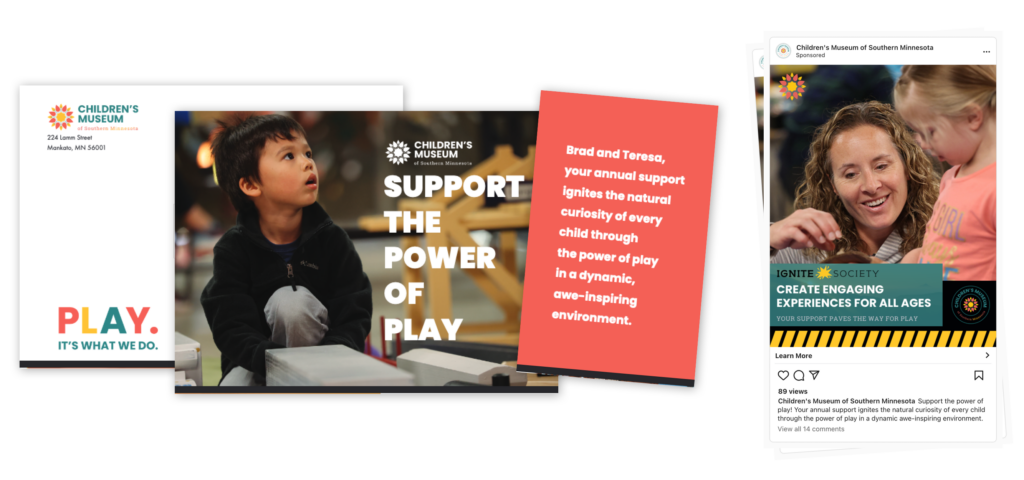
Test first and analyze along the way
How you test to ensure you are ready to launch a multichannel fundraising campaign depends on the capabilities of your data and communications platforms. Send out test emails, texts, and other communications through each channel so you can be confident in your approach. Testing adds an extra day or two to get a representative sample and receive feedback or edit, but it is well worth it (and you won’t send out a letter with incorrect merge fields in the salutation like I did!)
Evaluation during and after a multichannel fundraising campaign is equally important. Schedule dedicated time with your team to review and analyze your multichannel results and adjust your course as you discover new data. It is imperative to determine which channels are the most effective and how you can improve communications and outreach in the next campaign.
- Consultant Tip: Evaluation of donor data for each multichannel effort is important to determine what channels are most successful, if there are new donor segments emerging, and who needs additional personalized attention, such as a phone call or meeting.
Increase engagement with multichannel fundraising
Your donors are passionate about what you do, and you want them to continue to feel connected to your mission through donor stewardship. When you provide a seamless journey for them to connect with you in various ways and more often, you are increasing engagement. Engaged donors are more likely to volunteer, attend events, and tell friends about your work.
- Consultant Tip: The practice of employing multiple platforms is not only for your primary annual campaign. Take advantage of multichannel donor communications across all the phases of the donor cultivation cycle.
Multichannel Fundraising with CFA
At CFA, we can help you reach your audience strategically and transform your fundraising results. A development assessment is a great resource to help identify your unique donor communications opportunities, and partners like CFA can help you with a strategy for using multichannel fundraising as part of campaign counsel.
Contact us today to learn how we can partner with you.
Rob Ruchotzke, Senior Consultant
Rob Ruchotzke focuses on annual giving strategy, development assessments, campaign feasibility studies, and campaign counsel. Rob comes to CFA with nearly a decade of annual giving experience in higher education institutions. Most recently, Rob served as the director of annual giving at the University of Northern Iowa (UNI), where he led multichannel campaigns, developed crowdfunding platforms, managed annual giving vendors, and served as the strategy lead for UNI’s Day of Giving (#LivePurpleGiveGold).
A native of Camanche, Iowa, Rob holds a BA in Public Relations from the UNI and resides in Cedar Falls, Iowa.
Crowdfunding Campaigns for Nonprofits: Giving Tuesday and Beyond

By Rob Ruchotzke, Senior Consultant
There’s nothing like a crowdfunding campaign to capture a moment, build your donor base, or raise money for a specific project. I’ve had the opportunity to lead over 30 crowdfunding projects ranging in goal from $1,000 to $50,000, as well as seven days of giving and Giving Tuesday campaigns. Each project had its unique set of challenges and opportunities that led to the insights I am pleased to share with you below.
Crowdfunding allows you to galvanize your existing supporters and leverage your constituents and their social media networks to expand your reach faster than traditional annual giving methods like phonathons or direct mail campaigns. Plus, crowdfunding can be fun. When people see you and your followers having fun with a campaign, they are more likely to engage.
Crowdfunding is most successful when executed over a designated time period or on a single “Day of Giving,” such as Giving Tuesday. Giving Tuesday falls on the Tuesday after Thanksgiving (November 29, 2022) and is recognized around the world as a day to make contributions to nonprofit organizations. On Giving Tuesday 2021, nearly $3 billion was raised in the United States alone.
How to run a successful crowdfunding campaign
Set Campaign Messaging
Your goal can be a specific number of donors or a dollar amount, but it must be attainable, relevant, and time-bound. Create a unique, authentic tagline to communicate your goal and a dedicated landing page or fundraising platform that you can link to in all of your messages. Plan to share stories online along the way.
- Consultant Tip: Campaign video teasers sent via email and social media are effective ways to build anticipation before your campaign launch. Here is an example of a crowdfunding campaign teaser video from a university where I worked. When we encouraged reactions and responses to our posts, people were more likely to spread our message.
Build Your Team
Recruit a leader to manage the progress of internal staff members, volunteers, and “star” ambassadors. Who is best suited for planning and who for execution? Who is motivated and will stay engaged? What connections to social media “stars” do you have on your Board who would be willing to make a gift, post about their contribution on their social networks, and help increase organic engagement?
- Consultant Tip: Track which of your ambassadors brought in the most new donors or overall dollars and create a leaderboard to generate healthy competition within your team to increase gifts.
Find the Right Partner
Crowdfunding can be part of your larger annual giving strategy. Partnering with an expert who understands the planning, marketing, fundraising, and strategic moves that crowdfunding requires will make your effort run smoothly and give you confidence.
- Consultant Tip: Set aside time to meet with an account manager for each of the platforms you use including your customer relationship management (CRM) and bulk email platform, direct mail vendor, texting application, and giving page. Make sure you understand what tools you have at your disposal and how to use them to make your campaign really shine.
Set a Timeline
Once you determine your crowdfunding approach, it is crucial to plan when, what, and where you will post your campaign goals and progress updates. Creating a timeline can help your team see the bigger picture, generate new ideas throughout the process, and stay on schedule with timely communications.
Create Urgency
Crowdfunding is most effective when you have a compelling and urgent need to entice donors, many of whom may not yet be associated with your organization. One or more of your donors may be willing to encourage others to give to your crowdfunding effort by making a challenge gift and calling for matching gifts.
- Consultant Tip: In advance of launch day, meet with potential major donors to “seed” the campaign with early donations. This early support will encourage more people to get involved, especially when you have a challenge gift. During a designated day, time challenges can also be effective, such as a “Rush Hour Challenge” or “School’s Out Challenge” or a “Members Only Challenge.”
Drive Momentum
Your crowdfunding campaign success will be defined by how constituents drive the momentum via social media. Harness your ambassadors and keep the online engagement moving with timely messages, videos, and updates along the way. Use a multi-channel communications strategy to reach people in more than one way.
- Consultant Tip: Plan for the unexpected. Your campaign could go viral if a megastar or influencer gets on board. Be ready to react in real time and ride the wave to success.
Make It Easy
Donors want to click, give, share, and receive acknowledgement and campaign updates. Make the path to sharing your content simple and approachable both for your team and the public.
Prioritize Stewardship
Plan stewardship well in advance of launch day so that you can thank donors along the way. Enlist ambassadors, staff, and volunteers to help with a letter writing campaign or thank-you video in addition to your regular tax receipt acknowledgement.
- Consultant Tip: Show the impact! Record a video capturing the excitement on a day of giving or the results of the gifts that have been made – check out this example of a personalized video I received when I made a contribution during a crowdfunding campaign.
Analyze
Debrief, learn, and adapt for future programs using quantitative and qualitative data. Create tracking mechanisms in advance of your campaign. Use solicitation codes and set up a campaign tracking sheet so you can understand which channels and outreach tactics were most successful.
Crowdfunding takes effort, but can have an immediate impact on your organization and be incredibly satisfying when done correctly. Reach out today to learn more about how CFA can help your organization succeed in your crowdfunding and annual giving efforts.
Rob Ruchotzke, Senior Consultant
Rob Ruchotzke focuses on annual giving strategy, development assessments, campaign feasibility studies, and campaign counsel. Rob comes to CFA with nearly a decade of annual giving experience in higher education institutions. Most recently, Rob served as the director of annual giving at the University of Northern Iowa (UNI), where he led multi-channel campaigns, developed crowdfunding platforms, managed annual giving vendors, and served as the strategy lead for UNI’s Day of Giving (#LivePurpleGiveGold).
A native of Camanche, Iowa, Rob holds a BA in Public Relations from the UNI and resides in Cedar Falls, Iowa.