
Is Your Database Helping or Hurting Your Fundraising Efforts?

Most conversations about fixing problems with customer relationship management (CRM) databases focus on data health: eliminating duplicate records, outdated addresses, and inconsistent fields. Those issues are real, quite urgent in many cases, and need to be solved. But two other database issues are just as common, just as costly, and often just as destabilizing: (1) when data is perfectly clean but not accessible to the people who need it, and (2) when the CRM is not aligned with how the organization works. Both can quietly—or not so quietly—undermine fundraising strategy, donor relationships, and staff morale.

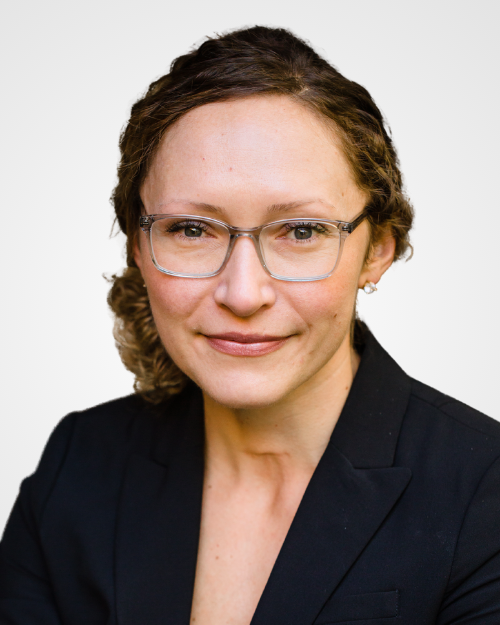
Stephanie Willis, CFA Consultant and author of The Art and Science Approach to Fundraising Data and Research, encounters these issues regularly through the client data audits she conducts as part of CFA’s data services. Working with nonprofits across the country on data strategy and the complex human dynamics that shape how CRMs and other data systems are used, she has learned that resolving major issues requires as much attention to people and culture as it does to technology.

Case Study 1: A Database on an Island

Vistas Land Trust* was an environmental nonprofit with a $6 million annual budget and a donor base that had been growing steadily for years. Their data coordinator, Mia, had managed their fundraising CRM for years, and she was meticulous. Every record was accurate and up to date. Salutations were correct. Gift histories were complete. The data was, by any measure, immaculate.

But Mia was the only one who knew how to use the system.

When the development director wanted to pull a report, she had to ask Mia. When a grants officer wanted to check whether a foundation contact was already in the database, she had to ask Mia. When leadership needed a donor list for an event, Mia generated it. She was, as Stephanie puts it, “the keeper of the keys.” No one else knew how to access the CRM.

When data becomes one person’s domain, it isn’t a technology problem or a data quality problem. It is a culture and training problem. Imagine for a moment what would happen if that person suddenly left their position. Every data-related operation would come to a standstill.  This sounds extreme, but it is actually more common than most nonprofit leaders realize.  

“An organization’s database is not the administrator’s database,” Stephanie says. “It belongs to the whole organization. Everyone who touches fundraising in any way—development staff, program staff, finance, leadership—should be able to view the information they need and understand how the system works. When only one person can access it, everyone else is flying blind.”

At Vistas, the consequences were becoming harder to ignore. An influx of new donors from a successful series of community events left the development team struggling to steward the new relationships effectively. They couldn’t pull segmented lists for outreach. They couldn’t generate reports for board meetings. They couldn’t even verify basic contact information without routing a request through Mia.

The solution was not to find a new system or replace Mia. Her institutional knowledge, skills, and precision were important assets. The solution was to build a shared culture of database literacy throughout the organization.

Stephanie’s approach in situations like this one begins with a single, direct question she poses to the whole organization: What do you actually want your database to do for you? The answers are often revelatory. Staff members articulate priorities they’ve never voiced. Leaders recognize gaps between what the system could offer and what they’ve been asking of it.

To get everyone up to speed, Stephanie provides workshops, training and process guides, as well as group and individual coaching sessions that help each staff member define processes and understand how to use their fundraising CRM in ways relevant to their specific responsibilities. 

“A database should serve the entire organization,” Stephanie emphasizes. “When you democratize access thoughtfully, with clear guidelines for who can view, who can edit, and how entries are made, you protect the data integrity that someone like Mia has worked hard to build, while giving everyone else the tools they need to do their jobs.”

Case Study 2: When the Tool and the Organization Don’t Align

Northstar Arts Center* was a performing and visual arts nonprofit with a $60 million annual budget. Two years prior, leadership decided to migrate to a new CRM platform designed by a reputable company with strong brand recognition and seemingly powerful capabilities. The investment was substantial. The promise was significant.

What Northstar’s team didn’t fully anticipate was what the system would actually require of them.

The CRM they chose was highly customizable, which was sold to them as a plus, but in order to configure it for fundraising and keep it running reliably, the organization also needed a dedicated database administrator. Northstar initially hesitated to make that investment, assuming the system, once set up, could be managed within existing roles.

Without a database administrator, this expensive “top shelf” CRM could not deliver on its intended value. Staff members couldn’t complete basic fundraising functions. Reports were unreliable. Workarounds multiplied. The database that was supposed to streamline operations was instead draining time and energy.

“Some platforms are built for fundraising from the ground up,” Stephanie explains. “They have recognizable fields, intuitive processes, and a manageable learning curve. Other platforms are designed for maximum customization, which means they need someone who knows how to build and maintain a specific architecture. If you don’t have that capacity in place, the system won’t work as expected.”

Over time, Northstar came to a better understanding of the tradeoff it had made. The system itself was not inherently flawed—it was built with certain expectations about technical oversight. The gap was in how the organization had resourced and structured its use. Once that became clear, leadership shifted its approach, investing in a database administrator, providing additional staff training, and adjusting internal workflows to support the system more effectively. 

In situations where the CRM and the organization seem mismatched, the issue is not simply whether to keep the old CRM or adopt a new one, but whether the system can meet the organization’s core needs when properly configured and supported.

“No system can be everything for every organization,” Stephanie explains. “The real question is: what are your non-negotiables? What are the things your database has to do well to support your fundraising?”

If a system can deliver on those non-negotiables, with the right staffing and workflows in place, then the work is to resource it appropriately and use it with intention. If a CRM cannot meet the organization’s non-negotiable needs, even with capable support, then it may be time to reconsider the platform altogether.

For Northstar, the best way forward was to appropriately resource their CRM. For other organizations, it may make better sense to change systems. To help clients quickly see which systems align with their capacity and priorities, Stephanie maintains a spreadsheet for side-by-side comparison of donor management platforms, organizing them by organization size,  fundraising volume, features, technical skill requirements, and typical use cases.  

Asking the Right Questions

Both Vistas and Northstar had invested in their fundraising databases. But in both cases, something essential was missing: alignment between the tool, the team, and the way the organization wanted to work.

Stephanie offers practical diagnostic questions for organizations wondering whether their database is helping or hindering them: 

  • Can your team pull the reports they need? 
  • Do they trust what’s in the system? 
  • Are they using it or avoiding it? 

If the answers are no, no, and the latter, it may be time to reassess your organization’s CRM.  

“Your database should be your primary source of truth,” Stephanie says. “It should tell you who your donors are, how they’re engaged, and where your fundraising is headed. When it does that well, it’s one of the most powerful tools you have. When it doesn’t, your strategy, stewardship, and reporting are built on sand.”

Partner With Us

Is your database serving your organization the way it should? Are there staff members who need access and training they’ve never received? Is your CRM the right fit for your team’s size and technical skill? CFA conducts thorough data audits that assess not just data health, but database fit, staff usage, and organizational alignment. We help nonprofits understand how to put their data systems and processes to the best use, where the gaps are, what options exist, and how to move forward with confidence. Contact CFA today to find out how a data audit can strengthen your fundraising strategy.

*Disclaimer: Client confidentiality is paramount in our work with each and every organization. The story in this article is fiction, based on real situations drawn from CFA’s broad experience serving nonprofit organizations.


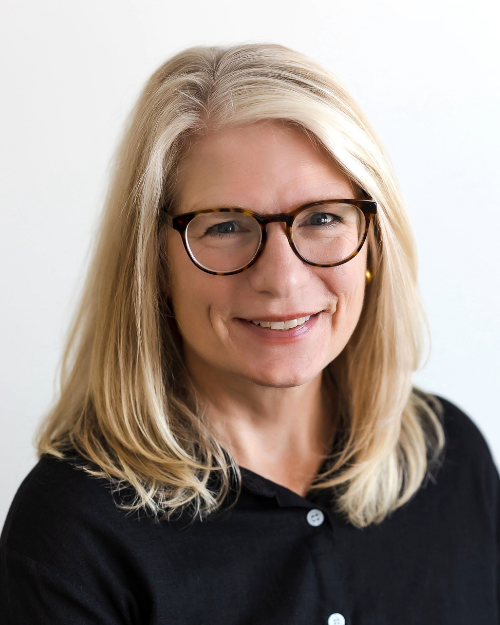
Leslie Cronin, Senior Manager of Strategic Communications

Leslie Cronin comes to Creative Fundraising Advisors with broad experience in education and nonprofits. Early in her career, she taught English, composition, and creative writing at selective independent schools, colleges, and universities. In 2005, she became Senior Development Writer at the Museum of Fine Arts, Houston, overseeing all aspects of communication coming out of the museum’s development department including exhibition descriptions, grant applications, correspondence with major donors, acknowledgements, and event invitations.

Leslie later brought her experience in education and fundraising to a new role, serving first as board member and then vice president of the board of an independent school in Houston, Texas. During her tenure, she was instrumental in the formulation of the school’s 20-year plan, including its successful accreditation as an International Baccalaureate institution. She worked closely with a wide variety of consultants on urban planning, architecture, and a fundraising feasibility study. Her insight into the client experience helps her every day in her work for CFA.

As Senior Manager of Strategic Communications, Leslie helps CFA’s clients shape their campaigns for maximum impact and results by leading case development workshops, writing compelling case summaries, and crafting powerfully persuasive campaign collateral. Additionally, Leslie manages CFA’s brand voice by developing content for the firm’s resource library and overseeing the editorial calendar. 

Leslie believes nonprofits have the power to change the world. In crafting cases for support, she writes as a committed advocate for each client and their goals. Leslie holds two Masters degrees, one an MFA from the Iowa Writers’ Workshop, the other an MA in English Literature from Temple University. She is mother to two grown children, a voracious reader, and an amateur equestrian. She lives on Cape Cod with her husband, author Justin Cronin, and their rescue dog, Lonesome Dove.

Campaign Staffing: Where to Start?

Story House* was a mid-sized literary nonprofit with a $3 million annual budget and no permanent home. Readings took place in rented auditoriums, while writing workshops were held in libraries and community centers. The organization worked out of a small house adapted for office use, a deliberately modest arrangement that reflected a focus on directing resources toward programs rather than facilities. 

The staff was lean but capable: Miguel, executive director; Dana, director of development; Aisha, director of programs; and Dinesh, administrative assistant. This small but mighty team delivered a full calendar of readings, workshops, and community programs while managing fundraising and partnerships. The organization’s ability to achieve outsized results had become part of its identity.

Over time, however, the limits of working in rented spaces became harder to ignore: rental costs added up, scheduled events were sometimes vulnerable to last-minute changes, and participation was often constrained by the limited number of rental spaces for classes and the limited availability of spaces for readings. 

Even more concerning was the fact that workshops would fill after the first week of registration, leaving plenty of unmet demand. People had been asking for years about additional programs for children and teens. It had become apparent that the organization needed to grow. 

Leadership began to see that with an appropriately sized home of its own, Story House could reach more people, schedule more classes and programs, and achieve greater impact. To achieve this ambition, it became clear that a new permanent home with a 200-seat auditorium, three classrooms, a flexible space for smaller readings, receptions, and youth programs, and additional office space to accommodate more staff as the organization grew would be needed. Estimates placed the cost and activation of such a facility at $25 million.  

They knew they would need a capital campaign to realize this ambition. What remained uncertain was how a staff this small could realistically take on the extra work that a campaign would require while at the same time keeping up with the demands of meeting annual fundraising goals.

Staffing Models for Organizations of All Sizes

For many organizations, one of the most challenging aspects of a capital campaign is finding the staff time required to manage daily campaign work. CFA Senior Manager of Campaigns Anne Spears notes that “organizations consistently underestimate how much time campaign work actually takes. Campaigns do not replace day-to-day fundraising; they sit on top of it, multiplying meetings, follow-ups, and coordination.”  

Campaigns introduce new demands that require sustained attention behind the scenes, often pulling leadership away from donor-facing work. “When fundraisers are entering data, stuffing envelopes, or printing name tags,” Anne explains, “they’re not building relationships. And that’s where campaigns can stall.” It’s important to carefully assess the skills and hours needed to do campaign work and plan accordingly. This will look different for different-sized organizations.

Large nonprofits may be in a position to hire part-time or full-time staff to support campaign work. Before adding additional fundraisers, however, it is important to recognize that donor-facing roles are a long-term investment. It can take six months to a year for a new major gifts officer to build the relationships and trust needed to make asks. Given the time constraints of a campaign, organizations may see faster results by hiring supporting roles that free existing frontline fundraisers to spend more time with donors.

Small and mid-sized organizations often need to be creative, using a combination of strategies to support campaign work. Some rely on volunteer fundraisers, though this approach still requires staff coordination to organize outreach, track progress, and support volunteers as they engage donors. Others invest in data or administrative roles that handle tracking, scheduling, and reporting, allowing experienced fundraisers to stay focused on donor relationships and solicitations. Still other organizations resort to shared staffing, where team members divide their time between campaign responsibilities and their regular roles. Anne observes, “The shared staffing model works best when time for campaign work is protected, and individuals are accountable for specific tasks. With dedicated time and clear accountability, it’s less likely that campaign work will get pushed aside.”

The Cost of Being Understaffed

Story House was initially reluctant to hire more personnel. They were accustomed to doing more with less, and as they reviewed their expenses and considered their budget, staffing felt like a cost center, while construction was viewed as the real investment. At the same time, every member of the team had little capacity to take on extra tasks. For any of them to assume more responsibility would be completely unsustainable. 

Anne sees this dynamic often and reminds clients that “Burnout is never worth it. In reality, understaffing a campaign is expensive because it makes campaigns last longer. And longer campaigns cost more.” Delays compound over time. Construction prices can rise, consultant contracts extend, and staff turnover can reset progress. Anne points out, “Time and money are inseparable in a campaign. Investing early in appropriate staffing is not a luxury. It’s actually an act of financial stewardship.”

Deciding What Roles to Hire

Story House needed more hands and could afford to make only one new hire, making the decision consequential. What emerged was the need for a development coordinator: someone responsible for executing the administrative tasks required to support fundraising strategies set by leadership. This role would handle gift processing, scheduling, reporting, prospect tracking, materials management, and follow-up. Rather than adding another major gift officer and waiting months for full productivity, the organization chose to invest in a position that freed leadership to focus on donor relationships.

Anne sees this decision point frequently. “Every organization is different, so it’s hard to generalize,” she says, “but in most cases, the first hire is not another gift officer. Often, what’s needed first is someone who takes the administrative weight off the people doing that work.” When organizations make that decision early, campaign activity becomes more systematic and less reactive.

What Lasts Beyond the Campaign

Importantly, Story House understood the new development coordinator role as an investment beyond the campaign itself. Once the campaign was complete, the development coordinator would remain on staff, with their role evolving as future needs became clearer.

When campaigns are staffed thoughtfully, their impact extends well beyond the fundraising goal. “The best outcome of a campaign,” Anne reflects, “is coming out the other side with a deeper pool of committed donors and a healthier organization.” For Story House, staffing decisions would shape not only the success of the campaign but the strength of the organization as it carried its mission into the future.

Partner With Us

At their core, campaign staffing decisions are not just about adding people. They are about protecting time, focus, and momentum. Through a development assessment or feasibility study, CFA helps organizations see clearly whether their staffing can support their fundraising ambitions, where gaps are likely to appear, and how to address them in ways that fit both budget and culture.

Contact us to find out how the right staffing decisions can strengthen your campaign and your organization for years to come.

*Disclaimer: Client confidentiality is paramount in our work with each and every organization. The story in this article is fiction, based on real situations drawn from CFA’s broad experience serving nonprofit organizations.


Leslie Cronin, Senior Manager of Strategic Communications

Leslie Cronin comes to Creative Fundraising Advisors with broad experience in education and nonprofits. Early in her career, she taught English, composition, and creative writing at selective independent schools, colleges, and universities. In 2005, she became Senior Development Writer at the Museum of Fine Arts, Houston, overseeing all aspects of communication coming out of the museum’s development department including exhibition descriptions, grant applications, correspondence with major donors, acknowledgements, and event invitations.

Leslie later brought her experience in education and fundraising to a new role, serving first as board member and then vice president of the board of an independent school in Houston, Texas. During her tenure, she was instrumental in the formulation of the school’s 20-year plan, including its successful accreditation as an International Baccalaureate institution. She worked closely with a wide variety of consultants on urban planning, architecture, and a fundraising feasibility study. Her insight into the client experience helps her every day in her work for CFA.

As Senior Manager of Strategic Communications, Leslie helps CFA’s clients shape their campaigns for maximum impact and results by leading case development workshops, writing compelling case summaries, and crafting powerfully persuasive campaign collateral. Additionally, Leslie manages CFA’s brand voice by developing content for the firm’s resource library and overseeing the editorial calendar. 

Leslie believes nonprofits have the power to change the world. In crafting cases for support, she writes as a committed advocate for each client and their goals. Leslie holds two Masters degrees, one an MFA from the Iowa Writers’ Workshop, the other an MA in English Literature from Temple University. She is mother to two grown children, a voracious reader, and an amateur equestrian. She lives on Cape Cod with her husband, author Justin Cronin, and their rescue dog, Lonesome Dove.

Moving to the Campaign Public Phase

When is it time for your campaign to go public? Because the quiet phase occurs largely behind closed doors, the transition into the public phase of a campaign can seem complex and mysterious. The art and science behind successful campaigns play prominently in the decision to shift gears from one phase to the next. 

The most effective campaign quiet phases are far from a well-kept secret. Rather, the quiet phase is a distinct point of inflection when a campaign’s most significant work is underway. 

As CFA shared in A Closer Look at the Campaign Quiet Phase, the quiet phase serves as a litmus test for a campaign’s vision and case for support, deeply engaging top priority donors while building confidence amongst fundraising staff and donors alike. The quiet phase also confirms what is often the most uncertain component of any campaign: the fundraising goal. By testing the case for support and gaining insight from an organization’s closest supporters, the quiet phase provides a period of flexibility before setting the final bar to achieve success. 

TRANSITIONING FROM THE QUIET PHASE

The determination to enter a campaign’s public phase is more nuanced than simply surpassing a predefined fundraising threshold. 

CFA Senior Manager of Campaigns Anne Spears brings over a decade of fundraising experience, offering strategic guidance to organizations throughout each stage of their campaigns and supporting progress toward their campaign goals. CFA takes a customized approach to each client we serve, and there are a variety of factors Anne considers when providing counsel at this strategic period in a campaign:

  1. Fundraising Progress: While most nonprofits raise between 50-80% of their overall goal before going public, campaigns quickly raising a significant percentage of funds may choose to set their sights higher than the original internal goal, while those experiencing fewer commitments or gifts lower than anticipated may establish a more feasible fundraising goal before entering the public phase. 
  1. Campaign Momentum: An organization’s pace toward their fundraising goal can also influence the decision to go public. Organizations quickly raising funds with a strong prospect pipeline may choose to take their campaign public early on to sustain the excitement. Conversely, organizations experiencing a decline in fundraising momentum may go public more quickly to broaden their pipeline of potential supporters. For organizations with a commitment to equity, the decision to promptly take their campaign public creates access early on for donors and stakeholders at all levels. 
  1. Anticipated Timeline and Trajectory: An organization’s capacity to implement and sustain a campaign will influence the duration and eventual finish line of their campaign. Some organizations with a smaller donor base and modest fundraising goal may strive for an expedited campaign relying on their current staffing structure, while organizations with ambitious goals may expand their fundraising team and set out on a lengthy campaign to reach their final destination. 

CFA provides customized counsel to each organization we serve, weighing these factors alongside the organization’s history, base of support, and vision for the future. While each campaign follows a unique course, having a direct line of sight to the fundraising goal – defined by a strong base of donors and promising prospects in the pipeline – before publicly announcing the campaign is the surest path to success. 

SUSTAINING MOMENTUM IN THE PUBLIC PHASE

Regardless of the depth of an organization’s development team or the extent of its fundraising goal, campaigns are a comprehensive undertaking that require sustained stamina and capacity to complete. As critical donor engagement activity progresses in the quiet phase, there is important groundwork to be laid internally to sustain progress in the public phase. 

Creating a Communications Plan

 “The key to public phase fundraising success hinges on a smooth passing of the baton from an organization’s development team to their marketing team,” according to Anne. For smaller organizations, these efforts may be housed under one department or even shared amongst a few staff. Larger organizations will require increased cross-functional coordination as the marketing team prepares the public facing communications plan. “When organizations decide to go public quickly, there is significant work happening simultaneously – securing leadership gifts while also targeting stakeholders at varying giving levels. So, it’s critical that organizations have their campaign communications plan ready as activity ramps up.”

  • A consistent, compelling communications plan should be built around the campaign’s case for support, complete with content and collateral to expand awareness, garner additional interest, and support individual donor cultivation. Check out CFA’s Donor Communications & Outreach Guide for more details about creating a donor communications plan to support your campaign or annual fund.

Engaging Staff and Volunteers

As organizations transition into the campaign public phase, the initial motivation and enthusiasm driving early fundraising wins can wane amongst staff and volunteer committee members. Establishing SMART goals tied specifically to the quiet and public phases of a campaign can support fundraising staff as they continue to make meaningful progress and sustain momentum within their own portfolios. As CFA’s Principal-West Coast Kristin Love shared in a recent article on fundraising metrics, relying on activity- and outcome-based leading indicators will drive results by informing time management, improving accountability, and ultimately increasing giving. 

The roles of volunteer committee members naturally transition and often decline in the campaign public phase, with involvement becoming more sporadic and event-based. The campaign public phase often involves peer-to-peer fundraising, which can also be a chance for volunteers to leverage their networks in new and exciting ways. To replenish the excitement of the campaign committee, Anne often advises clients to create space for new committee members as campaigns go public. “Allowing committee members to roll off and bringing in new, fresh energy can help to galvanize the team in the midst of a marathon of a campaign.” 

ACHIEVING FUNDRAISING SUCCESS IN THE PUBLIC PHASE AND BEYOND 

Sustained fundraising success requires consistent planning for the future. Just as organizations prepare for their campaign public phase during the quiet phase, it is equally important to establish systems to ensure proper gift acknowledgement and data integrity during the public stage. Internal capacity building can be one of the most impactful, enduring efforts of any campaign.

CFA guides our clients to ensure gift recognition processes, donor data entry, and reporting systems are prepared and ready for an influx of gifts. These vital systems provide real-time insights to inform fundraising strategies while enabling sustained donor engagement and stewardship post-campaign. With accurate donor records and consistent donor moves management strategies, organizations will be positioned to sustain future fundraising success.

CONTACT US

Campaigns are an extensive undertaking that require a balance of organizational strategy, experience, and stamina. At CFA, we have partnered with more than 100 organizations throughout the planning, execution, and sustaining of transformative campaigns. If your organization is interested in support to launch a successful campaign, contact CFA today to explore how we can help.


Anne Spears, Senior Manager of Campaigns

An experienced fundraiser with over a decade of experience in education, religious, and social service based nonprofit fundraising, Anne is passionate about the work being done by nonprofit organizations. She is energized and inspired by working side by side with our nonprofit partners as a project manager for fundraising campaigns.

Most recently Anne was the Director of Development at the Episcopal Diocese of West Texas where she oversaw a multitude of initiatives including capital campaigns for Diocesan camp facilities from the South Texas Coast to the Colorado Rockies, campaigns to assist asylum seekers traveling from Mexico to the U.S., and consulted with the 87 Diocesan churches regarding their fundraising needs. 

Previously Anne was the Chief Development Officer for Ascension DePaul Services of San Antonio and the Development Coordinator at St. Thomas Early Learning Center in College Station, Texas. She also worked for the State of Montana as a social services specialist serving indigenous and rural populations.

Anne has a  B.S. in Sociology, a M.S. in Family and Child Studies, along with a Master of Public Administration. She also is a Certified Fundraising Executive (CFRE). Anne lives in San Antonio, Texas, with her husband and three children.

Email Anne


Kendall Carlson, Content Writer

A frequent contributor to CFA’s digital content, Kendall Carlson has spent her career advancing nonprofit organizations across the Twin Cities. With 16 years of experience, Kendall brings a balance of strategic and operational leadership spanning fundraising, program development, evaluation, and strategic planning.

Most recently, Kendall served as Development and Communications Director at Hired, where she diversified revenue for the organization’s $11M budget and increased individual giving by 60%, led a rebrand, and launched an organization-wide data for impact initiative. Prior to Hired, Kendall served at Greater Twin Cities United Way, where she led an advancement strategy team to increase investment and engagement from the organization’s top corporate and major donors.  Kendall is known as a strategic, solution-oriented leader with a high capacity for detail and commitment to quality. She launched her consulting practice, Luminate Consulting, in 2022 to bring her skills in fundraising and program strategy to nonprofits seeking sustainable growth.

Campaign Committees: Love Them or Leave Them?

Fundraising at its core is about human connections and personal relationships: two things that are paramount during campaign planning and campaign committee formation. 

As relationships with donors evolve in an increasingly virtual world, traditional approaches to campaign planning are becoming less broadly applicable. When it comes to campaign committees, or any other fundraising program or strategy, CFA does not shy away from questioning the status quo or finding new solutions that will yield results in today’s philanthropic environment. 

With more than a decade of experience in nonprofit development, CFA Senior Manager of Campaigns Anne Spears works alongside clients as a partner in their campaigns. “Campaign committees have been a mainstay in campaign execution, and the thought of navigating a campaign without one feels like uncharted territory,” shares Anne. “But they are not always essential – and occasionally detrimental – to the fundraising process.”

Whether your organization has a campaign on the horizon or is seeking to strengthen your major gifts program, consider how deeper relationships with key donors can advance your mission in the present while setting up your organization for future fundraising success. 

DONOR RELATIONSHIPS ARE EVOLVING

Some organizations are turning away from traditional, relationship-based fundraising methods in favor of mass communication and online engagement. While virtual communications and social content may reach a broader audience of potential supporters, these strategies are less likely to sustain and increase giving without developing personal donor connections. Real connections simply cannot happen without person-to-person interactions and conversations.

Anne shares, “Younger generations are pulled in even more directions than before, and people are choosing to spend their time differently. Authentic donor engagement and relationship-building is evolving and we need to give donors the opportunity to be known as people.” This confluence of trends, resulting in an increased breadth and decreased depth of donor relationships, poses a significant challenge for organizations preparing for a campaign. 

CAMPAIGN COMMITTEES MAY NEED TO EVOLVE, TOO

Successful campaigns remain largely unchanged in their reliance on a focused set of influential relationships. Traditionally, campaigns are led by one or more committees comprised of key organizational stakeholders and influential, high-capacity donors. Effective campaign committees bring an infusion of energy and passion for the campaign’s vision and leverage personal and professional connections to expand the campaign’s reach. 

Yet, traditional guidance for recruiting a campaign committee does not account for the nuanced and evolving relationships organizations may have with supporters. Anne has supported many CFA clients to successfully conduct campaigns and brings a unique perspective to the forces impacting campaign committee selection. “The assumption is that organizations are sustaining and intentionally deepening relationships with influential and high-capacity donors, and that is not always the case.” 

For organizations with a nontraditional set of key stakeholders, such as highly engaged volunteers with limited connections to high-capacity donors, Anne advises her clients to be realistic and work with the relationships and connections they have to achieve their goals. 

RETHINKING CAMPAIGN COMMITTEES

Campaign committees require strategic coordination from development staff, and a commitment to both the campaign AND the organization’s mission to be successful. As campaign committees shift in their purpose and strategy, Anne encourages her clients to evaluate their relationships with donors before engaging a campaign committee. “At the end of the day, you really need people to open doors, get meetings, and make connections.” Thinking expansively about the organization’s stakeholders, audiences, and beneficiaries – including both present and past generations – can reveal leaders and volunteers willing to rise to the occasion. 

A common misstep is recruiting individuals with a high capacity to give but without the passion or personal bandwidth to assume the additional responsibility. As Anne shares, “Ultimately, individuals want to add value beyond their checkbook, to be seen as authentic partners in the work.” If the relationship has not been cultivated over time, or if the connection to the organization’s mission and leadership is not strong, it will become evident when campaign activity gets underway.

As organizations identify prospective volunteers, CFA encourages authentic conversations to identify how each volunteer envisions supporting the campaign. Not every volunteer needs to assume the same traditional campaign activities (i.e. requesting meetings, soliciting donors), but by creating an intentional volunteer engagement plan for each committee member, organizations can maximize their skill sets, value add, and level of engagement in the campaign. 

For organizations considering campaign committee alternatives, one or more of the following options may produce a stronger return on investment: 

  • Establishing a committee in name only to provide a vote of confidence for the organization and campaign.
  • Partnering with select volunteers such as board members and loyal donors to make introductions, request meetings, and host cultivation events.
  • Relying on internal staff capacity to cultivate and solicit donors.

With or without a campaign committee, relationships are fundamental to fundraising success. As Anne attests, “Organizations need external partners that bring financial resources, volunteer capacity, influence and advice to guide the organization’s trajectory.” Ultimately, organizations that have invested early on in these relationships, by engaging their board members, donors, and key stakeholders, will find a much smoother path to reaching their campaign goal. 

CFA IS HERE TO HELP!

While so much in philanthropy is evolving, one constant remains: the importance of relationships, not only in campaigns, but across every facet of fundraising. Relationships still take time to develop, and there is no time like the present to deepen relationships with your organization’s most important supporters. 

At CFA, we believe there is “no one size fits all” when it comes to planning campaigns and selecting the committees that run them. That’s where our combination of art, science, and custom solutions comes in, because each organization we serve is as unique as the individuals that lead and support them. Our consultants offer coaching, strategic guidance, and custom tools for effectively deploying campaign committees (or finding more successful alternatives!) that will engage donors and inspire support.  

If you are interested in exploring how CFA can support your organization’s donor engagement strategy or next campaign, contact CFA today to see how we can help.


Anne Spears, Senior Manager of Campaigns

An experienced fundraiser with over a decade of experience in education, religious, and social service based nonprofit fundraising, Anne is passionate about the work being done by nonprofit organizations. She is energized and inspired by working side by side with our nonprofit partners as a project manager for fundraising campaigns.

Prior to joining CFA, Anne was the Director of Development at the Episcopal Diocese of West Texas where she oversaw a multitude of initiatives including capital campaigns for Diocesan camp facilities from the South Texas Coast to the Colorado Rockies, campaigns to assist asylum seekers traveling from Mexico to the U.S., and consulted with the 87 Diocesan churches regarding their fundraising needs. 

Previously, Anne was the Chief Development Officer for Ascension DePaul Services of San Antonio and the Development Coordinator at St. Thomas Early Learning Center in College Station, Texas. She also worked for the State of Montana as a social services specialist serving indigenous and rural populations.

Anne has a B.S. in Sociology, a M.S. in Family and Child Studies, along with a Master of Public Administration. She also is a Certified Fundraising Executive (CFRE).

Anne lives in San Antonio, Texas, with her husband and three children.

Email Anne


Kendall Carlson, Content Writer

A frequent contributor to CFA’s digital content, Kendall Carlson has spent her career advancing nonprofit organizations across the Twin Cities. With 16 years of experience, Kendall brings a balance of strategic and operational leadership spanning fundraising, program development, evaluation, and strategic planning.

Most recently, Kendall served as Development and Communications Director at Hired, where she diversified revenue for the organization’s $11M budget and increased individual giving by 60%, led a rebrand, and launched an organization-wide data for impact initiative. Prior to Hired, Kendall served at Greater Twin Cities United Way, where she led an advancement strategy team to increase investment and engagement from the organization’s top corporate and major donors.  Kendall is known as a strategic, solution-oriented leader with a high capacity for detail and commitment to quality. She launched her consulting practice, Luminate Consulting, in 2022 to bring her skills in fundraising and program strategy to nonprofits seeking sustainable growth.