
Story House* was a mid-sized literary nonprofit with a $3 million annual budget and no permanent home. Readings took place in rented auditoriums, while writing workshops were held in libraries and community centers. The organization worked out of a small house adapted for office use, a deliberately modest arrangement that reflected a focus on directing resources toward programs rather than facilities.
The staff was lean but capable: Miguel, executive director; Dana, director of development; Aisha, director of programs; and Dinesh, administrative assistant. This small but mighty team delivered a full calendar of readings, workshops, and community programs while managing fundraising and partnerships. The organization’s ability to achieve outsized results had become part of its identity.
Over time, however, the limits of working in rented spaces became harder to ignore: rental costs added up, scheduled events were sometimes vulnerable to last-minute changes, and participation was often constrained by the limited number of rental spaces for classes and the limited availability of spaces for readings.
Even more concerning was the fact that workshops would fill after the first week of registration, leaving plenty of unmet demand. People had been asking for years about additional programs for children and teens. It had become apparent that the organization needed to grow.
Leadership began to see that with an appropriately sized home of its own, Story House could reach more people, schedule more classes and programs, and achieve greater impact. To achieve this ambition, it became clear that a new permanent home with a 200-seat auditorium, three classrooms, a flexible space for smaller readings, receptions, and youth programs, and additional office space to accommodate more staff as the organization grew would be needed. Estimates placed the cost and activation of such a facility at $25 million.
They knew they would need a capital campaign to realize this ambition. What remained uncertain was how a staff this small could realistically take on the extra work that a campaign would require while at the same time keeping up with the demands of meeting annual fundraising goals.
Staffing Models for Organizations of All Sizes
For many organizations, one of the most challenging aspects of a capital campaign is finding the staff time required to manage daily campaign work. CFA Senior Manager of Campaigns Anne Spears notes that “organizations consistently underestimate how much time campaign work actually takes. Campaigns do not replace day-to-day fundraising; they sit on top of it, multiplying meetings, follow-ups, and coordination.”
Campaigns introduce new demands that require sustained attention behind the scenes, often pulling leadership away from donor-facing work. “When fundraisers are entering data, stuffing envelopes, or printing name tags,” Anne explains, “they’re not building relationships. And that’s where campaigns can stall.” It’s important to carefully assess the skills and hours needed to do campaign work and plan accordingly. This will look different for different-sized organizations.
Large nonprofits may be in a position to hire part-time or full-time staff to support campaign work. Before adding additional fundraisers, however, it is important to recognize that donor-facing roles are a long-term investment. It can take six months to a year for a new major gifts officer to build the relationships and trust needed to make asks. Given the time constraints of a campaign, organizations may see faster results by hiring supporting roles that free existing frontline fundraisers to spend more time with donors.
Small and mid-sized organizations often need to be creative, using a combination of strategies to support campaign work. Some rely on volunteer fundraisers, though this approach still requires staff coordination to organize outreach, track progress, and support volunteers as they engage donors. Others invest in data or administrative roles that handle tracking, scheduling, and reporting, allowing experienced fundraisers to stay focused on donor relationships and solicitations. Still other organizations resort to shared staffing, where team members divide their time between campaign responsibilities and their regular roles. Anne observes, “The shared staffing model works best when time for campaign work is protected, and individuals are accountable for specific tasks. With dedicated time and clear accountability, it’s less likely that campaign work will get pushed aside.”
The Cost of Being Understaffed
Story House was initially reluctant to hire more personnel. They were accustomed to doing more with less, and as they reviewed their expenses and considered their budget, staffing felt like a cost center, while construction was viewed as the real investment. At the same time, every member of the team had little capacity to take on extra tasks. For any of them to assume more responsibility would be completely unsustainable.
Anne sees this dynamic often and reminds clients that “Burnout is never worth it. In reality, understaffing a campaign is expensive because it makes campaigns last longer. And longer campaigns cost more.” Delays compound over time. Construction prices can rise, consultant contracts extend, and staff turnover can reset progress. Anne points out, “Time and money are inseparable in a campaign. Investing early in appropriate staffing is not a luxury. It’s actually an act of financial stewardship.”
Deciding What Roles to Hire
Story House needed more hands and could afford to make only one new hire, making the decision consequential. What emerged was the need for a development coordinator: someone responsible for executing the administrative tasks required to support fundraising strategies set by leadership. This role would handle gift processing, scheduling, reporting, prospect tracking, materials management, and follow-up. Rather than adding another major gift officer and waiting months for full productivity, the organization chose to invest in a position that freed leadership to focus on donor relationships.
Anne sees this decision point frequently. “Every organization is different, so it’s hard to generalize,” she says, “but in most cases, the first hire is not another gift officer. Often, what’s needed first is someone who takes the administrative weight off the people doing that work.” When organizations make that decision early, campaign activity becomes more systematic and less reactive.
What Lasts Beyond the Campaign
Importantly, Story House understood the new development coordinator role as an investment beyond the campaign itself. Once the campaign was complete, the development coordinator would remain on staff, with their role evolving as future needs became clearer.
When campaigns are staffed thoughtfully, their impact extends well beyond the fundraising goal. “The best outcome of a campaign,” Anne reflects, “is coming out the other side with a deeper pool of committed donors and a healthier organization.” For Story House, staffing decisions would shape not only the success of the campaign but the strength of the organization as it carried its mission into the future.
Partner With Us
At their core, campaign staffing decisions are not just about adding people. They are about protecting time, focus, and momentum. Through a development assessment or feasibility study, CFA helps organizations see clearly whether their staffing can support their fundraising ambitions, where gaps are likely to appear, and how to address them in ways that fit both budget and culture.
Contact us to find out how the right staffing decisions can strengthen your campaign and your organization for years to come.
*Disclaimer: Client confidentiality is paramount in our work with each and every organization. The story in this article is fiction, based on real situations drawn from CFA’s broad experience serving nonprofit organizations.
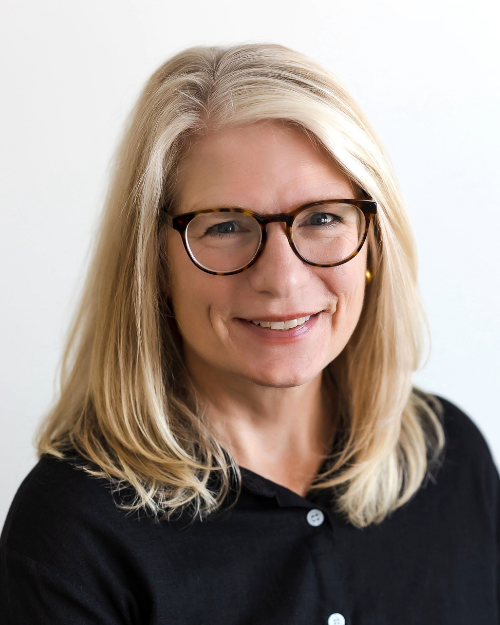
Leslie Cronin, Senior Manager of Strategic Communications
Leslie Cronin comes to Creative Fundraising Advisors with broad experience in education and nonprofits. Early in her career, she taught English, composition, and creative writing at selective independent schools, colleges, and universities. In 2005, she became Senior Development Writer at the Museum of Fine Arts, Houston, overseeing all aspects of communication coming out of the museum’s development department including exhibition descriptions, grant applications, correspondence with major donors, acknowledgements, and event invitations.
Leslie later brought her experience in education and fundraising to a new role, serving first as board member and then vice president of the board of an independent school in Houston, Texas. During her tenure, she was instrumental in the formulation of the school’s 20-year plan, including its successful accreditation as an International Baccalaureate institution. She worked closely with a wide variety of consultants on urban planning, architecture, and a fundraising feasibility study. Her insight into the client experience helps her every day in her work for CFA.
As Senior Manager of Strategic Communications, Leslie helps CFA’s clients shape their campaigns for maximum impact and results by leading case development workshops, writing compelling case summaries, and crafting powerfully persuasive campaign collateral. Additionally, Leslie manages CFA’s brand voice by developing content for the firm’s resource library and overseeing the editorial calendar.
Leslie believes nonprofits have the power to change the world. In crafting cases for support, she writes as a committed advocate for each client and their goals. Leslie holds two Masters degrees, one an MFA from the Iowa Writers’ Workshop, the other an MA in English Literature from Temple University. She is mother to two grown children, a voracious reader, and an amateur equestrian. She lives on Cape Cod with her husband, author Justin Cronin, and their rescue dog, Lonesome Dove.