

Good Reads for Greater Impact: The Culture Code
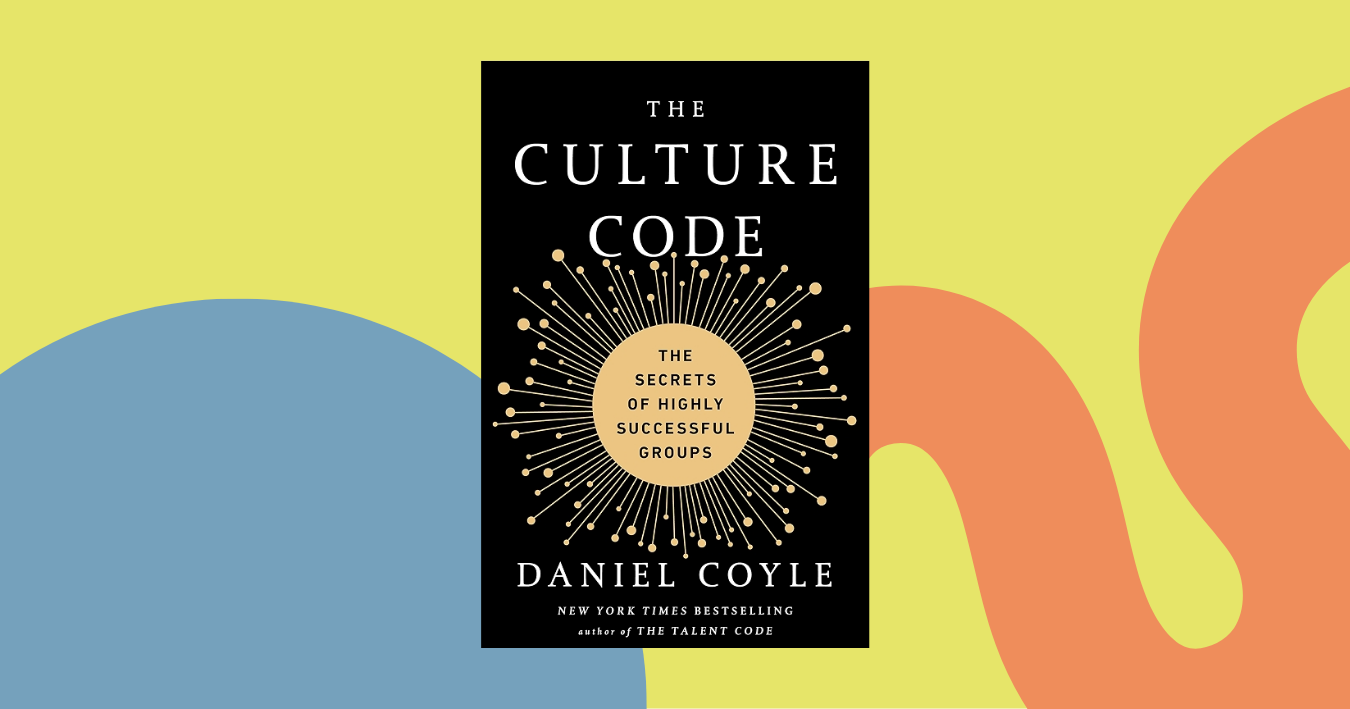
CFA’s book recommendations guide readers toward ideas and resources that can strengthen leadership, build healthier organizations, and improve fundraising results.
The Culture Code and the Case for Building Culture on Purpose
The Culture Code: The Secrets of Highly Successful Groups
By Daniel Coyle (Bantam, 2018)
Organizational culture can feel like the weather, an ambient condition that simply exists, rather than something built deliberately by leadership. Left unattended, culture will form itself, shaped by habit, precedent, and unspoken norms. It touches everyone connected to the mission: staff, board, volunteers, the whole stakeholder community. That gap between accidental and intentional culture is what The Culture Code sets out to close.
Consciously cultivating the conditions for an organizational culture where employees can thrive is especially important in nonprofit organizations because the stakes are real. More than a decade ago, the UnderDeveloped study documented a nonprofit sector-wide problem of widespread burnout and high turnover among fundraising staff. A common pressure makes it worse: nonprofits are often expected to deliver results while maintaining low overhead, a dynamic that researchers call the nonprofit starvation cycle, which pushes organizations to underinvest in the staff and infrastructure that sustain good work. Recent research from the Center for Effective Philanthropy confirms the problem has spread well beyond development roles, finding that nonprofit employees, including organization leaders themselves, are now reporting excessive levels of stress and burnout.
The good news is that leadership has the power to renovate organizational culture, and Daniel Coyle’s 2018 bestseller, The Culture Code, can be a helpful resource in rethinking how your internal culture operates. The Culture Code was originally published as a business title, and the book draws its wisdom from a wide range of teams — sports franchises, military units, creative ensembles, and nonprofits alike — and its lessons travel well across different contexts. Surprisingly, most of the insights center not on assembling the right composition of talent and skill, but on retooling how people treat one another and interact.
Through case studies, the book details a range of philosophical perspectives and concrete moves that can turn a besieged staff into a cohesive team that collaborates, supports one another, and strives to meet the highest standards. When teams share a sense of common purpose and trust one another enough to be truthful or even vulnerable, they are better equipped to tackle hard problems and navigate the ordinary friction of any workplace.
How The Culture Code Makes Research Come Alive
Coyle is not a scientist, and The Culture Code does not pretend to be groundbreaking scholarship. It draws on established organizational psychology, including Amy Edmondson’s research on psychological safety and Google’s Project Aristotle study. Coyle’s real contribution is translating these concepts into real-world applications. He is a journalist, a New York Times bestselling author, and a longtime Outside magazine contributor who spent years embedded with groups as diverse as Pixar, the Navy’s SEAL Team Six, Saturday Night Live, and the San Antonio Spurs, investigating how each team handled its worst defeats and achieved its peak experiences. The book reads less like a management manual and more like a set of true stories that illustrate how the research findings work in real life.
Three Strengths to Cultivate for a Healthier Culture
Coyle organizes the book around three core concepts that create the conditions for a healthy organizational dynamics:
- Building Safety. The first, and probably the most important, is building safety. Coyle draws on research into what he calls belonging cues, the small, repeated signals that tell a group’s members they are secure enough to stop guarding themselves and start contributing. As he puts it, these cues “seek to notify our ever-vigilant brains that they can stop worrying about dangers and shift into connection mode.” For nonprofit teams, that safety is the bedrock of effective collaboration.
- Shared Vulnerability. Coyle talks about Pixar’s “Braintrust” meetings where peer filmmakers critique projects in development to illustrate the importance of creating safe forums for open conversation. As Pixar co-founder Ed Catmull tells Coyle, “The Braintrust is the most important thing we do by far. It depends on completely candid feedback.” Coyle is careful to distinguish this from brutal honesty: the point is never to wound, but to name problems with openness, curiosity, and care. He calls this “the risky, occasionally painful, ultimately rewarding process of being vulnerable together,” and the payoff is steady progress toward excellence and trust that holds up under pressure.
- Establishing Purpose. Nonprofits start with a built-in advantage here, since mission is the reason every nonprofit exists. Coyle suggests most leaders still undersell it and recommends that they “be ten times as clear about your priorities as you think you should be.” Nonprofit leaders can create the conditions for a shared culture of purpose-driven work by exploring, cultivating, and connecting organizational and personal purpose.
Within its three-part framework,The Culture Code offers a wide range of practical strategies that encourage positive and productive organizational dynamics. With a few intentional changes, leaders can build a culture in which people feel safe, connected, and purposeful, one where they stay long enough to carry institutional knowledge forward and grow alongside the mission they serve.
How CFA Can Help
At Creative Fundraising Advisors, we believe that building an organizational culture where your team can thrive is one of the most valuable investments a nonprofit can make: energized teams build deeper donor relationships, and those relationships drive impact. Our development assessment can show how safety, trust, and purpose are functioning on your team, and our educational, training, and workshop opportunities can help you put ideas like Coyle’s into practice. Ready to create the conditions that help your team and mission truly thrive? Contact CFA to start the conversation.
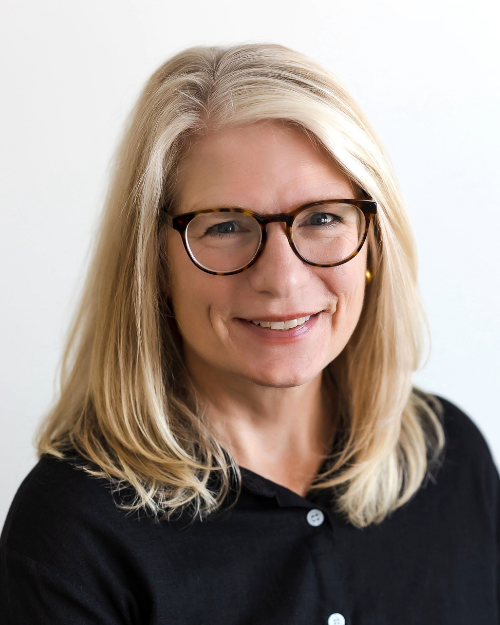
Leslie Cronin, Senior Manager of Strategic Communications
Leslie Cronin comes to Creative Fundraising Advisors with broad experience in education and nonprofits. Early in her career, she taught English, composition, and creative writing at selective independent schools, colleges, and universities. In 2005, she became Senior Development Writer at the Museum of Fine Arts, Houston, overseeing all aspects of communication coming out of the museum’s development department including exhibition descriptions, grant applications, correspondence with major donors, acknowledgements, and event invitations.
Leslie later brought her experience in education and fundraising to a new role, serving first as board member and then vice president of the board of an independent school in Houston, Texas. During her tenure, she was instrumental in the formulation of the school’s 20-year plan, including its successful accreditation as an International Baccalaureate institution. She worked closely with a wide variety of consultants on urban planning, architecture, and a fundraising feasibility study. Her insight into the client experience helps her every day in her work for CFA.
As Senior Manager of Strategic Communications, Leslie helps CFA’s clients shape their campaigns for maximum impact and results by leading case development workshops, writing compelling case summaries, and crafting powerfully persuasive campaign collateral. Additionally, Leslie manages CFA’s brand voice by developing content for the firm’s resource library and overseeing the editorial calendar.
Leslie believes nonprofits have the power to change the world. In crafting cases for support, she writes as a committed advocate for each client and their goals. Leslie holds two Masters degrees, one an MFA from the Iowa Writers’ Workshop, the other an MA in English Literature from Temple University. She is mother to two grown children, a voracious reader, and an amateur equestrian. She lives on Cape Cod with her husband, author Justin Cronin, and their rescue dog, Lonesome Dove.