

Is Your Database Helping or Hurting Your Fundraising Efforts?

Most conversations about fixing problems with customer relationship management (CRM) databases focus on data health: eliminating duplicate records, outdated addresses, and inconsistent fields. Those issues are real, quite urgent in many cases, and need to be solved. But two other database issues are just as common, just as costly, and often just as destabilizing: (1) when data is perfectly clean but not accessible to the people who need it, and (2) when the CRM is not aligned with how the organization works. Both can quietly—or not so quietly—undermine fundraising strategy, donor relationships, and staff morale.
Stephanie Willis, CFA Consultant and author of The Art and Science Approach to Fundraising Data and Research, encounters these issues regularly through the client data audits she conducts as part of CFA’s data services. Working with nonprofits across the country on data strategy and the complex human dynamics that shape how CRMs and other data systems are used, she has learned that resolving major issues requires as much attention to people and culture as it does to technology.
Case Study 1: A Database on an Island
Vistas Land Trust* was an environmental nonprofit with a $6 million annual budget and a donor base that had been growing steadily for years. Their data coordinator, Mia, had managed their fundraising CRM for years, and she was meticulous. Every record was accurate and up to date. Salutations were correct. Gift histories were complete. The data was, by any measure, immaculate.
But Mia was the only one who knew how to use the system.
When the development director wanted to pull a report, she had to ask Mia. When a grants officer wanted to check whether a foundation contact was already in the database, she had to ask Mia. When leadership needed a donor list for an event, Mia generated it. She was, as Stephanie puts it, “the keeper of the keys.” No one else knew how to access the CRM.
When data becomes one person’s domain, it isn’t a technology problem or a data quality problem. It is a culture and training problem. Imagine for a moment what would happen if that person suddenly left their position. Every data-related operation would come to a standstill. This sounds extreme, but it is actually more common than most nonprofit leaders realize.
“An organization’s database is not the administrator’s database,” Stephanie says. “It belongs to the whole organization. Everyone who touches fundraising in any way—development staff, program staff, finance, leadership—should be able to view the information they need and understand how the system works. When only one person can access it, everyone else is flying blind.”
At Vistas, the consequences were becoming harder to ignore. An influx of new donors from a successful series of community events left the development team struggling to steward the new relationships effectively. They couldn’t pull segmented lists for outreach. They couldn’t generate reports for board meetings. They couldn’t even verify basic contact information without routing a request through Mia.
The solution was not to find a new system or replace Mia. Her institutional knowledge, skills, and precision were important assets. The solution was to build a shared culture of database literacy throughout the organization.
Stephanie’s approach in situations like this one begins with a single, direct question she poses to the whole organization: What do you actually want your database to do for you? The answers are often revelatory. Staff members articulate priorities they’ve never voiced. Leaders recognize gaps between what the system could offer and what they’ve been asking of it.
To get everyone up to speed, Stephanie provides workshops, training and process guides, as well as group and individual coaching sessions that help each staff member define processes and understand how to use their fundraising CRM in ways relevant to their specific responsibilities.
“A database should serve the entire organization,” Stephanie emphasizes. “When you democratize access thoughtfully, with clear guidelines for who can view, who can edit, and how entries are made, you protect the data integrity that someone like Mia has worked hard to build, while giving everyone else the tools they need to do their jobs.”
Case Study 2: When the Tool and the Organization Don’t Align
Northstar Arts Center* was a performing and visual arts nonprofit with a $60 million annual budget. Two years prior, leadership decided to migrate to a new CRM platform designed by a reputable company with strong brand recognition and seemingly powerful capabilities. The investment was substantial. The promise was significant.
What Northstar’s team didn’t fully anticipate was what the system would actually require of them.
The CRM they chose was highly customizable, which was sold to them as a plus, but in order to configure it for fundraising and keep it running reliably, the organization also needed a dedicated database administrator. Northstar initially hesitated to make that investment, assuming the system, once set up, could be managed within existing roles.
Without a database administrator, this expensive “top shelf” CRM could not deliver on its intended value. Staff members couldn’t complete basic fundraising functions. Reports were unreliable. Workarounds multiplied. The database that was supposed to streamline operations was instead draining time and energy.
“Some platforms are built for fundraising from the ground up,” Stephanie explains. “They have recognizable fields, intuitive processes, and a manageable learning curve. Other platforms are designed for maximum customization, which means they need someone who knows how to build and maintain a specific architecture. If you don’t have that capacity in place, the system won’t work as expected.”
Over time, Northstar came to a better understanding of the tradeoff it had made. The system itself was not inherently flawed—it was built with certain expectations about technical oversight. The gap was in how the organization had resourced and structured its use. Once that became clear, leadership shifted its approach, investing in a database administrator, providing additional staff training, and adjusting internal workflows to support the system more effectively.
In situations where the CRM and the organization seem mismatched, the issue is not simply whether to keep the old CRM or adopt a new one, but whether the system can meet the organization’s core needs when properly configured and supported.
“No system can be everything for every organization,” Stephanie explains. “The real question is: what are your non-negotiables? What are the things your database has to do well to support your fundraising?”
If a system can deliver on those non-negotiables, with the right staffing and workflows in place, then the work is to resource it appropriately and use it with intention. If a CRM cannot meet the organization’s non-negotiable needs, even with capable support, then it may be time to reconsider the platform altogether.
For Northstar, the best way forward was to appropriately resource their CRM. For other organizations, it may make better sense to change systems. To help clients quickly see which systems align with their capacity and priorities, Stephanie maintains a spreadsheet for side-by-side comparison of donor management platforms, organizing them by organization size, fundraising volume, features, technical skill requirements, and typical use cases.
Asking the Right Questions
Both Vistas and Northstar had invested in their fundraising databases. But in both cases, something essential was missing: alignment between the tool, the team, and the way the organization wanted to work.
Stephanie offers practical diagnostic questions for organizations wondering whether their database is helping or hindering them:
- Can your team pull the reports they need?
- Do they trust what’s in the system?
- Are they using it or avoiding it?
If the answers are no, no, and the latter, it may be time to reassess your organization’s CRM.
“Your database should be your primary source of truth,” Stephanie says. “It should tell you who your donors are, how they’re engaged, and where your fundraising is headed. When it does that well, it’s one of the most powerful tools you have. When it doesn’t, your strategy, stewardship, and reporting are built on sand.”
Partner With Us
Is your database serving your organization the way it should? Are there staff members who need access and training they’ve never received? Is your CRM the right fit for your team’s size and technical skill? CFA conducts thorough data audits that assess not just data health, but database fit, staff usage, and organizational alignment. We help nonprofits understand how to put their data systems and processes to the best use, where the gaps are, what options exist, and how to move forward with confidence. Contact CFA today to find out how a data audit can strengthen your fundraising strategy.
*Disclaimer: Client confidentiality is paramount in our work with each and every organization. The story in this article is fiction, based on real situations drawn from CFA’s broad experience serving nonprofit organizations.
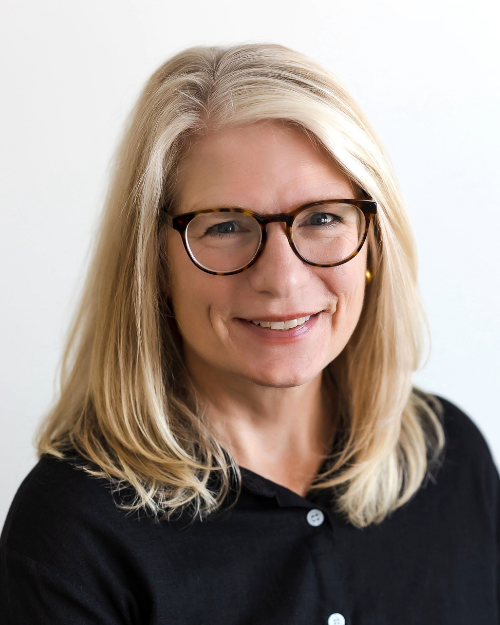
Leslie Cronin, Senior Manager of Strategic Communications
Leslie Cronin comes to Creative Fundraising Advisors with broad experience in education and nonprofits. Early in her career, she taught English, composition, and creative writing at selective independent schools, colleges, and universities. In 2005, she became Senior Development Writer at the Museum of Fine Arts, Houston, overseeing all aspects of communication coming out of the museum’s development department including exhibition descriptions, grant applications, correspondence with major donors, acknowledgements, and event invitations.
Leslie later brought her experience in education and fundraising to a new role, serving first as board member and then vice president of the board of an independent school in Houston, Texas. During her tenure, she was instrumental in the formulation of the school’s 20-year plan, including its successful accreditation as an International Baccalaureate institution. She worked closely with a wide variety of consultants on urban planning, architecture, and a fundraising feasibility study. Her insight into the client experience helps her every day in her work for CFA.
As Senior Manager of Strategic Communications, Leslie helps CFA’s clients shape their campaigns for maximum impact and results by leading case development workshops, writing compelling case summaries, and crafting powerfully persuasive campaign collateral. Additionally, Leslie manages CFA’s brand voice by developing content for the firm’s resource library and overseeing the editorial calendar.
Leslie believes nonprofits have the power to change the world. In crafting cases for support, she writes as a committed advocate for each client and their goals. Leslie holds two Masters degrees, one an MFA from the Iowa Writers’ Workshop, the other an MA in English Literature from Temple University. She is mother to two grown children, a voracious reader, and an amateur equestrian. She lives on Cape Cod with her husband, author Justin Cronin, and their rescue dog, Lonesome Dove.