

The National Gallery: A Case Study in Funding the Margin of Excellence

We know excellence when we see it. We stop. Look again. And stand back in awe. Whether it is a social service organization so humane that it transforms not just individual lives but entire communities, a dancer or musician who has perfected their craft to the point of making the impossible look effortless, or a land conservation effort so ambitious it reshapes the ecological future of a region, true excellence announces itself. It is a curious alchemy of skill, vision, and hard work in perfect harmony.
What is less often remarked upon is how excellence comes into being. In the nonprofit sector, when we are in the presence of something truly exceptional, philanthropy is almost always at the core of the story. The cancer research center rewriting the odds for patients. The conservatory that educates generations of world-class musicians. The ballet company that does not merely perform but creates. In each case, philanthropy funds the distance between good and excellent, between what earned revenue and government support make possible and what vision demands.
There is a name for that threshold, the place where transformational vision and transformational philanthropy join forces. It’s called the margin of excellence.
Campaigns Propel Organizations into the Margin of Excellence
Every nonprofit, however resourceful, eventually hits the limit of what earned revenue and government support can sustain. Ticket sales, tuition, memberships, program fees, and facility rentals seldom generate all the resources excellence requires. Government funding is usually tied to existing programs and often cannot be relied upon year after year. Creative Fundraising Advisors (CFA) Founder and CEO Paul Johnson notes, “Philanthropy gives an organization the flexibility and entrepreneurial spirit to go beyond what public funding or earned revenue makes possible, to reach for excellence. It unlocks creativity and innovation that routine funding would never afford.” When an organization is ready to level up, campaigns are the vehicle. “At their best, campaigns fund the margin of excellence,” Paul argues. “They are not about covering a budget gap. They are about taking an organization from good to great, or from great to excellent.”
The Building Blocks of a Credible Case for Excellence
Not every organization is ready to make the case for excellence. Before an organization can credibly invite donors to fund excellence, it must demonstrate that it has already earned the right to claim it. Paul identifies two qualities as foundational to a case for excellence: transparency and authenticity. Transparency is about how an organization defines and communicates its standards, showing donors not just what you have achieved, but the framework of thinking and judgment that governs every decision. It is the difference between asking donors to admire the result and inviting them into a genuine understanding of what you are building. “Donors giving at the highest level need to see inside the work,” Paul explains. “They need to understand the standard you have set and how it is upheld. Transparency converts donors into true believers.”
Authenticity operates differently. It is about revealing the human cost of pursuing excellence. Where transparency illuminates the standard, authenticity lifts the veil on what it takes to meet it, day after day. Donors who attend a ballet see a performance that appears effortless, not the years of training, the daily barre work, or the physical therapy that makes it possible. The most authentic organizations understand that this gap between what donors see and what excellence actually requires is not a backstory but an opportunity. The most authentic organizations close that gap intentionally, giving donors a window into the hard work and dedication required to deliver the mission. This is how an organization demonstrates that its pursuit of excellence is real, sustained, and worthy of investment. “Excellence is hard-earned,” Paul says. “Authenticity is letting people see what that pursuit really looks like — because that is what inspires giving at the highest level.”
When Vision and Philanthropy Converge: The National Gallery’s Project Domani
These qualities, transparency about the standard and authenticity about the pursuit, are what allow an organization to meet sophisticated donors where they are: ready to invest at the highest level when the vision is credible, the leadership is proven, and the standard of excellence is beyond question. At the National Gallery in London, a CFA client, that alignment has already attracted £375 million toward one of the most ambitious cultural campaigns of our era.
Founded in 1824, the National Gallery houses the UK’s collection of paintings in the Western tradition and is one of the most visited museums on earth. It is also a free museum, whose operating budget is largely sustained by the British government. That public funding does an enormous amount. What it cannot do is fully fund the transformation the Gallery’s leadership has spent years envisioning.
Project Domani is that transformation. The £750 million campaign will fund a landmark new wing designed by Kengo Kuma and Associates, create an endowment to fund acquisitions and programming, and build new public spaces connecting Trafalgar Square and Leicester Square. Project Domani also includes the move to extend the National Gallery’s historic collection beyond 1900, making it the only museum in the world that exclusively displays paintings, where visitors will be able to view the entire history of painting in the Western tradition.
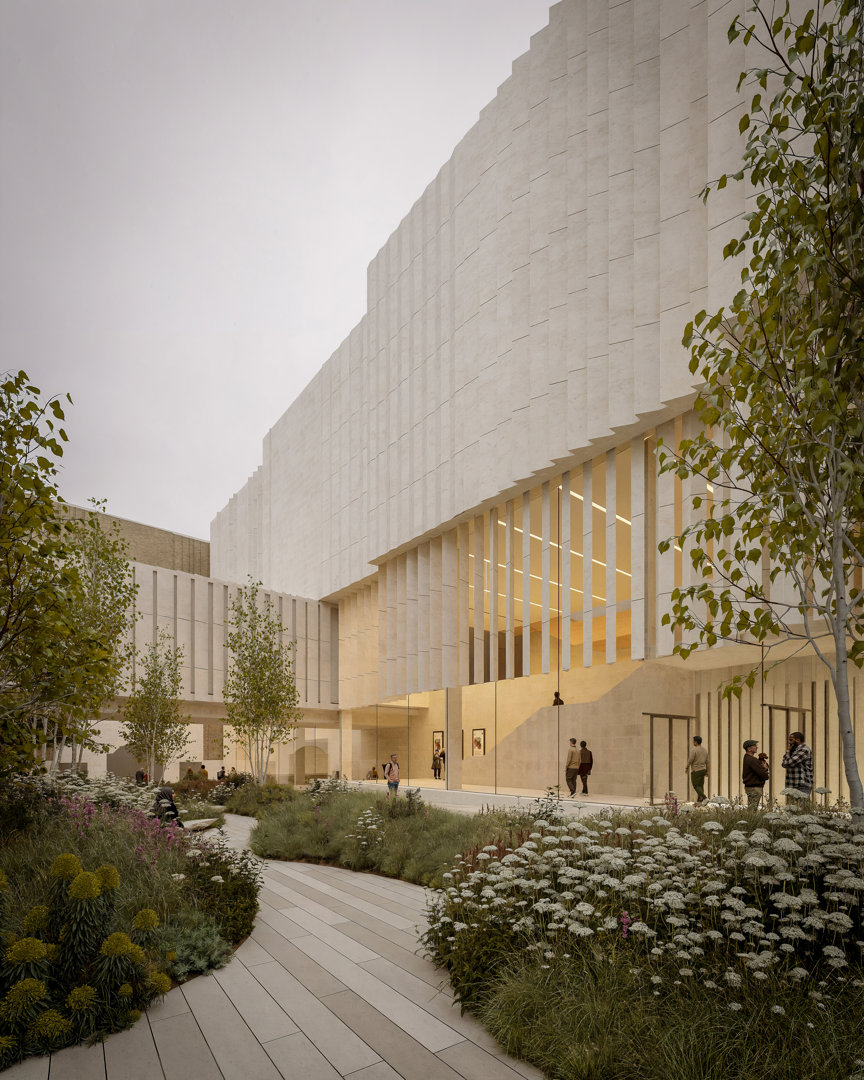
The campaign was catalyzed by a transformational gift of £150 million from the Crankstart Foundation, accompanied by the promise of a significant collection of works. That commitment was matched by a gift of equal size from the Julia Rausing Trust — two of the largest gifts ever made to a museum anywhere in the world. Together they signal something important: when an institution has earned the right to claim excellence and can articulate with clarity what philanthropy will make possible, donors of extraordinary capacity respond in kind.
At the heart of this effort is a curatorial philosophy defined by uncompromising discernment: only the finest examples of each artistic movement and school are considered for acquisition. The result is a collection that is not vast so much as definitive. Extending the collection beyond 1900 demands the same exacting standard, and with it, the considerable resources needed to acquire modern masterpieces. “The National Gallery has the collection, the expertise, the history, and the relationships to claim excellence with complete credibility,” Paul says. “What it needs now is the philanthropy to bring the vision fully into being.”
“Excellence, at the end of the day, is inspiring,” Paul reflects. “When donors can see it, understand it, and believe that their investment will bring something extraordinary into the world that would not exist without them — that is when transformational philanthropy becomes possible.”
Donors Fund the Why
Simon Sinek’s bestseller, Start With Why, argues that the most inspiring companies do not lead with what they do — they lead with why they do it. The why is the purpose, the belief, the cause that animates everything else.
This core philosophy of starting with why is especially relevant for nonprofits, and Paul has built his consulting practice around this insight. “People fund vision, not a catalogue of activities. They want to know why you do what you do, and when you can answer that compellingly, the what takes care of itself.” Annual giving keeps an organization in motion, but it rarely produces a donor’s best gift. Campaigns do because a campaign is an invitation to invest in a future that does not yet exist. “The difference between checkbook philanthropy and investment philanthropy is always vision,” Paul says. “One asks a donor to maintain what is. The other asks them to believe in what could be and to make it real.”
For a vision to unlock transformational generosity, it must be aspirational but achievable. Not a wish, but a destination. “A vision has to be believable to be inspiring,” Paul says. “Aspirational enough to be exciting, grounded enough to be trusted. When donors can see themselves in the story of how you get there, they do not just write a check. They become part of something that will outlast them.”
The Starting Point for Your Organization
For organizations ready to shift their conversations toward a new vision of excellence, Paul’s counsel is consistent: start with a strategic plan. Not a vision statement in isolation, but a full articulation of what impact the organization seeks and the goals that will get it there. “Excellence is not an abstract aspiration. It is grounded in process. You have to be able to show donors not just where you are going, but what will be true when you arrive and what it will mean for the people you serve.”
Partner With Us
Is your organization ready to make the case for excellence? CFA works with nonprofits at every stage of this journey, from strategic planning and vision articulation to case development and campaign counsel. We help organizations find and tell the story of why their work matters at the highest level, and we partner with them to translate that story into transformational philanthropy. Contact us to find out how we can help your organization operate in the margin of excellence.
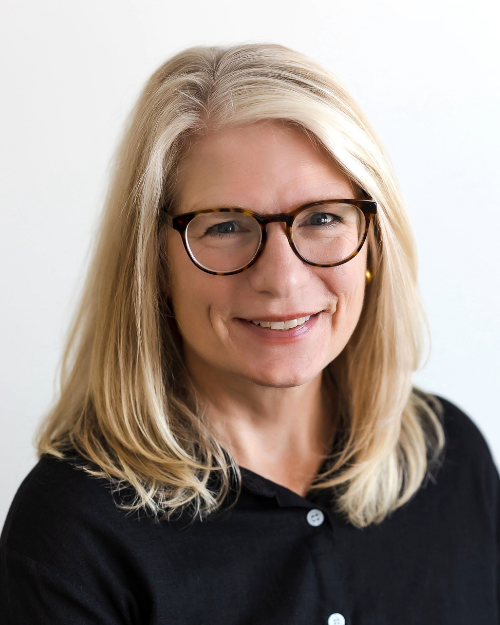
Leslie Cronin, Senior Manager of Strategic Communications
Leslie Cronin comes to Creative Fundraising Advisors with broad experience in education and nonprofits. Early in her career, she taught English, composition, and creative writing at selective independent schools, colleges, and universities. In 2005, she became Senior Development Writer at the Museum of Fine Arts, Houston, overseeing all aspects of communication coming out of the museum’s development department including exhibition descriptions, grant applications, correspondence with major donors, acknowledgements, and event invitations.
Leslie later brought her experience in education and fundraising to a new role, serving first as board member and then vice president of the board of an independent school in Houston, Texas. During her tenure, she was instrumental in the formulation of the school’s 20-year plan, including its successful accreditation as an International Baccalaureate institution. She worked closely with a wide variety of consultants on urban planning, architecture, and a fundraising feasibility study. Her insight into the client experience helps her every day in her work for CFA.
As Senior Manager of Strategic Communications, Leslie helps CFA’s clients shape their campaigns for maximum impact and results by leading case development workshops, writing compelling case summaries, and crafting powerfully persuasive campaign collateral. Additionally, Leslie manages CFA’s brand voice by developing content for the firm’s resource library and overseeing the editorial calendar.
Leslie believes nonprofits have the power to change the world. In crafting cases for support, she writes as a committed advocate for each client and their goals. Leslie holds two Masters degrees, one an MFA from the Iowa Writers’ Workshop, the other an MA in English Literature from Temple University. She is mother to two grown children, a voracious reader, and an amateur equestrian. She lives on Cape Cod with her husband, author Justin Cronin, and their rescue dog, Lonesome Dove.