

Advised Not to Launch a Campaign, They Built the Engine Instead

Not every nonprofit feasibility study ends with a green light for a capital campaign. Sometimes, the better outcome is to surface what an organization is genuinely ready to accomplish and to identify the investments that will strengthen its development program, increase fundraising yield, and ultimately position it for more impactful work down the road. For Minnesota Land Trust (MLT), that was precisely the case. In 2023, the organization engaged Creative Fundraising Advisors (CFA) and consultants Paul Johnson and Colin Hamilton to assess its readiness for a campaign. What followed was a carefully considered course correction that, three years later, has produced some of the most significant fundraising growth in the organization’s history.
Minnesota Land Trust: Protecting What Cannot Be Replaced
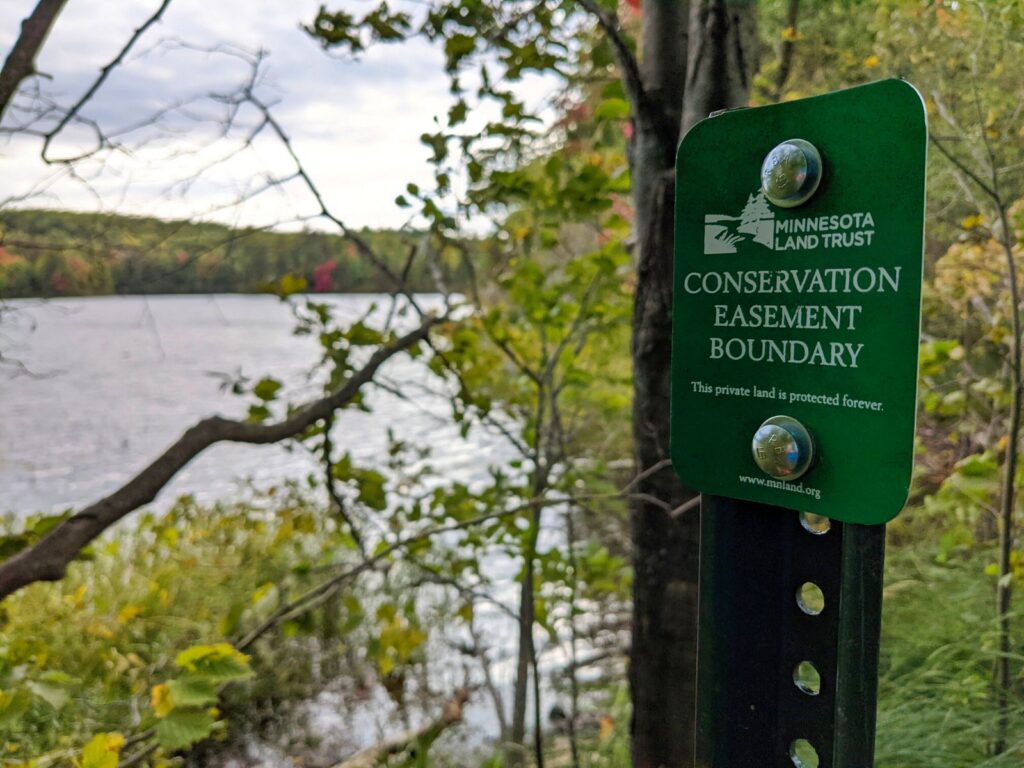
Founded in 1991, MLT works to protect and restore Minnesota land, water, and wildlife. The organization helps landowners protect and preserve property through conservation easements, legal agreements that permanently restrict development and open the way for rewilding the land and restoring its ecology. MLT has conserved more than 1,000 properties across Minnesota, making it one of the highest-volume land trusts in the country. Public sources fund the majority of its roughly $20 million annual budget, and the organization is also a trusted advisor to the Minnesota state government on conservation policy.
Entering the Engagement
In 2023, MLT was thinking expansively. Having completed a $5 million capital campaign in 2021, leadership hoped to follow it with a larger, $12 million campaign to accelerate programmatic work, grow the development program, and build the long-term stewardship fund. MLT CEO Kris Larson recalls a thorough, energizing process, involving a strong volunteer committee and extensive donor interviews. Like most organizations embarking on a feasibility study, MLT expected the process would confirm a campaign as the logical next step.
What the Feasibility Study Revealed
CFA Founder and CEO Paul Johnson says that one of the main purposes of a feasibility study is to “move things from the ‘we think we know’ column to the ‘we know’ column.” What emerged from MLT’s process was a nuanced and ultimately clarifying picture. CFA’s assessment found that while donors believed deeply in MLT’s mission, the conditions for a $12 million campaign were not yet in place. In launching a new campaign so soon after the previous one, some stakeholders felt that MLT was simply asking again rather than offering something meaningfully new. The study also indicated that the development operation needed investment before it could support a campaign of this ambition. The analysis surfaced a strategic question at the heart of its recommendations: was a campaign the right vehicle to fuel the growth of the development operation, or did investment in their development operations need to come first? The evidence pointed clearly toward the latter.
CFA’s assessment concluded there wasn’t a feasible short-term path to $12 million, and that scaling back the number wouldn’t produce a compelling campaign either. But the data pointed to a real opportunity: a substantial pool of cold-to-warm donors ready for cultivation, and an underdeveloped strategy for engaging landowners as long-term philanthropic partners. CFA Strategic Partner Colin Hamilton puts it simply: “A campaign can become the default solution, but sometimes there are more effective things an organization can do first. It’s really about finding what’s the best path at any given period in your organizational arc.” What CFA’s assessment revealed was not a closed door but a roadmap, one that gave MLT the clarity and confidence to take the steps that would serve its mission best in the long run.
Building the Foundation for Lasting Growth
CFA’s core recommendation was to spend the next 18-24 months building MLT’s development program: hire and activate a stronger team, deploy CEO Kris Larson as lead fundraiser rather than depend on him for every relationship, and evolve major giving into a more donor-centric, portfolio-driven approach. Rather than one large campaign, CFA pointed MLT toward smaller, targeted initiatives tied to specific geographies, issues, and outcomes that donors already cared about—moves that were smaller, more local, more nimble, and ultimately more productive than competing head-on with larger national organizations that were also planning campaigns at that time.
Kris took the advice to heart, recruiting Adam Breininger as the new Director of Development and Communications. Adam reviewed the feasibility study before accepting the role, a transparency that shaped his approach from the start. Among his first moves was co-designing Ignite, a targeted campaign that made a compelling case for investing in the development department itself. Ignite raised more than $800,000, funding growth of the development and communications team from four to ultimately nine positions, a tech stack overhaul including a new CRM and online giving platform, and a comprehensive organizational rebrand launching later this fall.
Remarkable Signs of Success
The results have been striking. Since fiscal year 2023, MLT has achieved 83% growth in contributed revenue, with budgeted annual fundraising rising from about $1.3 million to more than $3 million. The donor base has grown roughly 50%, from 2,000 to 3,000, with another 1,000 supporters expected this year. MLT’s 2026 gala was the most successful event in the organization’s history, raising over $725,000. Adam also notes that the growth is broadly distributed: “All four of our giving categories, from community-level donors to major gifts, are seeing significant upticks.” Some of the organization’s largest gifts to date arrived not through a campaign but through annual giving, a powerful signal that MLT’s donor base is warming and scaling in ways that would have been hard to imagine three years ago.
A New Organizational Confidence
Growth in contributed revenue is just one part of this success story. A bold new strategic plan calls for accomplishing as much conservation work in the next decade as in its first 35 years, and MLT has grown from roughly 30 to 45 staff members to help deliver on it. Kris no longer carries the majority of donor relationships himself; that trust has been distributed across a professional team, reducing organizational risk and deepening stewardship across the board.
“The traction we had on the development side freed up not just the board but the whole staff to dream bigger,” Kris observes. “Development used to feel like a department of limitations. Now it’s the engine driving ambition across the whole organization.” When MLT launches its next campaign, it will do so from a very different position than in 2023, with an experienced team, sophisticated infrastructure, and a growing donor community ready to scale alongside the mission.
Partner With Us
Are you unsure whether a campaign is right for you? A feasibility study can give you the information you need to confidently step into your next chapter. CFA meets every client where they are, with honest, thoughtful counsel to meet your challenges and seize your opportunities. Whether the path forward is a comprehensive campaign, a targeted initiative like Ignite, or a period of purposeful capacity building, we can help you map the right path and deliver your mission with greater impact. Contact CFA today to begin the conversation.