

Good Reads for Greater Impact: From What Is to What If
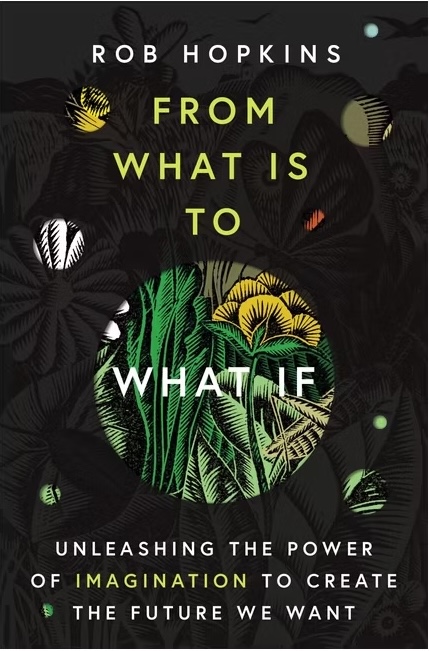
CFA’s quarterly book review guides readers toward sources that will help them get better returns on their fundraising efforts.
From What Is to What If—Imagination for a New Year, and a New Kind of Leadership
As nonprofit leaders step into the new year, the desire to imagine a better future will very likely meet the hard edges of reality. Economic uncertainty continues to ripple across communities. Many organizations are feeling the strain of cautious philanthropy, unpredictable markets, and donors managing competing priorities. The pace of current events can leave even the most optimistic leaders feeling hesitant.
In these moments, imagination can feel like a luxury. But as Rob Hopkins argues in From What Is to What If, imagination is actually a necessity—especially now.
Hopkins, co-founder of the Transition Network, makes a compelling case that imagination is one of society’s most undervalued resources. He defines it not as escapism, but as the essential starting point for any meaningful change. When our imaginative capacity weakens—through fatigue, fear, distraction, or simply the pressure of daily responsibilities—our ability to envision alternatives narrows. The temptation to default to incremental adjustments rather than bold solutions is strong.
Fundraising is harder in moments of uncertainty. Strategic planning becomes more cautious. Teams lean heavily on what is proven, familiar, and efficient. Yet the missions nonprofits pursue—environmental recovery, community health, educational opportunity, artistic expression, food security, scientific progress—require the opposite. They require courage, creativity, and the willingness to imagine outcomes that do not yet exist.
Hopkins’ book reminds us that this imaginative capacity is not just individual but collective. It is strengthened through community, collaboration, and shared purpose. Through case studies and stories from around the world, he shows how imagination can reshape civic life, revitalize neighborhoods, and inspire people to work together despite differences. These examples feel urgent in a year when many communities are searching for common ground and common good.
At CFA, we see inspiring innovations every day in the organizations we serve. Nonprofits normalize the common good. They stand in the vanguard of social change, tirelessly working toward a brighter, happier, more beautiful, and more equitable future—often long before the rest of society catches up. Even during economic headwinds, nonprofits persist in planting seeds for a better tomorrow. Their commitment is one of the most powerful expressions of civic imagination we have.
And this is precisely why Hopkins’ book is such a strong companion for planning the year ahead. It asserts that imagination is not naïve—it is strategic. It fuels the bold visions that galvanize donors, shape campaigns, and attract partners. It strengthens our capacity to see beyond short-term challenges and to articulate compelling, hopeful futures that people want to invest in.
As we enter 2026, From What Is to What If offers a timely invitation: to keep that imaginative muscle strong, even when circumstances make it difficult. It reminds us to stay grounded in reality without being confined by it. And to remember that the futures nonprofits imagine—healthier communities, stronger ecosystems, more just and connected societies—are the very futures the world needs now more than ever.
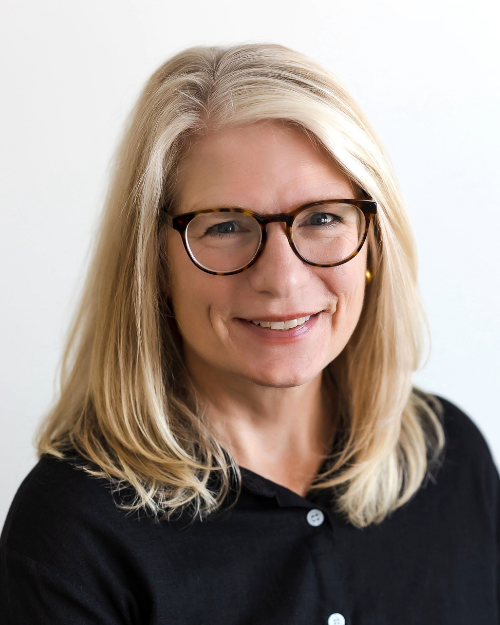
Leslie Cronin, Senior Manager of Strategic Communications
Leslie Cronin comes to Creative Fundraising Advisors with broad experience in education and nonprofits. Early in her career, she taught English, composition, and creative writing at selective independent schools, colleges, and universities. In 2005, she became Senior Development Writer at the Museum of Fine Arts, Houston, overseeing all aspects of communication coming out of the museum’s development department including exhibition descriptions, grant applications, correspondence with major donors, acknowledgements, and event invitations.
Leslie later brought her experience in education and fundraising to a new role, serving first as board member and then vice president of the board of an independent school in Houston, Texas. During her tenure, she was instrumental in the formulation of the school’s 20-year plan, including its successful accreditation as an International Baccalaureate institution. She worked closely with a wide variety of consultants on urban planning, architecture, and a fundraising feasibility study. Her insight into the client experience helps her every day in her work for CFA.
As Senior Manager of Strategic Communications, Leslie helps CFA’s clients shape their campaigns for maximum impact and results by leading case development workshops, writing compelling case summaries, and crafting powerfully persuasive campaign collateral. Additionally, Leslie manages CFA’s brand voice by developing content for the firm’s resource library and overseeing the editorial calendar.
Leslie believes nonprofits have the power to change the world. In crafting cases for support, she writes as a committed advocate for each client and their goals. Leslie holds two Masters degrees, one an MFA from the Iowa Writers’ Workshop, the other an MA in English Literature from Temple University. She is mother to two grown children, a voracious reader, and an amateur equestrian. She lives on Cape Cod with her husband, author Justin Cronin, and their rescue dog, Lonesome Dove.